
Unbiased headlines. Facts, not spin.
Unbiased Headlines is an independently owned news organization. We bring you the facts, not opinions, written fresh from 110+ named sources. Sources linked so you can verify it yourself.
 economy
Notable (6/10)
Musk Says Tesla Will Wind Down Cybertruck Production in Mid-2027 as Full-Size EV Pickup Sales Fall 53%
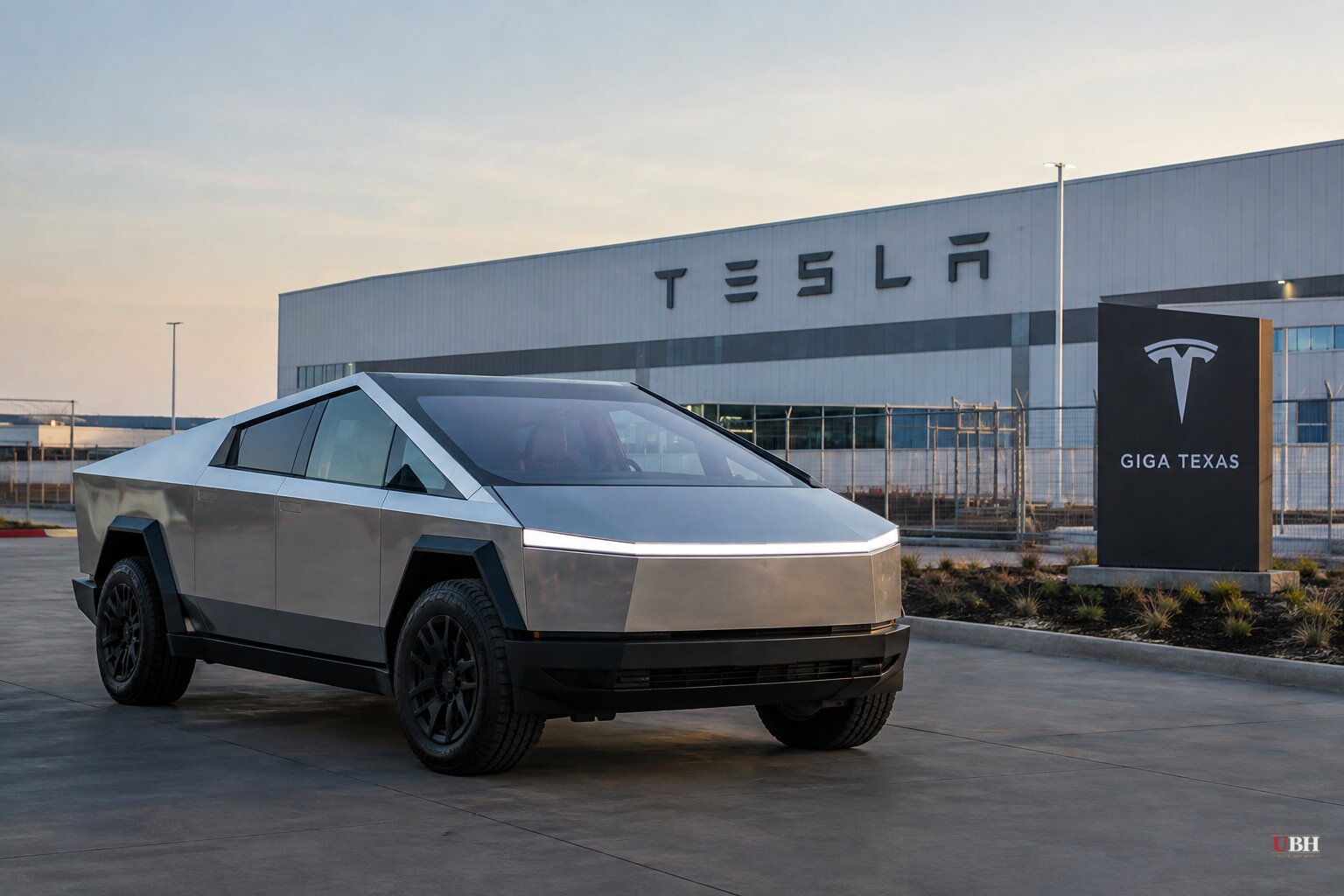
Since deliveries began in late 2023, Tesla has sold only tens of thousands of Cybertrucks, a long way from the 250,000 a year Musk once floated. On Friday, Nov. 6, he said the run is heading toward an end.
"Tesla will be winding down production of the Cybertruck at Gigafactory Texas around the middle of next year to make room for increased Cybercab production," Musk wrote on X.
He did not say the truck is being killed outright. He did call it the "end of an era" in a reply on X.
What Musk and Tesla have said
In the same thread, Musk called the Cybertruck the best vehicle Tesla has ever made and said the fleet on the road will be around for a long time. Cybertruck lead engineer Wes Morrill posted that the truck was "an incredible technology development platform and lives on through Cybercab."
That is the company's case: this is a floor-space decision, not a product funeral. The Cybercab is a two-seat robotaxi with no steering wheel or brake pedals, and Tesla has begun running Cybercabs in Austin with plans to expand.
The regulatory path is not finished. Federal Motor Vehicle Safety Standards require manual controls such as brake pedals, and the Transportation Department is working to update some of those rules for fully autonomous vehicles.
Tesla did not respond to a request for comment from The Epoch Times. It has not said whether Cybertruck production will move to another plant. Austin is the only known Tesla factory equipped to build the truck's specialized components.
The sales record
Kelley Blue Book counted 20,237 Cybertrucks sold in the U.S. last year, down from 38,965 the year before. Tesla does not report Cybertruck sales separately. It folds them into an "Other Models" category, where third-quarter deliveries came to 8,295, down from 12,364 in the second quarter.
That category is not a clean read on the truck. Tesla also ended production of the Model S and Model X earlier this year.
The launch promises did not hold either. Tesla originally advertised a starting price below $40,000 and up to 500 miles of range. Neither materialized, according to TechCrunch. The truck has also drawn multiple recalls and quality-control problems, and its sharp-edged stainless-steel body made European approval hard.
"Anywhere where you have crash regulation that takes into account pedestrian impact, that Cybertruck won't go, can't go," Palmer, the former Aston Martin CEO, said. He added: "It doesn't make sense to keep it going when it's not meeting its targets."
Detroit's pickups fared no better
The Cybertruck is not an outlier. Cox Automotive data shows the six EV pickups it tracks sold about 32,500 units through September, down 53% from the same stretch of 2025.
Ford's F-150 Lightning sales fell from 33,510 to 27,307 in the period KBB measured, and the Rivian R1T dropped from 11,085 to 7,416.
The corporate bills are large. GM has taken nearly $11 billion in write-downs since 2025 as it slowed its EV pace. Ford discontinued its electric pickup and recorded a $19.5 billion charge. Stellantis paid $26 billion in write-downs, and the Ram REV never reached production. Together that is roughly $56.5 billion. Those figures cover each company's wider EV retrenchment, not trucks alone.
Stephanie Valdez Streaty, director of industry insights at Cox Automotive, said pickup buyers expect strong towing, payload, range and charging. Big batteries are expensive, she said, and towing can sharply cut range.
Robby DeGraff, manager of product and consumer insights at AutoPacific, was blunter on price. "These full-size EV pickup trucks are and were pretty dang expensive," he said. The GMC Sierra EV starts around $65,000.
The next bet is smaller
Automakers are now aiming lower. Ford says its Fathom, a midsize truck and the first vehicle on its universal EV platform, will start under $29,000, with production beginning next fall. Ford has not released trim levels or range figures.
Slate Auto is going further with its bare-bones two-seat Blank Slate pickup.
Tesla's own pivot is away from conventional vehicles. Its remaining passenger lineup is the Model 3 and Model Y, yet the company still leans heavily on vehicle sales for revenue while it pushes into robotaxis and humanoid robots. Tesla has not made its Optimus robots available for commercial sale.
The next concrete markers are mid-2027, when Texas Cybertruck production is due to taper, and next fall, when Ford's sub-$29,000 Fathom is set to start production. Whether the Cybertruck line ends for good or gets a second life is something only Tesla can answer.
Sources used for this briefing
7 links from 6 independent newsrooms (syndicated copies of the same report count once)
These are the sources it draws on, linked so you can verify.


