
Unbiased headlines. Facts, not spin.
Every story is an unbiased news briefing written from 110+ sources across the spectrum — sources linked so you can verify it yourself.
 defense
Breaking / Critical (9/10)
June 28, 2026 at 10:17 PM
defense
Breaking / Critical (9/10)
June 28, 2026 at 10:17 PM
Strait of Hormuz Standoff Deepens: Iran Moves 4 Million Barrels as Shipping Giant Declares Chaos the 'New Normal'
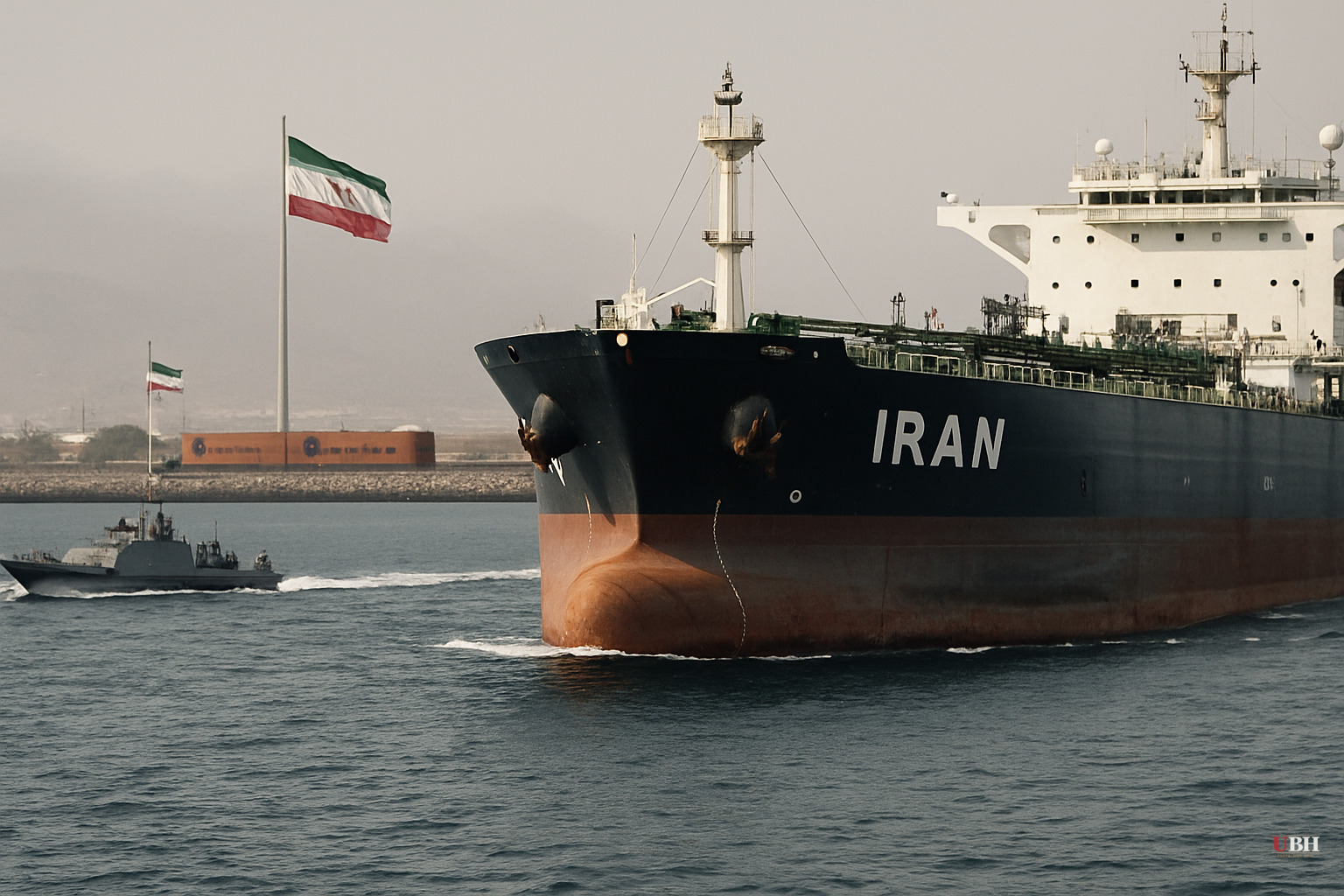
Since Iran struck Bahrain and Kuwait on Sunday, June 28, and the U.S. answered with strikes on 10 Iranian targets, the fragile memorandum of understanding signed earlier this month has been pushed to the edge.
What Triggered the Latest Exchange
U.S. Central Command launched strikes on June 26 after a Panama-flagged oil tanker carrying more than 2 million barrels of crude was hit in the Strait of Hormuz, according to Breitbart News citing AP. The U.S. targeted Iranian missile and drone storage locations on Qeshm Island, according to Fox News. Iran's Islamic Revolutionary Guard Corps then launched drones and missiles at Bahrain and Kuwait in response.
Kuwait confirmed its air defenses intercepted two Iranian ballistic missiles, with no injuries or damage reported. Bahrain's Interior Ministry said Iranian munitions destroyed the top floor of an eight-story residential building near the international airport. No one was killed. The building was NOT near the U.S. Navy's 5th Fleet headquarters, also based in Bahrain, according to NPR.
Bahrain's Foreign Ministry called the strikes "a deliberate approach and a systematic pattern of repeated aggression."
The Strait Dispute Is the Real Sticking Point
The immediate military exchanges are symptoms of the deeper problem: Iran insists it alone has the right to govern the Strait of Hormuz. That claim is incompatible with the U.S. position.
Iranian Foreign Minister Abbas Araghchi, speaking in Baghdad on Sunday during a state visit to Iraq, said any attempt to establish shipping arrangements that bypass Iranian oversight would "only lead to further complications, delay the reopening of the Strait of Hormuz, and increase the level of tension." He simultaneously called on all parties to honor the MOU and not let it "deviate from its course," according to Breitbart citing AP.
Iran wants the ceasefire framework intact and exclusive control of the strait. Washington wants the strait open without Iranian veto power over commercial traffic. The 60-day MOU gave both sides time to resolve exactly this, and as of June 28, they have not.
Hapag-Lloyd: This Is Permanent Now
German shipping giant Hapag-Lloyd put a number on the operational reality. Spokesperson Hanja Maria Richter told Fox News Digital that heightened Strait of Hormuz risk is now "the new normal in the Persian Gulf region for some months." The company is conducting individual risk assessments for every vessel transiting the region.
Simultaneously, maritime intelligence firm Windward AI reported that Iran restarted its crude export cycle out of Kharg Island for the first time in days. The T-Jetty and Western Terminal loaded at the same time, with 28 tankers in the East Waiting Area, 27 of them "dark," meaning their transponders were off. Total outbound cargo: an estimated 4.12 million barrels, of which roughly 3.91 million are crude oil, according to analytics firm Vortexa.
Iran is moving that volume while simultaneously striking Gulf neighbors and warning about strait access. The move signals confidence, pressure, or both.
Lebanon Is Still Burning
The strait isn't the only front. Hezbollah killed an Israeli soldier in Deir Siryan village in southern Lebanon on Sunday, according to Israel's military, which said it responded by killing the attacker. Hezbollah's leader stated publicly that the group will fight until Israel withdraws from southern Lebanon entirely.
Israel's military chief of staff, Lt. Gen. Eyal Zamir, visiting troops on the northern border, warned that Israel is "prepared to rapidly resume offensive operations in both Lebanon and Iran if required," according to NPR.
Iran's parliament speaker Mohammad Bagher Qalibaf reportedly called for an urgent meeting of a newly formed conflict control unit involving Iran, the U.S., and Lebanon, a detail NPR noted from Lebanese media. Whether that meeting produces anything concrete remains to be seen.
Iran's Parallel Digital Campaign
Counterterrorism expert Dr. Omar Mohammed of the George Washington Program on Extremism told Fox News Digital that Tehran has deployed a coordinated social media influence operation targeting American domestic opinion. Mohammed argues the decapitation of Iran's senior leadership (Supreme Leader Ali Khamenei was killed February 28) forced the regime onto platforms like X as a substitute for physical authority. New leader Mojtaba Khamenei remains in hiding.
"The regime has moved its legitimacy contest onto a platform," Mohammed said, noting identical talking points reposted by Iran's judiciary chief, vice president, and security council within minutes of each other.
A coordinated government communications strategy is not automatically a covert influence operation. Every government coordinates messaging. The question is whether the campaign involves fake accounts, fabricated content, or domestic political manipulation. Mohammed's public statements are specific about coordination patterns but stop short of documenting that level of detail.
What's Actually at Stake
The 60-day MOU covers shipping in the Strait of Hormuz, removal of the U.S. port blockade, sanctions relief, and Iran's stockpile of highly enriched uranium. None of those are resolved. The strait dispute is actively producing military exchanges that are undermining the very framework designed to contain them.
Iranian Foreign Minister Araghchi's Baghdad appearance called for MOU compliance while defending Iran's exclusive strait authority. This leaves no room for the U.S. to accept any outcome where Iran retains a unilateral veto over 20% of the world's seaborne oil. That gap is what the next 60 days, or fewer, has to close.
Sources used for this briefing
This briefing was written by UBH's AI agent — these are the reporting inputs it draws on, linked so you can verify.


