
Unbiased headlines. Facts, not spin.
Unbiased Headlines is an independently owned news organization. We bring you the facts, not opinions, written fresh from 110+ named sources. Sources linked so you can verify it yourself.
 energy
Major Story (8/10)
Event date: October 21, 2026 ·
S&P Global Warns Hormuz Energy Shock Could Become a Global Food Crisis as India Faces Weak Monsoon
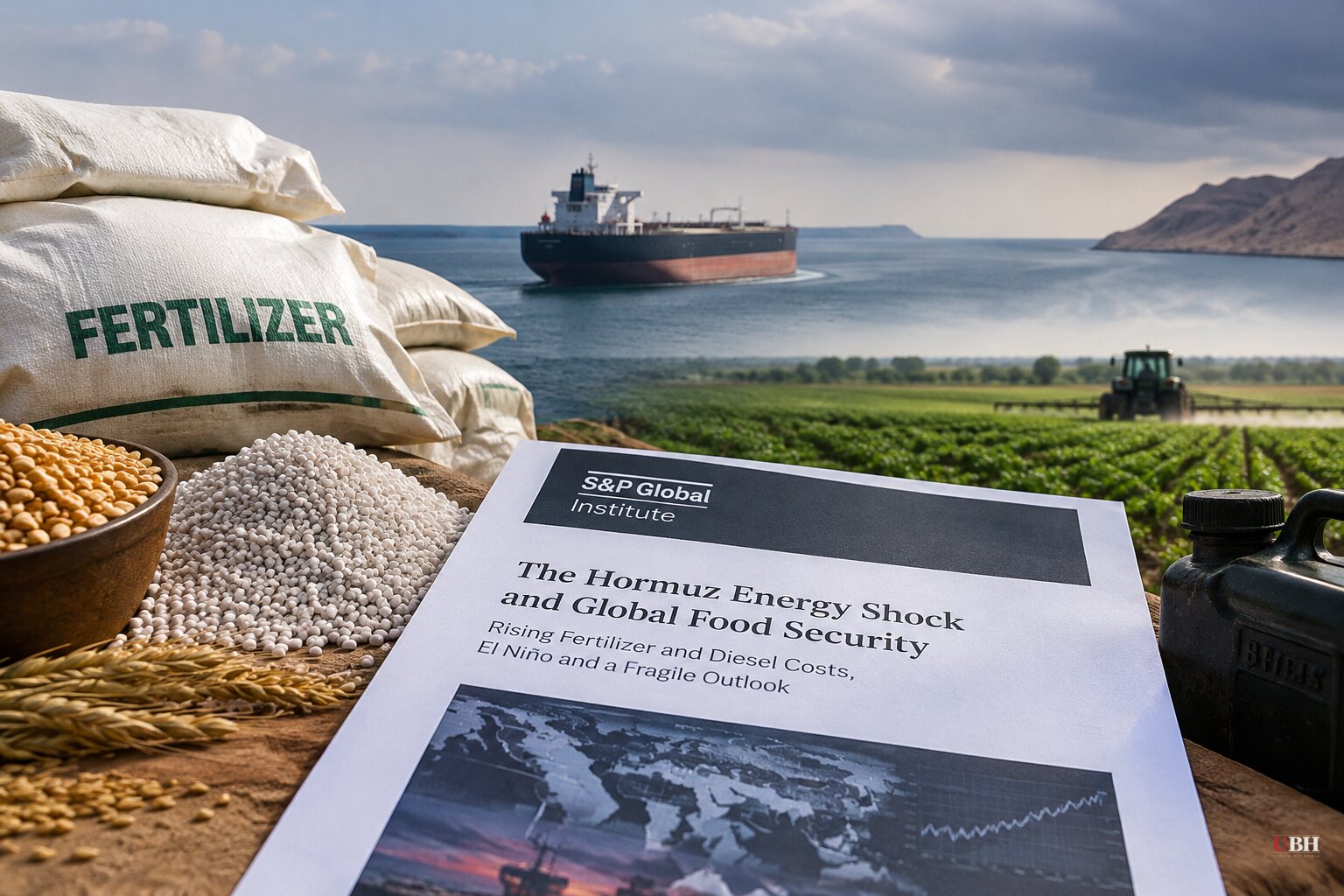
The Strait of Hormuz has been a fuel story since the U.S.-Israeli offensive on Iran began in February. It is now a food story too.
In the first report from the S&P Global Institute, released Oct. 19, authors Daniel Yergin, Shankari Srinivasan, Allan Pickett and Simon Blakey say higher energy and fertilizer costs, biofuel-linked demand and El Niño weather risk are starting to reinforce each other. "Conflict is now testing all of them at once, just as El Niño tests the harvest," they write.
Fertilizer runs through the same chokepoint
About 20% of global oil supply and 20% of LNG trade moved through Hormuz before the war. Less discussed is fertilizer.
According to S&P, roughly 29% of global urea trade normally passes through the strait. So does nearly half of the global sulfur trade and about 21% of merchant ammonia trade.
The strait closed to nearly all shipping on Feb. 28, and fertilizer prices roughly doubled, according to OilPrice's account of the timeline. The strait is no longer at a standstill, but control of the waterway remains contested.
The damage also reaches producers far from the Gulf. Fertilizer plants elsewhere burn natural gas as feedstock and fuel, so restricting LNG flows raises costs everywhere.
In Bangladesh, four of the country's five urea plants have been shut since March because LNG is unavailable, S&P says. Gulf producers are an important source of India's imported urea, and LNG supports about 85% of its domestic urea output.
Restarting supply will not be quick. Semafor, cited by OilPrice, reports Gulf natural gas output would need months or even years to ramp up to restore feedstock supply.
The numbers behind the warning
The UN's Jorge Moreira da Silva said in April that Hormuz disruption could push 45 million more people into hunger. The IMF's World Economic Outlook projects a 10% rise in fertilizer prices by the end of this year, adding 5% to food costs in 2026 and another 2.4% in 2027, with wide regional variation.
Diesel is the other squeeze. In early October, Kpler counted 10 tankers struck in the strait between Sept. 28 and Oct. 4, a record and well above the previous weekly high of six. The UK Maritime Trade Operations agency reported a tanker hit by "multiple projectiles," with casualties.
Brent was trading around $105 a barrel in that period, and the International Energy Agency said its members would not add to the 400 million barrels they agreed in March to release. The IEA said about 325 million barrels had been released, with roughly 100 million more still to come.
India: stocked up, but exposed
India shows how the shock lands on a big importer. Times of India reports that Indian refiners paid an average of $120 a barrel for crude in October, the highest monthly average in 12 years.
The Drewry World Container Index stood at $4,585 per 40-foot container on Oct. 22, against $1,746 a year earlier. Ajai Sahay, director general of the Federation of Indian Export Organisations, said container rates to West Asian ports have jumped from $800 to $8,000 to $10,000. Drewry said only two containerships sailed into the Gulf in Week 42, down from five the week before.
New Delhi's defense of its position is concrete. Top officials told Times of India that fertilizer companies used a falling-price window to stock up for the next season. The fertilizer ministry also has surplus cash from savings, and higher-than-budgeted disinvestment receipts and dividends from state-run financial institutions and the RBI are expected to keep the fiscal deficit within its 4.3% of GDP target.
The cushion is thin. State-run fuel retailers are absorbing losses because pump prices track import costs. The government has already cut duties and allowed later price increases, and fuel and fertilizer subsidies are past last year's level. The Centre, the report says, has limited headroom for more.
That is taxpayer money. Every extra rupee of subsidy is a rupee borrowed or taxed.
A weak monsoon on top
India's June-to-September rainfall totaled about 759.4 mm against a normal 868.6 mm, a 12.6% shortfall and the lowest since 2015, according to reports citing the India Meteorological Department. Analyst Mohd. Ziyaullah Khan notes that lower reservoir levels and thin soil moisture could hit the rabi crops: wheat, mustard and chickpeas. Wheat is especially vulnerable to heat during grain filling.
Khan is explicit that this does not mean India is on the brink of mass starvation. Record harvests may provide a temporary cushion, he writes, but they do not remove the underlying vulnerabilities for a country of more than 1.4 billion people where millions struggle to afford a healthy diet.
The S&P authors also frame their conclusion as a risk, not a certainty. Their paper's title ends in a question mark: "Leading to a global food crisis?"
Diplomacy under way
On Oct. 20, External Affairs Minister S. Jaishankar, Secretary of State Marco Rubio and UAE Foreign Minister Sheikh Abdullah bin Zayed Al Nahyan held trilateral talks in Mumbai on energy security and connectivity. Rubio called it a discussion of "regional energy security" and shared economic priorities. Jaishankar called it a "useful exchange of perspectives." The talks came amid Houthi attacks on Saudi energy assets and civilian infrastructure.
ING commodity strategists put the oil side plainly: prices will only trade sustainably lower if the lingering risks are addressed.
The next test is the rabi season. Whether India's fertilizer stocks, its 4.3% deficit target and the remaining IEA stock releases hold if shipping attacks continue will show up in wheat sowing and winter fuel and fertilizer bills.
New Delhi has not announced additional subsidy allocations.
Sources used for this briefing
7 links from 6 independent newsrooms (syndicated copies of the same report count once)
These are the sources it draws on, linked so you can verify.


