
Unbiased headlines. Facts, not spin.
Unbiased Headlines is an independently owned news organization. We bring you the facts, not opinions, written fresh from 110+ named sources. Sources linked so you can verify it yourself.
 energy
Major Story (7/10)
Event date: October 22, 2026 ·
Study: Deep Gulf Sea Life Down About 60% After Deepwater Horizon, With No Sign of Recovery 16 Years On
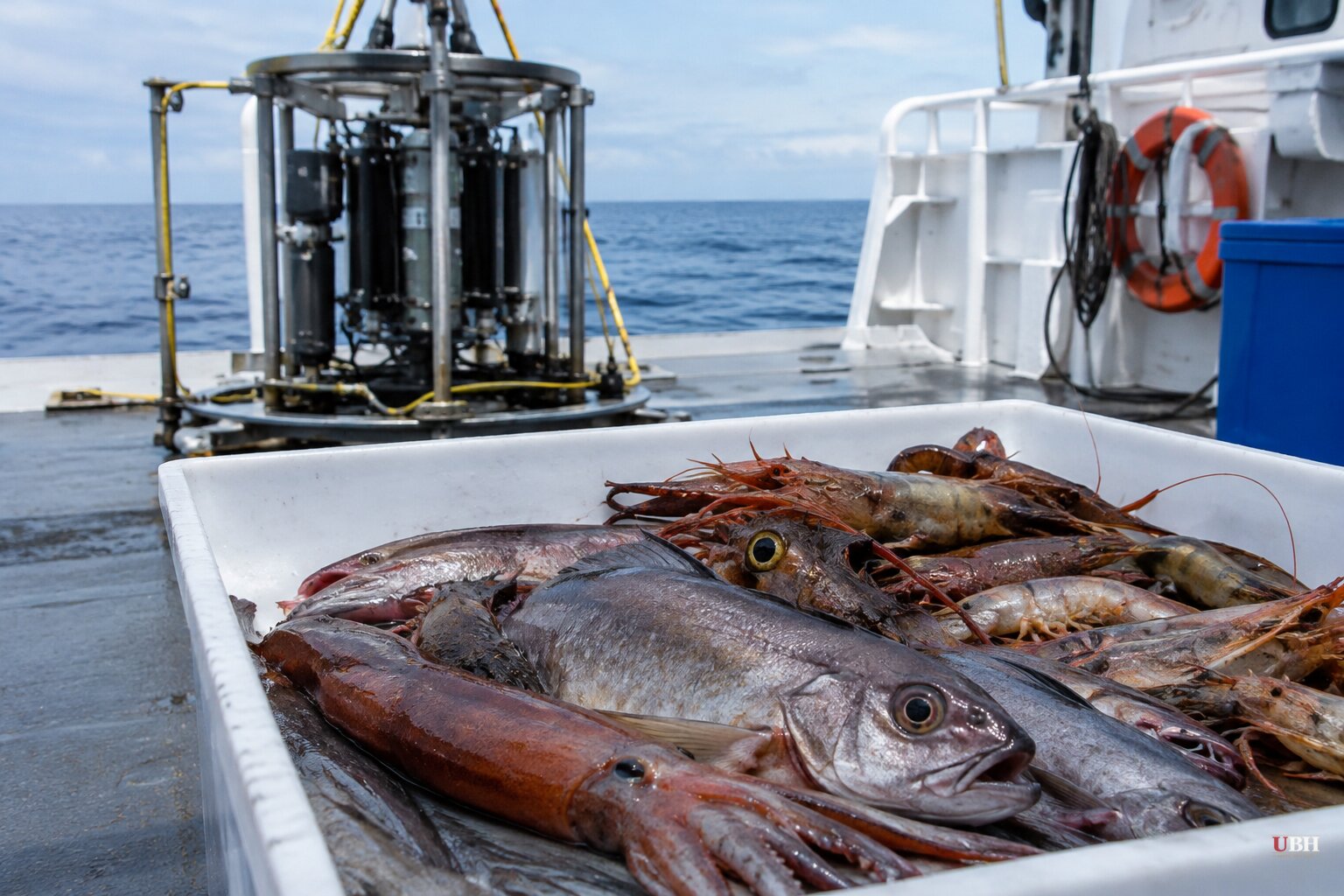
Sixteen years after the Deepwater Horizon blowout, the deep open water of the Gulf of Mexico is still emptier than it was right after the spill. That is the finding of a study published Monday, Oct. 19, in the Proceedings of the National Academy of Sciences.
The team, led by biological oceanographer Tracey Sutton of Nova Southeastern University, pulled together more than 2,000 net samples, acoustic sonar surveys and genetic analyses. The work covers the Gulf's deep pelagic zone, the dark water column between roughly 600 and 5,000 feet.
What the sampling found
Between the 2011 sampling and a return trip using the same equipment about three and a half years later, the numbers dropped hard:
- Fish fell 63.5%.
- Crustaceans, including shrimp and krill, fell 62%.
- Cephalopods such as squid and octopus fell 59.7%.
The hardest-hit groups were the ones the open-ocean food web leans on. Krill fell 72.8%, bristlemouth fishes 69% and lanternfishes 62.9%. Sutton's team says some species declined by as much as 60 to 85% over that stretch.
Sampling continued through 2023. Sutton said the low populations held, with a slight uptick in 2022 and 2023 that was not statistically significant or lasting. "That low state has just maintained low," he told CBC News.
Dense patches of prey that were common in 2011 have virtually disappeared, according to the Florida International University researchers on the team. Predators need those concentrations to make hunting worth the energy. Sutton said the missing prey patches have resulted in a "decline in things like deep-diving whales and dolphins."
The genetic damage
The researchers also looked at three lanternfish species that crashed. They found genetic diversity falling among the survivors, which the study ties to inbreeding after the population collapse. "The rate of genomic diversity decline is remarkable given the short temporal scale," the authors wrote.
FIU's Heather Bracken-Grissom called genetic diversity "nature's insurance policy." As it erodes, she said, so does the ability of populations to adapt.
The study also points to contamination that carried forward. Sutton said pollutants stored in the eggs of survivors left later generations weaker. Six years after the spill, researchers found elevated levels of polycyclic aromatic hydrocarbons in deep-sea fish eggs and cephalopod tissue.
Oil and dispersants
The blowout killed 11 workers and injured 17. Oil and gas flowed from the well for 87 days. About 134 million gallons of oil entered the Gulf, which a U.S. government task force put at up to 4.9 million barrels. The well also released about 7.7 billion cubic feet of gas.
State and federal agencies, including the EPA, authorized BP to apply 1.84 million gallons of chemical dispersants. Dispersants break oil into smaller droplets. The study reports they also pushed toxic hydrocarbons deeper into the water column, raising exposure for mid-water and deep-sea animals.
Study co-author Isabel Romero, a chemical oceanographer at the University of South Carolina, said oil and dispersants both harm fish, but in different ways.
The causal claim and its limits
The attribution to the spill is the authors' inference. The study does not rest on a controlled experiment. Sutton said this part of the Gulf had not been studied before 2010, so there is no pre-spill baseline. The first samples came in 2011.
The team says it tested other explanations. "We looked at all of the natural variables we thought could account for it, namely temperature, oxygen supply and food," Sutton said. "None of those vary with the decline. The event that did was the oil spill. So we think that's the most likely cause." The paper calls the blowout "the most parsimonious explanation."
BP's position is that the company has changed. Spokesperson Paul Takahashi said the accident "forever changed" BP and that it has made "many changes intended to help prevent an event like this from ever happening again." The company did not respond to the study's findings in the statement cited.
The money already spent
In 2016, BP agreed to a $20.8 billion settlement, including up to $8.8 billion for environmental restoration. Damage assessments and restoration work by federal, state and tribal trustees are ongoing. Whether that money reaches the open-ocean water column, as opposed to coastlines and wetlands, is not addressed in the study's findings.
Deep-sea mining
The authors say the findings carry a warning for proposed industrial deep-sea mining. In their view, remote depths that seem insulated from human activity can be pushed into a diminished state with "limited resilience to facilitate recovery." They argue mining could damage the ecosystem before baseline conditions are assessed.
The study leaves an open question. Sixteen years of data show a lasting decline, but no one measured this part of the Gulf before April 2010. Researchers say deep-water baselines for any new industrial activity would have to be set first.
Sources used for this briefing
7 links from 7 independent newsrooms (syndicated copies of the same report count once)
These are the sources it draws on, linked so you can verify.


