
Unbiased headlines. Facts, not spin.
Unbiased Headlines is an independently owned news organization. We bring you the facts, not opinions, written fresh from 110+ named sources. Sources linked so you can verify it yourself.
 energy
Major Story (7/10)
Event date: October 15, 2026 ·
Asian Orders for U.S. Crude Drop About 50% as Gulf Coast-to-China Tanker Rate Hits Record $79.6 Million
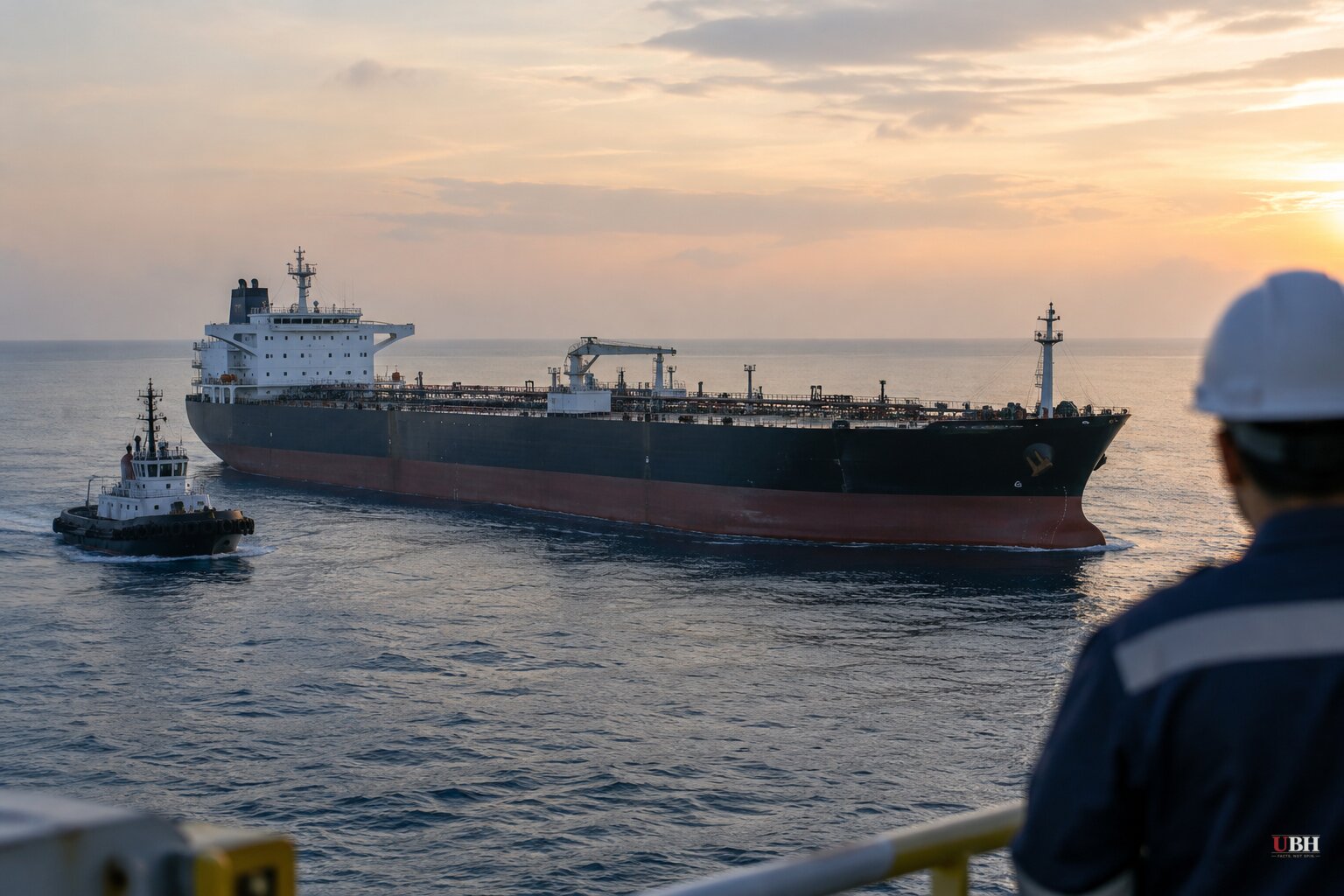
Since the U.S.-Iran conflict began in late February, the war has reshuffled where oil goes and which ships carry it. The latest result is a freight market that is pricing American crude out of Asia.
The cost of chartering a supertanker from the U.S. Gulf Coast to China touched $79.6 million earlier in October, according to Baltic Exchange figures. In the five years before the war, that route averaged less than $8 million. By Thursday, Oct. 22, the rate had eased to almost $60 million. That is still an extraordinary number.
For a 30-day voyage on the largest class of crude carrier, the charter alone now equals about half the cost of building a new ship. The figure does not include the oil in the tanks, which is trading around $100 a barrel.
Asian refiners pull back
Anonymous traders say Asian refinery orders of U.S. crude for November delivery have fallen roughly 50% from September, to between 24 million and 26 million barrels. Vessel-tracking data from Kpler and Vortexa indicate that if orders stay at that level through the end of the month, it would be a seven-year low for U.S. crude arriving in Asia.
Randy Hawkins, head of international crude supply and trading at Valero Energy, put the per-barrel math on the company's earnings call this week. "The main story right now in the market is freight rates," he said. Moving a supertanker of crude from the Gulf Coast to Asia now costs about $30 to $35 a barrel, compared with roughly $5 in 2025.
Hawkins said the surge is "causing severe dislocations in our global crude pricing" as refiners look for barrels closer to home and sellers discount cargoes to absorb the freight.
The International Energy Agency has separately put Gulf oil shipping costs above $37 a barrel, about five times pre-war levels.
Prices on the U.S. side are sliding
Export-bound Permian crude was trading at 25 cents above the benchmark futures contract at the Magellan East Houston hub as of Wednesday, according to Link Data Services. Six weeks earlier the premium was more than $3.
The Mars medium sour grade, a deepwater Gulf of Mexico crude similar to Middle Eastern barrels, saw its premium to futures fall to $6 from $17.50.
On the other side of the trade, nearby supply is getting more expensive. Dated Brent hit a record $20-a-barrel premium to Brent last week, and some West African grades have slumped to discounts as deep as minus $20 a barrel to offset shipping costs, according to the same Link Data Services estimates.
Why ships are scarce
A large part of the squeeze is a shortage of very large crude carriers. Producers moving oil out of the Gulf have leaned on ship-to-ship transfers in the Gulf of Oman. Kpler counts about 80 supertankers in that shuttle fleet, with round-trip times averaging 23 days, against an optimal 9 to 10 days for a Basrah-to-Sohar run.
Record rates on the Persian Gulf and Gulf of Oman runs are drawing tankers to the risky but lucrative trade. That leaves fewer vessels for long hauls like Houston to Asia.
Oil is moving, just not cheaply
The volume picture is less dire than the freight picture. Kpler data show total oil flows reached 24.5 million barrels per day in the week ending Oct. 18, above the 24.4 million average recorded on Feb. 22, the week before the conflict began. That total includes alternative routes such as the Red Sea and excludes Iranian exports, which have dropped to near zero under the U.S. blockade.
Vortexa's estimate is lower, at 18 million barrels a day, though still only slightly below the pre-war average.
Ship traffic through Hormuz itself is a different story. Kpler said about 20 ships were known to complete the transit over the past ten days, against more than 100 a day in peacetime. U.S. Central Command said about 400 merchant ships passed through the strait over the preceding week. Many vessels run with transponders off to avoid being targeted, so the true count is hard to pin down. Iran's Islamic Revolutionary Guard Corps insists the strait is "closed"; CENTCOM says it is open.
CENTCOM said last Saturday that U.S. forces have redirected 138 commercial vessels to enforce the Iran blockade.
Regional attacks continue
The security picture around Gulf energy infrastructure has not calmed. The Saudi-led coalition said its air defenses destroyed an incoming drone aimed at the Eastern Province on Thursday local time. Yemen's Houthis vowed Wednesday to keep attacking airports and oil facilities in Saudi Arabia. Sources told Reuters that a missile strike damaged a building at Saudi Aramco's headquarters in Dhahran. Brent rose 37 cents, or 0.35%, to $106.06 a barrel on Wednesday, according to Reuters.
Will November recover?
The end of the November trading cycle is not a hard deadline. One market participant, speaking anonymously, said Asia-bound U.S. cargoes for November could recover to as much as 40 million barrels in post-cycle trades.
Vortexa is skeptical. "We don't currently see evidence of a near-term surge that would push those volumes significantly higher," said Rohit Rathod, a senior analyst at the firm.
The test comes when the cycle closes at the end of October. If supertanker rates stay near $60 million, Rathod's read points to the lowest U.S. crude volumes into Asia in seven years.
Sources used for this briefing
7 links from 7 independent newsrooms (syndicated copies of the same report count once)
These are the sources it draws on, linked so you can verify.


