
Unbiased headlines. Facts, not spin.
Unbiased Headlines is an independently owned news organization. We bring you the facts, not opinions, written fresh from 110+ named sources. Sources linked so you can verify it yourself.
 energy
Notable (5/10)
Event date: October 22, 2026 ·
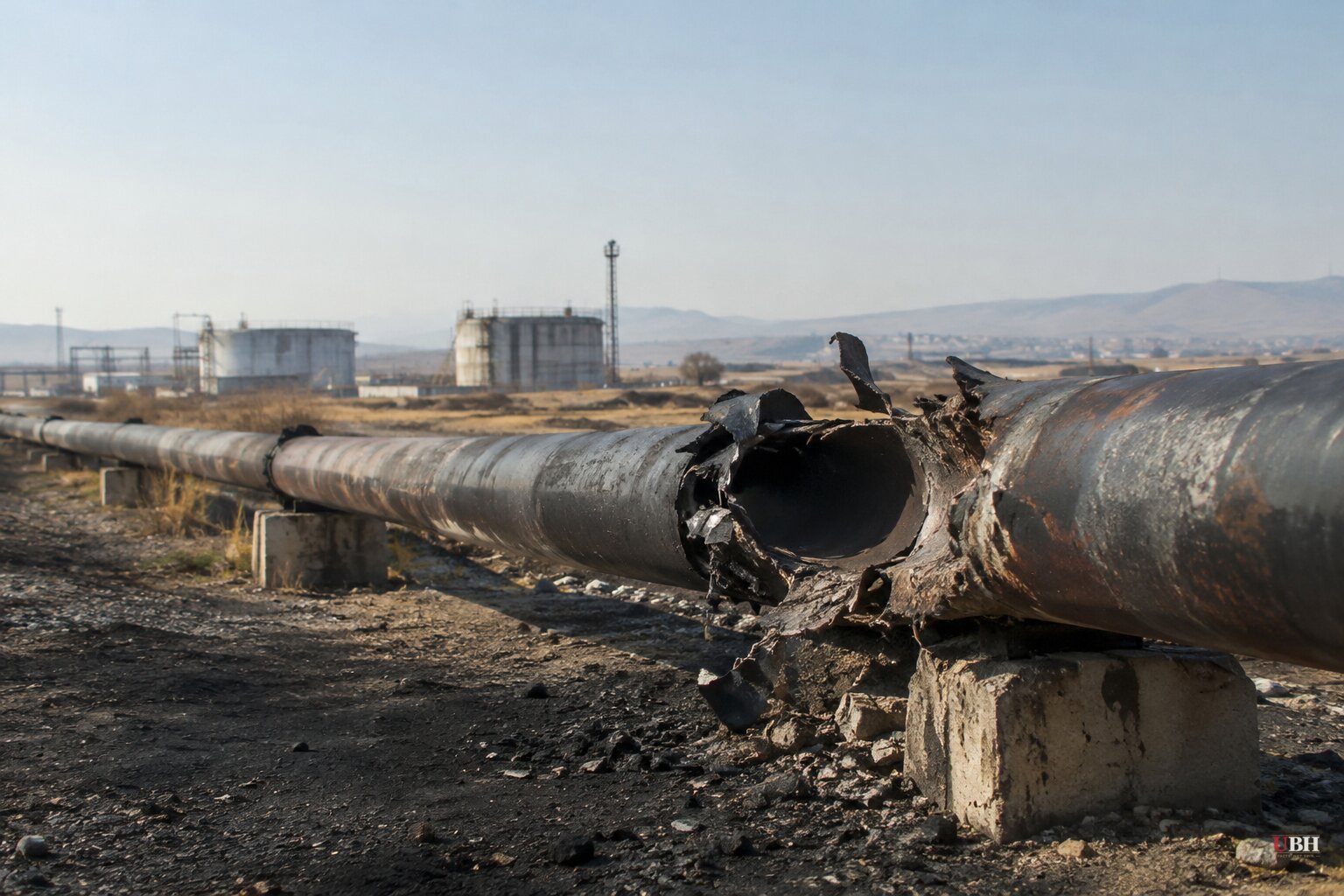
Syria Replaces State Oil Company CEO as Pipeline Attacks Continue
Since President Ahmed al-Sharaa formed a transitional government on March 29, 2025, Damascus has pitched its energy sector as the engine of recovery. The past week showed how much work that involves.
New man at the top of the state oil company
On Oct. 18, al-Sharaa issued a decree replacing Youssef Qablawi with Maher al-Hassan as CEO of the Syrian Petroleum Company (SPC). Qablawi was the first chief of the state-owned firm since it was reconstituted last year and led Syria's talks with international oil companies and investors, according to MEES.
Al-Hassan holds a petrochemical engineering degree from Homs University. He worked briefly between 2011 and 2013 at the Hayan block, which was operated by Croatia's INA until EU sanctions forced the company out in 2012. He later served as minister of domestic trade and consumer protection in the post-Assad transitional government. Most recently he was deputy to the minister of economy and industry.
That is a résumé heavy on government and light on running a producing oil company. The decree itself is the only public explanation so far.
Four attacks in about three months
The handover came days after another strike on the network. On Thursday, Oct. 15, an explosion hit the Jbessa gas export pipeline in the Al-Arbeidi area of southern Hasakah province, about 60 km from Al-Shaddadi, and started a fire. The SPC called it a sabotage attack. Crews isolated the section and closed valves on both sides.
No group has claimed responsibility, and neither the company nor state media named a suspect.
It was the latest in a string:
- August: an explosion on the gas export pipeline from the Jbessa plant disrupted supplies to several power-generating turbines. The company said preliminary investigations pointed to deliberate sabotage.
- Sept. 28: a blast on the Jbessa line near Al-Shoula in Deir Ezzor halted gas to power stations. Operations resumed after a damaged section was replaced.
- Oct. 7: an oil pipeline near Tal Hamis in Hasakah was damaged. The company said the people responsible were arrested and referred to the judiciary.
On Oct. 15, a separate pipeline carrying petroleum products from Baniyas to Homs was also punctured in the Hadida area, west of Homs. The leak forced authorities to close the Homs–Tartus highway in both directions. State media said the leak was believed to be tied to an attempted fuel theft. The cause has not been confirmed.
Oday al-Satouf, head of the SPC's media office, said gas would keep reaching power stations through alternative arrangements and that domestic gas supplies were unaffected.
How far output has to climb
Before the conflict began in 2011, Syria produced an average of 380,000 barrels per day of crude and 900 million cubic feet of gas daily. Wood Mackenzie figures put oil output down 80% and gas down by half from those levels.
The government has regained key assets, including the Omar oil field and the Tabiyeh gas complex. A 2026 agreement with the Kurdish-led Syrian Democratic Forces could fold SDF forces into state structures, which would further unify control of the northeast, where most of the oil sits. Wood Mackenzie estimates reserves at 1.3 billion barrels of oil equivalent, with large unexplored onshore areas and an untouched offshore sector.
US and EU sanctions have been lifted since Assad fell, and SWIFT access has been restored. In May, Syria announced an offshore site for its first deep-water exploration project, to be developed by Chevron, Qatar's UCC Holding and the SPC.
Analysts at OilPrice.com argue that, with that foreign money and Syria's geography, the country could eventually become a regional energy hub. The attacks on pipelines carrying the gas that powers the grid show how far that is from reality today.
Imported gas fills part of the gap
Syria is leaning on imports. According to Azerbaijan's State Statistical Committee, Syria bought 864.410 million cubic meters of Azerbaijani gas worth $294.583 million from January through August 2026. That works out to roughly $341 per thousand cubic meters, by our arithmetic.
The gas flows through Türkiye's Kilis region to power plants in Aleppo and Homs. Deliveries began Aug. 2, 2025, under a memorandum signed July 12, 2025, between SOCAR and the Syrian government. The first phase calls for 1.2 billion cubic meters a year, enough for 1,200 to 1,300 megawatts of generation.
Eight months of purchases annualize to about 1.3 billion cubic meters, a pace above that first-phase target. Türkiye's energy minister, Alparslan Bayraktar, said the infrastructure could initially carry up to 2 billion cubic meters a year.
What to watch
Al-Hassan takes over with the Chevron-UCC offshore project still at the early stage and a domestic network that has been hit four times since August. Authorities announced arrests only for the Oct. 7 Tal Hamis attack. No one has been named for the Oct. 15 blast, and the cause of the Baniyas-Homs puncture remains unconfirmed.
Sources used for this briefing
7 links from 7 independent newsrooms (syndicated copies of the same report count once)
These are the sources it draws on, linked so you can verify.


