
Unbiased headlines. Facts, not spin.
Unbiased Headlines is an independently owned news organization. We bring you the facts, not opinions, written fresh from 110+ named sources. Sources linked so you can verify it yourself.
 energy
Notable (6/10)
Event date: October 19, 2026 ·
Microsoft Pulls Out of Nscale's Loughton Data Centre as Grid Delays Mount
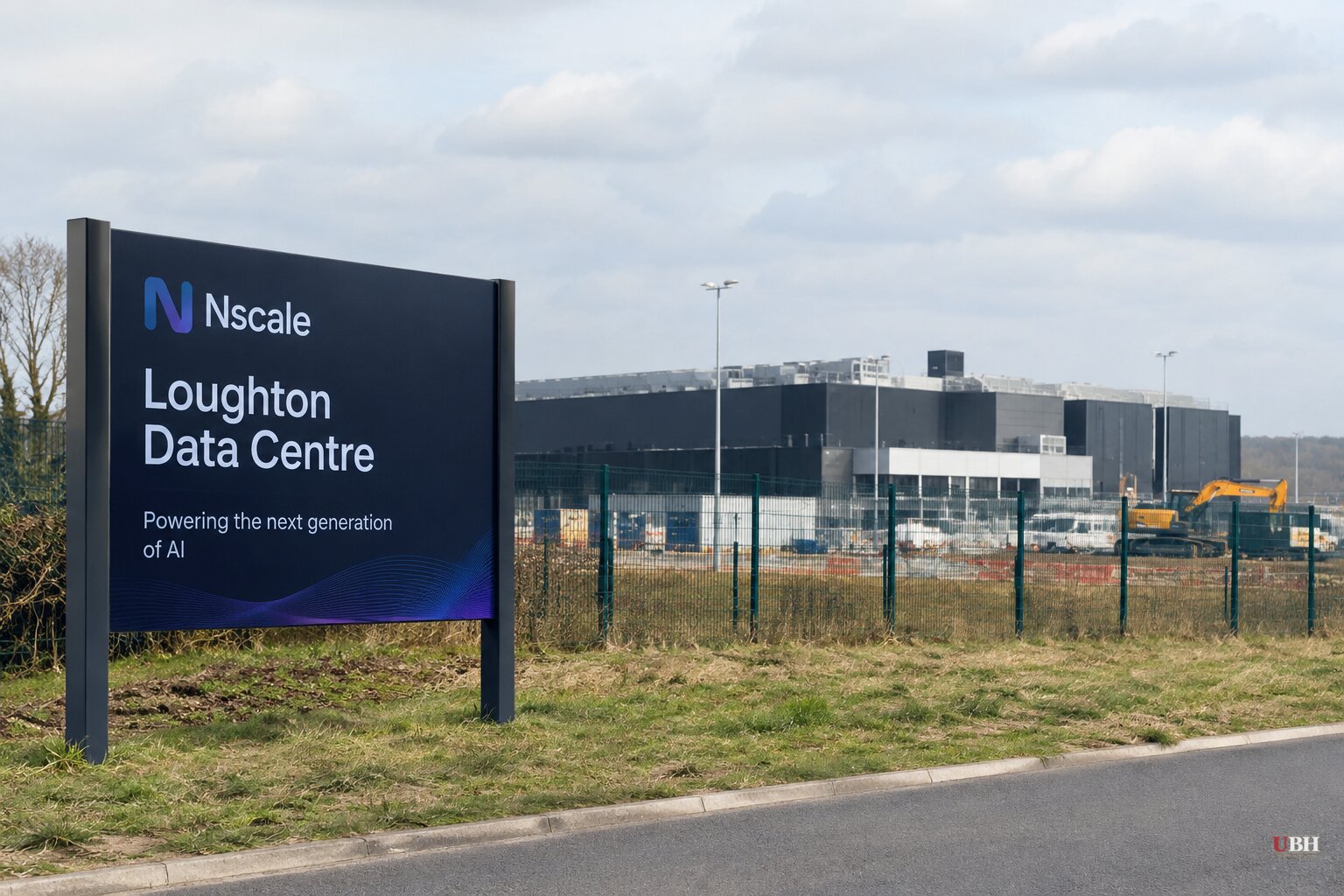
Microsoft has pulled out of an AI data centre deal at Loughton, Essex, and the site's grid connection problem is now a documented, expensive casualty.
Microsoft confirmed it has withdrawn from the lease with British startup Nscale, which is backed by Nvidia. A Microsoft spokesperson said the decision "relates to a single site" and that the company remains "committed to our partnership with Nscale."
Microsoft has not publicly given a reason. British media reported that grid officials told Nscale the site would not have power until the 2030s. Nscale itself pointed at the grid, calling it an "unfortunate London-wide grid issue" that has "no impact on our other contracts."
What was promised
The deal was announced during President Donald Trump's state visit to the UK just over a year ago. Microsoft pledged $30 billion to Britain, with $2 billion allocated to the Loughton site. The company's own blog post promised the country's largest supercomputer, with more than 23,000 Nvidia GPUs.
Starmer cited Loughton as the "largest UK sovereign AI data centre." Nvidia's Jensen Huang said the UK would be an "AI superpower."
The connection had been expected next year. The site is now a patch of broken concrete.
OpenAI also withdrew earlier this year from a planned UK version of Stargate with Nscale and Nvidia. British media reported that OpenAI blamed high energy costs and regulatory uncertainty.
The company's side
Nscale says it is "exploring alternative power sources for the site, in addition to other expansion sites in the UK." It says its relationship with Microsoft "remains strong and long-term."
A person familiar with the matter said Loughton was only a small portion of Microsoft's agreements with Nscale. Nscale's other projects are in locations outside the UK, including Norway, Portugal and the US.
The timing is awkward. Nscale is preparing an IPO on the New York Stock Exchange, reportedly targeting a valuation of up to $35 billion. Its filing says "a substantial portion of our committed revenue is driven by a limited number of customers with large contracts," naming Microsoft and Anthropic.
UK Power Networks, which does not disclose individual connections, said many data centres "can connect to our distribution network" but are "awaiting works on the national transmission network, which we do not own."
The bottleneck is costing real money
The problem is moving power to where it is needed, not producing it. On Oct. 14, the grid operator reportedly spent £47.9 million paying wind farms to switch off in oversupplied areas, while firing up gas plants elsewhere. According to consultancy LCP Delta, 9 GW of wind and hydro capacity, enough for roughly 8 million households, was paid not to produce that day.
Shivam Malhotra, LCP Delta's head of power trading, said: "The system overall wasn't tight in terms of power supplies… It's the age-old story of a lack of infrastructure to transport power to where it's needed."
Balancing cost £505 million in September, the highest monthly figure on record. The cost is projected to reach up to £3.2 billion over the next year while Great Britain works through £150 billion of transmission upgrades. Those costs are levied on household energy bills.
The main chokepoint is the B6 boundary between Scotland and England, where only two cables carry power south. Managing it has averaged roughly £800,000 a day so far in 2026-27, about double the 2025-26 average. Scotland uses about 8% of the UK's electricity but produces about 19% of its generation.
In early October, the National Energy System Operator, known as Neso, had to request "last resort" emergency help from France, which sent last-minute supplies.
Neso is also under scrutiny over its handling of the summer heatwave. An independent investigation by the law firm Eversheds Sutherland, published on a Monday in October, found "cultural, governance and control issues" at the operator, though it found "no evidence" of inappropriate influence over operational decisions. A separate Ofgem investigation is ongoing.
Why connections take so long
The delays are not simply a queue problem. Mott MacDonald, which hosted a roundtable with Energy UK, says delays stem from cost allocation, capacity management and regulatory complexity, not just queue prioritisation or speculative applications. Most reinforcement costs are spread across all consumers through network charges rather than paid by the connecting customer. That slows upgrades, because the regulatory process has to manage the bill impact.
Mott MacDonald's project director Rosa Rotko and the roundtable participants point to alternatives, including letting large connecting customers contribute to upgrades. They say this could speed connections without adding to consumer bills, though any approach needs "careful balancing of fairness."
The pace gap is stark. Elisabeth Cremona, energy infrastructure lead at the think tank Ember, told Computer Weekly that grid build-outs typically take five to 15 years, while a data centre can be ready in 18 months. "You're essentially looking at putting 500,000 houses on the grid in a single location really, really fast, and that's just never happened before," she said.
National Grid is building a £1 billion North West London Upgrade, announced in August, to connect five data centres across Bedfordshire, Hertfordshire and London with 1 GW of demand. Ofgem's RIIO-3 price control allows up to £10.7 billion for electricity transmission between 2026 and 2031, potentially rising to £90 billion as projects mature.
What is still open
Microsoft has not said whether the grid delay drove its exit, and no official has publicly confirmed the 2030s connection date. Nscale says it is looking at alternative power for Loughton, but it has not named a source or a timeline.
The larger question is cost. Who pays for the transmission upgrades, developers or households, is still unsettled, and the September balancing figure is already on the bills.
Sources used for this briefing
7 links from 6 independent newsrooms (syndicated copies of the same report count once)
These are the sources it draws on, linked so you can verify.


