
Unbiased headlines. Facts, not spin.
Unbiased Headlines is an independently owned news organization. We bring you the facts, not opinions, written fresh from 110+ named sources. Sources linked so you can verify it yourself.
 energy
Notable (5/10)
Event date: October 9, 2026 ·
COP31 Host Kurum Says Climate Spending Should Exceed NATO's 5% Defense Target; EU Draft Sees 'No Scope' for New Finance
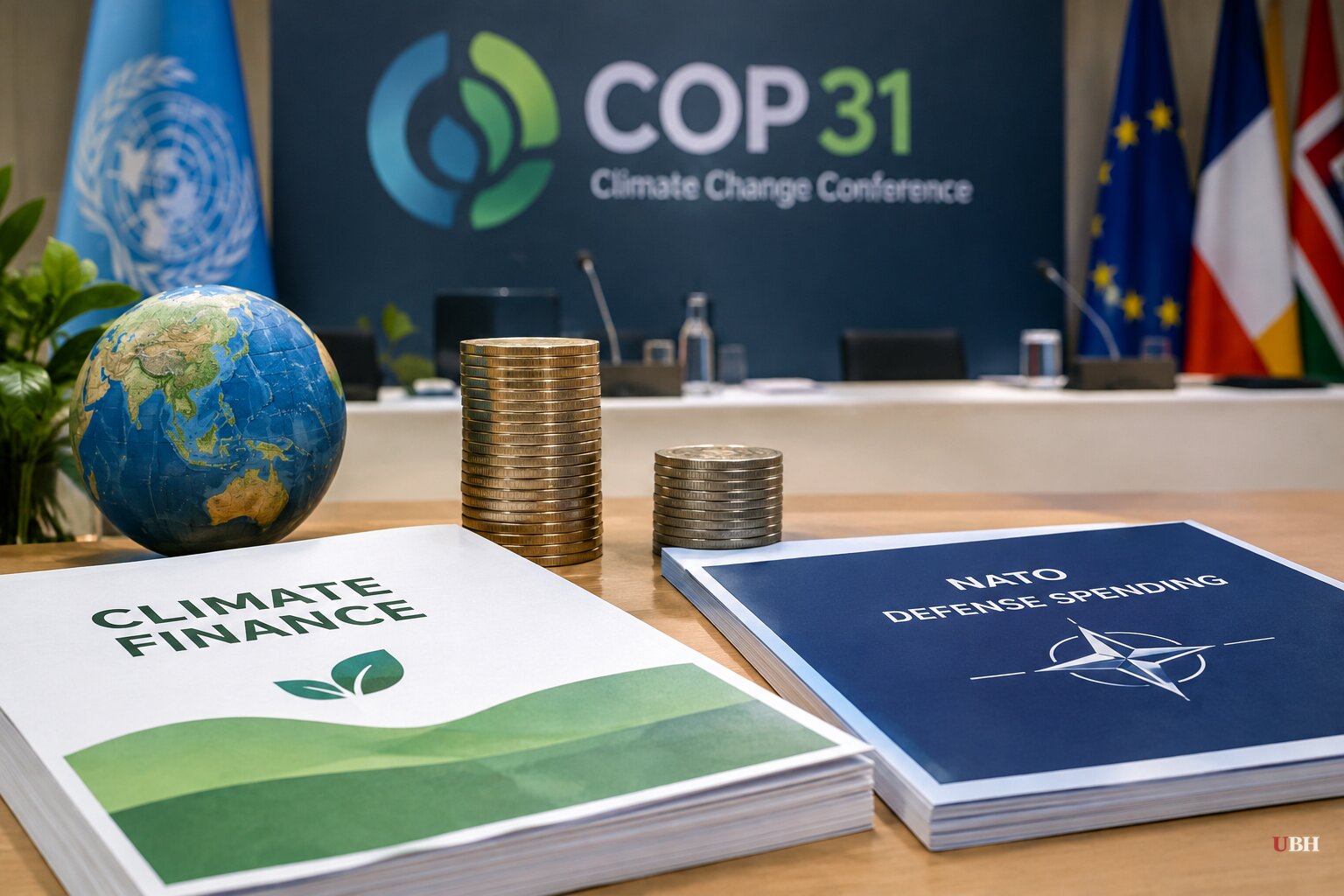
Since the pre-COP talks in Nadi, Fiji, wrapped up on Oct. 8, the host of the UN's COP31 summit has not walked back his demand that rich countries put more into climate than into defense. The main event opens Monday, Nov. 9 in Antalya, Turkey, two weeks from tomorrow.
The demand comes from Murat Kurum, Turkey's climate and environment minister and COP31 president-designate. Asked in Fiji whether wealthy countries should spend as much on climate as on defense, he answered: "Much more."
"The climate issue is the security issue itself," Kurum told reporters.
The pitch
Kurum framed it as a cost argument. "If you don't spend one unit of money prior to the disasters, then you are left in a position where you have to spend 10 units of money after the disaster. It's cheaper pre-disaster."
He also put it as a question of national survival. "What does it mean to spend 5% for defense if you don't have a country to live on? What does it mean to defend it?"
The 5% figure is NATO's. Alliance members committed last year to spend at least 3.5% of national economic output on core defense by 2035, plus up to 1.5% more on related areas.
Kurum has not put a dollar figure or a percentage of GDP on "much more."
The money on the table
The European Union is not signaling it will go along. A draft EU document says "there is no scope" for new climate finance commitments at COP31. The EU's position is that existing promises come first.
UN climate chief Simon Stiell said in Fiji that nations "must deliver on existing finance commitments" and keep working toward $1.3 trillion a year for developing countries by 2035.
The record on existing commitments is thin. Germany, Europe's largest economy, cut its climate spending last year and missed its financing pledge. Several governments are trimming overall aid budgets. The United States has withdrawn from climate-focused efforts.
The Fiji meeting did produce modest new pledges for the Pacific Resilience Facility. The U.K. pledged $13 million and Fiji $10 million. The Netherlands offered $1.12 million, and Denmark and Ireland each doubled earlier commitments. Australia, which earlier pledged AU$100 million (about $70 million) to the fund, added roughly AU$10 million in separate proposals for Pacific renewable energy and related projects.
Australia's climate minister, Chris Bowen, said only 0.2% of global climate finance goes to adaptation in small island developing states, the countries most exposed to the damage. "That has got to change," he said.
Turnout and the fossil fuel question
The Nadi meeting drew only 13 national leaders besides Australian Prime Minister Anthony Albanese, most of them from the Pacific. About 30 ministers attended, including from India and several European countries, along with representatives of China and Saudi Arabia and roughly 4,000 other participants.
Kurum also hedged on whether COP31 should repeat the earlier agreement to "transition away from fossil fuels." He told the Guardian the world is "already in a transition" and suggested fossil fuel use could be addressed indirectly through other steps.
His preferred headline target is electrification. Kurum and Bowen both said COP31 would push for electricity to supply 35% of the energy used to power homes, businesses, factories and vehicles by 2035. The figure is around 21% today.
Climate campaigners have criticized both Turkey and Australia for backing new coal and gas development while co-hosting the talks. Turkey announced a major renewable energy buildout in September, and it also intends to expand its own oil and gas production.
The two countries share an unusual structure. Turkey holds the COP31 presidency and hosts in Antalya, while Australia holds a newly created "president of negotiations" role. Australia pushed for the pre-COP to be held in the Pacific.
The Pacific ask
Pacific leaders in Fiji repeated three demands: act to "keep 1.5C alive," direct climate finance to the poorest and most vulnerable communities, and prioritize ocean health.
A delegation visited Tuvalu, a country of about 10,000 people that sits roughly 2 meters above sea level on average. Visitors saw a 20-hectare land reclamation project. Melelusi Sokotia, 13, told them her friends' dreams of becoming "teachers, doctors, builders" were being crowded out by the question of whether they could "grow safely here in Tuvalu."
Fiji's climate minister, Lynda Tabuya, closed the talks with a warning: "This pre-Cop draws to a close tonight. Our responsibility does not."
What comes next
About 190 governments are due in Antalya from Nov. 9 to 20. The open questions are concrete. Will any wealthy government answer Kurum's call with a number, or will the EU's "no scope" line hold? And will the final text carry any language on moving away from fossil fuels, given that the host has declined to commit to it?
Sources used for this briefing
6 links from 5 independent newsrooms (syndicated copies of the same report count once)
These are the sources it draws on, linked so you can verify.


