
Unbiased headlines. Facts, not spin.
Unbiased Headlines is an independently owned news organization. We bring you the facts, not opinions, written fresh from 110+ named sources. Sources linked so you can verify it yourself.
 economy
Major Story (7/10)
Event date: November 1, 2026 ·
South Korea's Trade Minister Says $1 Trillion Export Year Will Be Reached in November, With $930 Billion Already Shipped
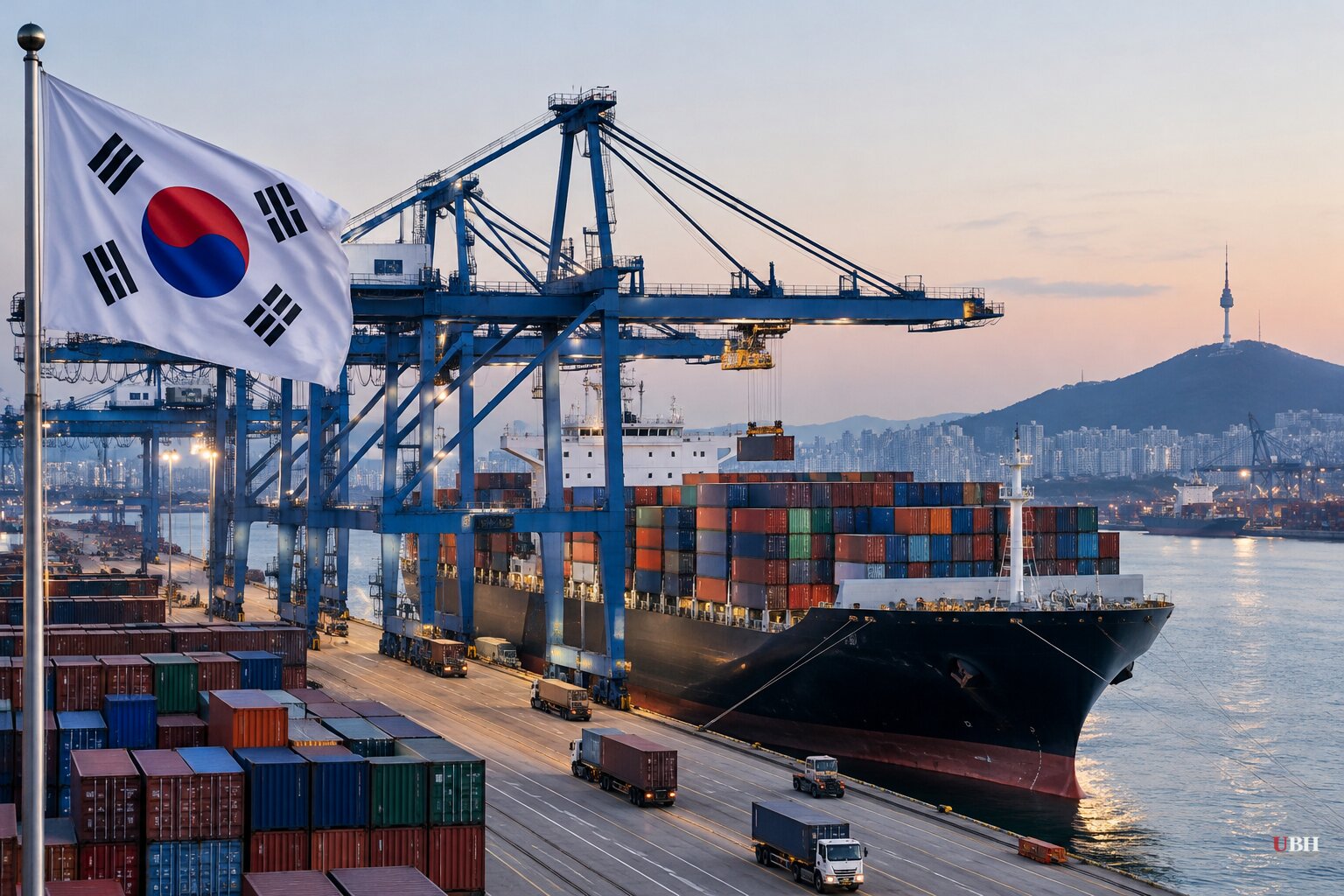
Since the trade ministry reported October exports of $115.28 billion on Sunday, Nov. 1, the government has attached a date to the headline number: South Korea will cross $1 trillion in annual exports this month.
"With exports continuing solid growth of more than US$110 billion in October, it is becoming certain that annual exports of US$1 trillion will be reached within November," said Kim Jung-kwan, the minister of trade, industry and resources.
January through October exports totaled $930 billion. That leaves roughly $70 billion to go, and the last two months have run above $110 billion each.
A club of three, soon four
Only the United States, China and Germany have ever hit $1 trillion in a calendar year. South Korea would be the fourth.
The October gain of 93.7% was the strongest since January 1974, according to the figures cited by Reuters. It also beat the 93.2% median forecast in a Reuters poll of economists.
Part of the jump is a calendar quirk. Chuseok fell in September this year and October last year, so October had more working days. On a working-day adjusted basis, growth was 76.1%, still enormous.
Where the money went
Shipments to the US rose 185.8% and shipments to China rose 133.6%. Exports to Southeast Asia grew 128.0% and to Europe 56.4%.
Chips were $56.44 billion of the total, up 259.4%, or 48.9% of everything South Korea sold abroad. Computer exports, mostly server storage for AI data centers, rose 496.6% to $5.85 billion. Server SSDs alone went from $820 million to $5.64 billion in a year.
It is not a clean sweep. Of the 20 major export categories the ministry tracks, 18 grew. Shipbuilding fell 43.6% to $2.64 billion and household goods fell 13.4%.
Imports rose 36.0% to $72.78 billion, the biggest annual increase since January 2022. The ministry pointed to higher crude oil prices and demand for chipmaking equipment and cars. The monthly surplus was $42.50 billion, below September's record of $49.97 billion.
Startup Fortune reports South Korea's trade surplus with the US is tracking toward more than $100 billion for the year, which would be a record.
A lopsided expansion
The export numbers sit next to a weaker domestic picture. The Bank of Korea said third-quarter GDP grew 1% from the prior quarter and 3.4% from a year earlier, beating a Bloomberg survey median of 0.8%.
Private consumption fell 0.2% in the same quarter. Exports account for about 45% of GDP, and the central bank said they rose 2.3% on the quarter, led by semiconductors, machinery and electrical equipment.
Bloomberg described the result as an increasingly uneven expansion that may complicate the path for further rate hikes.
Finance Minister Lee Hyoung-il said earlier in October he expects 2026 growth of 3.4% to 3.6%. That would be the strongest year since 2011, excluding the pandemic. In 2025 the economy grew 1%.
The AI spending question
The whole picture rests on customers continuing to buy. Samsung Electronics and SK Hynix together control roughly 80% of the global market for high-bandwidth memory, according to Al Jazeera's account of the market.
Last Friday, Oct. 30, doubts about AI spending hit Asian markets after disappointing results and guidance from Amazon.com and Intel. That revived questions about whether heavy outlays on data centers can deliver quick returns. The Kospi slid 3.5%, SK Hynix fell 7%, and a Bloomberg gauge of regional chipmakers dropped as much as 4.8%.
The trade data does not answer that question. October shipments reflect orders already placed, and the ministry attributes the surge to prices and volumes staying high as global Big Tech firms keep investing in AI capacity.
Startup Fortune reports that SK Hynix has said its DRAM and HBM output is essentially committed through 2029, and that Samsung has covered roughly 80% of its 2027 memory production with signed contracts. Neither company's own statement appears in the trade ministry's release.
What comes next
November's customs and ministry data will show whether the $1 trillion mark falls as Kim predicts. The Bank of Korea's Nov. 26 rate decision will be the first test of how policymakers weigh record exports against falling household spending.
Sources used for this briefing
7 links from 6 independent newsrooms (syndicated copies of the same report count once)
These are the sources it draws on, linked so you can verify.


