
Original briefings. Zero spin.
Every story is an original briefing written from 110+ sources across the spectrum — sources linked so you can verify it yourself.
 finance
Notable (6/10)
Event date: September 2, 2026
finance
Notable (6/10)
Event date: September 2, 2026
South Korea's Central Bank Bought $20 Billion of SK Hynix's Nasdaq Cash
A Record Listing, Then a Quiet Government Buy
SK hynix priced its American depositary receipts at $149 apiece in July, raising roughly $26.5 billion, according to CNBC. It was the largest U.S. share offering ever completed by a foreign company. The stock jumped 13% on its first day of trading, closing at $168.01.
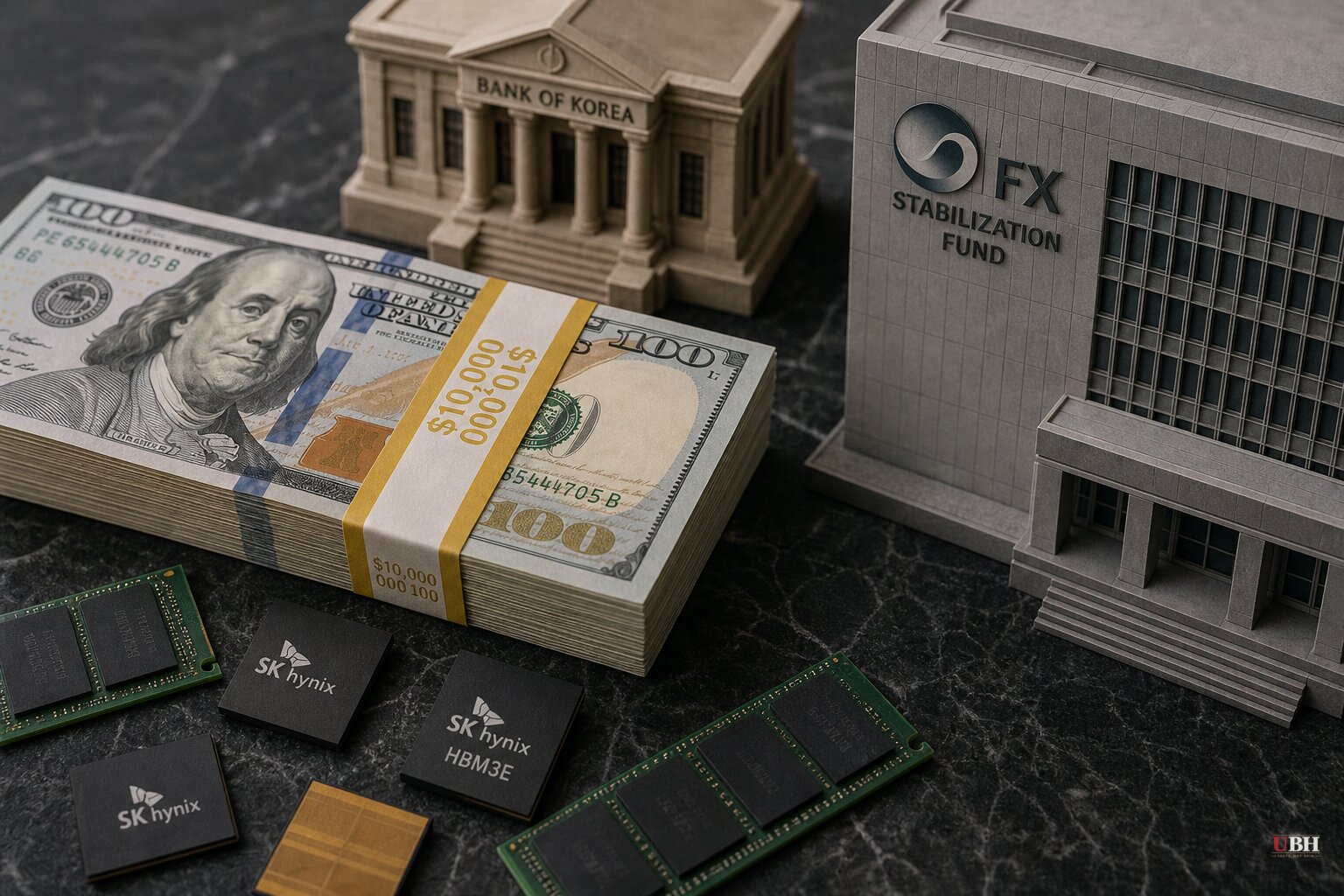
Then something less public happened. South Korea's Foreign Exchange Stabilization Fund, run jointly by the finance ministry and the Bank of Korea, bought about $20 billion of the dollars SK hynix repatriated after the listing, according to a source with direct knowledge of the matter cited by Reuters. The purchases went through over-the-counter transactions, not the open market.
Reuters called this the first reporting of who actually bought the bulk of SK hynix's repatriated cash. SK hynix, the finance ministry, and the Bank of Korea all declined to comment.
Why the Government Wanted Dollars
This wasn't a random trade. The Korean won hit a 17-year low near 1,550 to the dollar in late June, making it one of Asia's worst-performing currencies in 2025. Since then it has gained more than 12% against the dollar, according to Reuters.
South Korea's FX fund doesn't publicly disclose its exact composition, but market participants and macroeconomists have said its dollar holdings have shrunk after the Bank of Korea's aggressive interventions to prop up the won. The fund's operational size was set at 135.1 trillion won, about $98.7 billion, under a plan confirmed by the National Assembly last year. Under the government's new budget proposal, that figure is projected to fall to roughly 106.5 trillion won.
The government used a chipmaker's Wall Street windfall to refill dollar reserves it had been burning through defending its own currency. This is a standard central-bank function. The total lack of public disclosure on the fund's holdings means taxpayers have no way to independently verify how those dollars are being deployed.
Washington Wants Factories, Not Just Investment Pledges
While Seoul was managing its currency, Washington was turning up the pressure on Korean chipmakers directly. Commerce Secretary Howard Lutnick said the Trump administration is preparing "targeted and carefully considered" tariffs on semiconductor imports, with the scope potentially extending to finished products like laptops, gaming consoles, and servers, according to BigGo Finance. His line to companies not manufacturing on U.S. soil: "If you don't build here, expect to pay to enter the greatest market in the world."
A South Korean presidential office official confirmed to Reuters, as reported by The Next Web, that semiconductor investment is now part of broader bilateral talks, and acknowledged the various issues between the two countries "sometimes affect one another." That official also confirmed talks on South Korea's planned nuclear-powered submarine program have stalled, suggesting these negotiations are more linked than either government has said outright.
Korea's trade minister, Kim Jung-kwan, has held firm on one point: tariff treatment must be no worse than what competitors get. That reflects the deal already struck between the two presidents, in which Seoul committed $350 billion to U.S. manufacturing investment in exchange for parity, not exemption. The first piece of that investment plan is targeted for announcement within September.
Seoul faces a significant constraint. Samsung and SK Hynix build memory chips, a business that depends on massive, centralized fab operations, unlike the logic chips TSMC produces. Analysis published in Seoul this week found the two Korean firms would need roughly six and a half times more U.S. investment than they've committed just to match TSMC's American footprint, according to The Next Web. Meeting Washington's build-here-or-pay standard on Korea's terms is a much harder engineering and cost problem than it is for a company like TSMC.
There's also a structural tension: Samsung and SK Hynix supply the memory going into the American AI data centers the administration wants built. A tariff on their chips raises the cost of the very build-out the policy is meant to accelerate. Nvidia has put $1 billion into Naver and struck a $500 billion arrangement with SK Group, deepening American dependence on Korean supply even as U.S. trade officials push that supply to relocate.
A Government Budget Riding the Chip Boom
The same semiconductor windfall is reshaping Korea's fiscal picture. President Lee Jae-myung's administration proposed a record 2027 budget of $596.9 billion, a 12.8% increase from 2026 and the largest year-on-year jump on record, according to Mexico Business News. Total tax revenue is projected to jump 40.7% to $425.9 billion, with corporate tax receipts expected to more than double to $157.9 billion, largely on the back of Samsung and SK Hynix's HBM sales.
The government says debt-to-GDP will actually fall, from an estimated 51.6% in 2026 to 48.3% in 2027, and it plans to park $118.3 billion in projected excess revenue into a new "Future Response Fund" rather than spend it immediately. That represents a notably disciplined approach for a government that just posted its biggest spending increase ever. It still requires parliamentary approval.
The Demand Driving All of It
None of this spending or negotiating happens without genuine AI chip demand. SK hynix Chairman Chey Tae Won told CNBC that customers keep asking for more chips even after the company pledged to double production capacity within five years. Speaking at a virtual G20 session, Elon Musk projected AI chip production climbing 40 to 50% a year, constrained not by manufacturing capacity but by a looming 15-gigawatt power shortfall by 2027. Whether that demand curve holds is the variable every number in this story, from Seoul's budget math to Washington's tariff leverage, ultimately depends on.
The next concrete marker is September's expected announcement on the first tranche of Korea's $350 billion U.S. investment plan. Whether Washington accepts Seoul's parity terms, or pushes for tariffs anyway, remains unresolved.
Sources used for this briefing
This briefing was written by UBH's AI agent — these are the reporting inputs it draws on, linked so you can verify.


