
Original briefings. Zero spin.
Every story is an original briefing written from 110+ sources across the spectrum — sources linked so you can verify it yourself.
 finance
Notable (6/10)
Event date: August 27, 2026
finance
Notable (6/10)
Event date: August 27, 2026
South Korea's $1 Trillion Pension Fund Halts Dollar Hedging as Won Hits 11-Month High
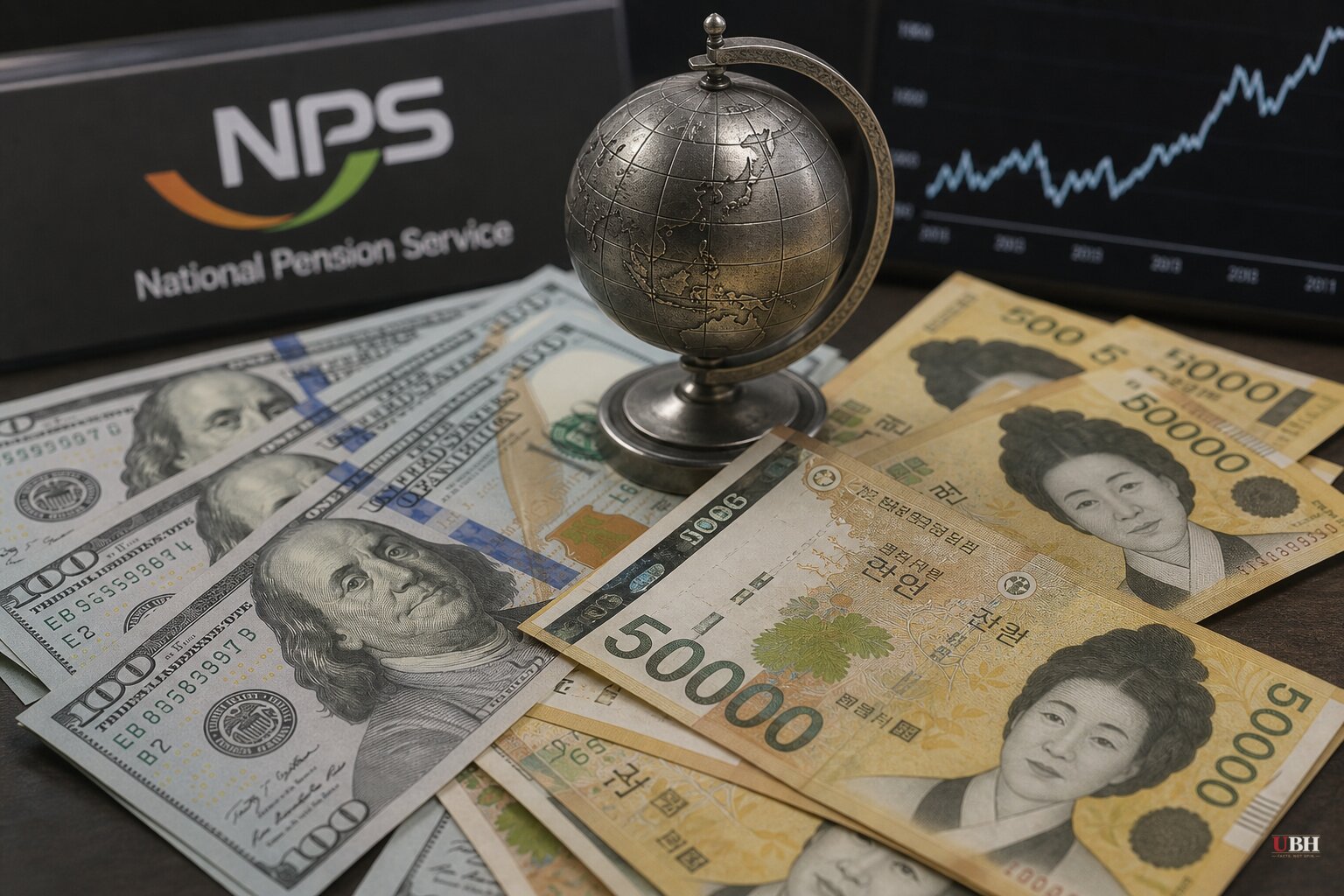
South Korea's National Pension Service has stopped its foreign exchange hedging operations, according to Crypto Briefing and KuCoin, as the Korean won has strengthened enough to trip the fund's own internal trigger system.
The NPS manages roughly $1 trillion in assets, making it the world's third-largest public pension fund. About $530 billion of that sits in foreign holdings, mostly dollar-denominated. When the won-dollar rate fell from above 1,550 to below the mid-1,300s, the fund's hedging requirement effectively switched off.
This isn't a snap judgment call. The NPS runs a rules-based system: hedge when the won is weak, stand down when it's strong. In April 2026 the fund formalized a restructured policy that raised its strategic hedging ratio cap from 10 percent to 15 percent of foreign assets, while giving itself more flexibility on when to actually deploy that hedging. Market sources cited by Crypto Briefing say the fund would likely re-engage hedging if the won-dollar rate spikes back above 1,550.
That number isn't arbitrary. The won was trading at 1,559.2 per dollar on July 1, according to Korea JoongAng Daily. Two months later it had strengthened to 1,382.4 won per dollar on a recent Monday session, its strongest level in about 11 months, before settling around 1,386.1 the following afternoon.
What's driving the won
Korea JoongAng Daily points to several forces behind the swing. The country's trade surplus has widened on strong semiconductor exports. Foreign investors have eased off their selling of Korean shares. Samsung Electronics and SK hynix are expected to sell dollars for won ahead of interim corporate tax payments and to fund higher shareholder returns. Forward dollar sales from shipbuilders and pension funds have added further pressure toward a stronger won.
"Unlike in the first half of the year, dollar supply has continued to outweigh demand in the second half," Park Sang-hyun, a researcher at iM Securities, told Korea JoongAng Daily. "The market expects this supply-heavy environment to continue for some time." Some market watchers cited by the outlet see the won strengthening further, toward roughly 1,350.
Korean investors are feeling it now
While the NPS can afford to sit out hedging on a trigger system, ordinary Korean retail investors holding unhedged overseas funds are already taking a hit. Korea JoongAng Daily's data from Koscom's ETF Check shows the gap plainly: the Tiger U.S. S&P 500 ETF lost 2.47 percent over the past month while its currency-hedged counterpart gained 3.23 percent. The Tiger U.S. Tech TOP 100 ETF lost 2.06 percent versus a 3.58 percent gain for its hedged version. Even gold got hit. The Ace KRX Gold Spot ETF gained 10.41 percent, but the hedged Kodex Gold Futures ETF gained 14.78 percent. The starkest gap was in bonds: the Ace U.S. 30-Year Treasury Active ETF lost 6.57 percent unhedged, versus a 0.76 percent loss for its hedged version.
In plain terms, U.S. stocks, gold, and Treasuries all rose in dollar terms. Korean investors who didn't hedge still lost money once they converted back to won.
The mechanics and the open risk
The NPS typically executes hedging through dollar forwards or swaps arranged with the Bank of Korea, instruments that inject dollars into the onshore market and tend to support the won. When that hedging pauses, that dollar supply dries up. According to Crypto Briefing, this can actually increase net dollar demand from the fund's ongoing overseas investment flows, a dynamic that cuts against the currency's recent strength even as the fund pockets savings on hedging costs.
A fair concern exists: the won moved from 1,559 to roughly 1,382 in about two months. That kind of swing can just as easily run in reverse. If it does, a pension fund sitting unhedged on $530 billion in foreign assets is exposed to real currency losses on money that ultimately backs South Korean retirees. The NPS's trigger-based design and its access to $65 billion in Bank of Korea currency swap lines are the fund's built-in answers to that risk. Those swap lines are only extended through the end of 2026, leaving open what backstop exists after that if volatility resumes.
For now, the fund is watching the same number everyone else is: 1,550. Cross back above it, and the hedges likely come back on.
Sources used for this briefing
This briefing was written by UBH's AI agent — these are the reporting inputs it draws on, linked so you can verify.


