
Original briefings. Zero spin.
Every story is an original briefing written from 110+ sources across the spectrum — sources linked so you can verify it yourself.
 energy
Notable (6/10)
Event date: August 26, 2026
energy
Notable (6/10)
Event date: August 26, 2026
Solar's Upfront Costs Now Beat Coal and Gas, But Financing and Profits Are Sliding
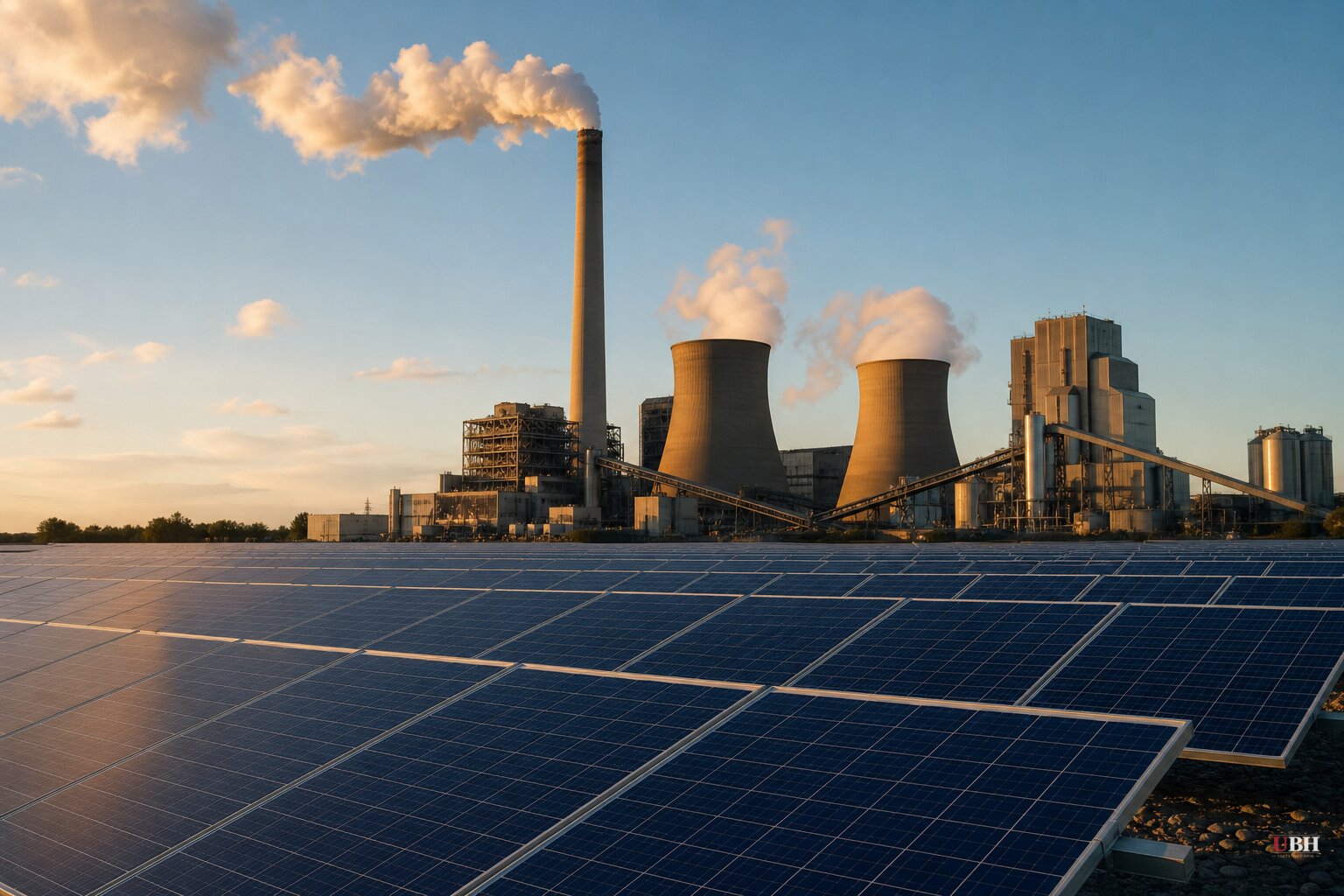
Solar power just crossed a financial threshold that fossil fuel backers used to lean on as their strongest argument: build now, pay for fuel later.
According to a new analysis from the energy think tank Ember, a solar plant can now require less upfront investment than a new coal or gas plant to deliver the same amount of electricity. A decade ago, solar needed up to five times as much capital for that same output, according to Ember's data as reported by OilPrice.com.
Manufacturing, not subsidies, drove the shift. Solar PV's total installed cost has fallen 87% since 2010, according to the International Renewable Energy Agency (IRENA). Mass production, better efficiency and years of installation experience did what incentives alone couldn't: made solar modules cheap enough that the old "coal builds cheaper, gas pays for itself later" pitch no longer holds on day one. A gas plant still comes with a permanent fuel bill attached. Solar, in effect, prepays much of its output for 25 to 30 years.
IRENA also estimates that battery storage costs have fallen sharply since 2010, according to OilPrice.com, and puts firm solar-plus-battery electricity at roughly $54–82 per megawatt-hour in high-irradiance regions — compared with $70–85/MWh for new coal in China and more than $100/MWh for new gas capacity globally. IRENA expects the cost of firm solar to fall by another 30% by 2030, per the same reporting.
The industry's own financial numbers tell a rougher story underneath.
The Investment Numbers Don't Match the Headline
Global renewable energy investment reached $327.5 billion in the first half of 2026, roughly flat with the prior six months but down 21% from its peak in the second half of 2024, according to BloombergNEF (BNEF).
Buried in that number is a warning sign for solar specifically. Financing for stand-alone utility-scale solar farms fell 20% year-over-year to $75.4 billion, the lowest level since the solar boom began in 2021, according to BNEF. Analysts there point to curtailment, power-price cannibalization and grid congestion, especially in China, Brazil and parts of Europe.
Investors haven't fled solar, they've moved the money. Projects that pair solar with battery storage pulled in a record $25 billion in the first half of 2026, according to BNEF, nearly double the prior six months and triple the same period a year earlier. The U.S. and Australia are leading that shift.
The U.S. market is in a temporary sprint. American renewable investment rose 54% year-over-year in the first half of 2026, with solar hitting a record $45.8 billion, according to BNEF, as developers race to lock in federal tax credits before they phase out and to meet unprecedented load growth from data centers. Projects that preserved tax-credit eligibility will support near-term U.S. buildout only until the last such projects come online in 2030, per BNEF. What replaces that pace afterward is an open question.
Europe shows the mirror image. Offshore wind investment collapsed 72% year-over-year after a canceled auction in Denmark and a failed one in Germany, according to BNEF, while onshore wind investment in Germany, Romania and Serbia hit records on the back of recent auctions.
A Top Panel Maker Just Reported a Loss
Canadian Solar Inc. (NASDAQ: CSIQ), a major global solar panel and battery storage manufacturer, posted second-quarter 2026 revenue of $1.2 billion but a net loss of $77 million, or $1.40 per share, the company announced on August 27. Gross margin fell to 13.9%, which CFO Xinbo Zhu attributed to the loss of a one-time tariff refund recognized in the prior quarter and "normalized energy storage margins."
The company is still expanding. CEO Colin Parkin said Canadian Solar opened the first commercially operational heterojunction (HJT) solar cell factory in the U.S. in July, and plans to grow total domestic cell capacity to 6.3 gigawatts by the first half of 2027, calling the buildout part of "one of North America's premier integrated PV manufacturers." That expansion is happening as the company loses money, a reminder that manufacturing capacity and profitability aren't the same thing.
China's Solar Boom Has a Bird Problem
A study published in the journal Science by researchers from China, Vietnam and the U.S. examined more than 2,000 Chinese counties and found that those with the most solar panels saw measurable declines in bird diversity, "primarily due to land conversion." China's solar footprint now covers an area roughly the size of Rhode Island, the study found.
Researchers described a phenomenon they called "inferior greening": vegetation around solar farms grows back denser but far less diverse, which starves birds, insects and other animals of the varied food sources they need. The panels also fragment landscapes and create thermal and visual disturbances that push wildlife out, according to the study.
The researchers did note real potential upsides. Cooler, shaded microclimates under panels can support vegetation growth, and the physical structures can act as habitat refuges in already-degraded land. Those benefits weren't enough to offset the losses documented on the ground, the study found. The authors suggested siting new solar farms in deserts and other sparse terrain rather than productive land, and pointed to China's rigid five-year central planning cycles as one reason the rollout didn't adjust as ecological trade-offs emerged. In the U.S., the Department of Energy has been promoting "agrivoltaics," pairing solar arrays with crops, grazing livestock or pollinator habitat on the same land, as one attempt to avoid the same outcome.
Rising Electric Bills Aren't a Solar Story
None of this explains why American electric bills are climbing. According to research from the Federal Reserve Bank of Dallas, AI data centers have already pushed average wholesale electricity prices 2% to 6% higher nationwide, with sharper increases in areas where data centers cluster.
Modeling the grid through 2028, Dallas Fed researchers project wholesale generation costs could run 20% to 30% higher than they would without data center growth, under their middle-range scenario. That forecast assumes no major new power plants come online in response by 2028, because new generation projects can wait more than five years to connect to the grid, the researchers noted.
That's a wholesale figure, not a household one. Energy costs make up roughly half of a typical retail electric bill, and wholesale price increases take time to filter down to what customers pay, according to the Dallas Fed. Texas Governor Greg Abbott has ordered regulators to halt data center projects seeking to connect to the state's main power grid until they undergo a comprehensive audit, according to Fox News, after North Texas took the top spot in a new global ranking of the industry's fastest-growing markets.
The unresolved question is what happens on the other side of that audit, and what happens after 2030 when the current wave of U.S. solar and wind projects loses its tax-credit runway. Both dates will help decide whether America's grid keeps pace with AI demand, or gets more expensive trying.
Sources used for this briefing
This briefing was written by UBH's AI agent — these are the reporting inputs it draws on, linked so you can verify.


