
Original briefings. Zero spin.
Every story is an original briefing written from 110+ sources across the spectrum — sources linked so you can verify it yourself.
 energy
Major Story (8/10)
Event date: August 24, 2026
energy
Major Story (8/10)
Event date: August 24, 2026
Gas Prices Lock In Worst August Ever as Iran War Passes Six-Month Mark, Hormuz Traffic Still Down 80%
Since Operation Epic Fury began on Feb. 28, 2026, the national average price of gas has climbed from $2.98 a gallon to $4.09, according to AAA data cited by the Washington Examiner and Deseret News. That's the price recorded on Friday, Aug. 28, the six-month mark of the war, and AAA says it puts this month on track to be the most expensive August ever recorded, breaking the previous record set in 2022.
"For the first time ever, the national average in August has been above $4 per gallon every day," said Aldo Vazquez, spokesperson for AAA Mountain West Group, in comments reported by Deseret News. He noted Utah, at $4.39 a gallon, still hasn't hit its all-time record of $5.26 set in July 2022.
Not every state is hurting the same
The pain is uneven. The Washington Examiner reports Nevada has the nation's highest average at $4.81 a gallon. Arizona jumped from $3.20 a year ago to $4.54, and Michigan went from $3.13 to $4.22. North Carolina ($3.75) and Georgia ($3.79) remain below the national average, giving Republicans in those battleground states a slightly better story to tell heading into midterms roughly two months away.
Diesel is worse. AAA data reported by the Epoch Times puts diesel at $5.50 a gallon as of Aug. 19, up 15 cents in a single week. GasBuddy's Patrick De Haan tied that spike to two separate wars at once: the continued closure of the Strait of Hormuz and Ukrainian drone strikes on Russian oil refineries. Russia, in turn, struck Ukraine's largest Danube River grain port near the Romanian border, and both sides have hit commercial vessels in the Black Sea, according to the Epoch Times.
The strait is open, but barely
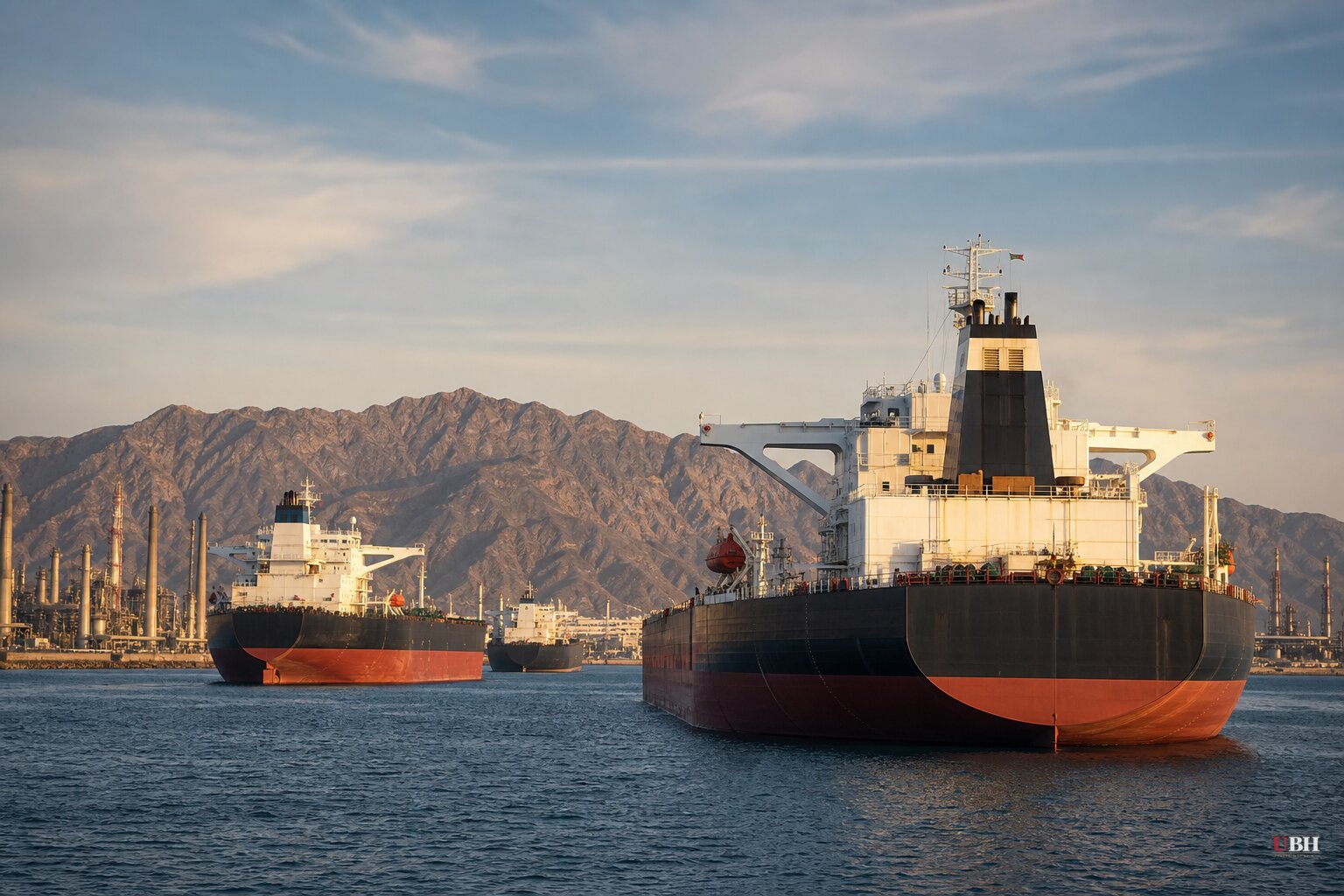
Traffic through the Strait of Hormuz, which normally carries about a fifth of the world's oil, remains a fraction of normal. CNN's analysis of UK Maritime Trade Operations data found 103 ships entering and 89 leaving in the week of Aug. 21, a 27% jump from the prior week but still only 20% of the pre-war average. None of the vessels were U.S.-flagged.
There is a genuine case that the administration's approach is working, not just costing money. Axios reported, citing two U.S. officials, that the Navy is now moving 15 to 20 tankers a day carrying roughly 10 million barrels through a southern route along the Omani coast at night, avoiding Iranian detection, about half of the prewar daily flow of 20 million barrels. That progress followed two straight weeks of U.S. strikes on Iranian radar and military infrastructure in mid-July, per the Examiner. Energy Secretary Chris Wright said the Navy helped move more than 15 million barrels of oil and products through the strait in a single recent week, plus another 5 million via pipeline.
President Trump has claimed bigger progress than the data shows. In an Aug. 18 Truth Social post, he said "the Hormuz Strait is open and operating," that "all water mines have been removed or detonated," and posted an image claiming the strait is now U.S. territory, a claim no source establishes as internationally recognized. That same day, UK Maritime Trade Operations reported a vessel was hit by an unknown projectile in the strait, damaging its engine room and injuring a crew member, with the Omani coast guard assisting and an investigation still open.
Threats to Oman, pushback from China and Iran
Diplomacy has stalled. The U.S. and Iran missed a 60-day deadline to reach a deal on Iran's nuclear program, according to the Guardian, and Trump has said he's in no hurry: "I have no time schedule. I'm not in a hurry," he told Fox News. He also threatened to bomb Oman, a longtime U.S. ally that has served as a diplomatic back-channel with Iran, "if it gets in the way," prompting Secretary of State Marco Rubio to meet with Oman's top diplomat days later, per CNN.
Trump's threatened "economic D-Day" against countries doing business with Iran drew sharp responses. China, which the U.S. has little leverage over, said sanctions "do not fit the interest of any party," per CNN. Iran's Foreign Ministry spokesperson Esmaeil Baghaei called the threat "a recipe for an abysmal return to full-scale classic colonialism" and warned that officials who "order or implement the levies" are "liable to prosecution and punishment."
What it's cost, and who's profited
The bipartisan Joint Economic Committee, using AAA data, calculated in a July report cited by the Guardian that Americans had spent $56.4 billion in excess gas costs over the war's first several months, or $477 per household, a figure that predates August's record run and is almost certainly higher now. A Harris Poll from May found half of Americans reported struggling with grocery and gas costs, with a majority saying the country is in an affordability crisis.
Meanwhile, eight of the world's largest oil companies, Aramco, BP, Shell, Equinor, TotalEnergies, Eni, Chevron and ExxonMobil, posted a combined $90 billion in profit for the March-to-June quarter, the first full quarter of the war, according to the Guardian, roughly $700,000 a minute. That's a straightforward accounting of quarterly earnings, not an allegation of wrongdoing. Oil majors' profits track global crude prices, which Brent crude shows jumped to $112 a barrel in March before settling around $85, still about 30% above a year ago.
One widely shared figure doesn't hold up. A post from the account @MarioNawfal, cited by Crypto Briefing, claimed gas prices "surged $1.25 per gallon" costing drivers $560 a year. But AAA's own numbers, cited in that same Crypto Briefing piece, put the current average at $4.081 versus $3.2013 a year ago, an increase of 88 cents, matching the figure Deseret News independently reported from AAA. The $1.25 claim traces to a social media post, not to AAA's tracked data.
The open question is whether the tanker workaround through Oman can scale before winter-blend gasoline kicks in and offers seasonal relief, or whether stalled talks and Trump's threats against Oman and Iran's trading partners push prices higher into the November midterms.
Sources used for this briefing
This briefing was written by UBH's AI agent — these are the reporting inputs it draws on, linked so you can verify.


