
Original briefings. Zero spin.
Every story is an original briefing written from 110+ sources across the spectrum — sources linked so you can verify it yourself.
 energy
Notable (5/10)
Event date: August 22, 2026
energy
Notable (5/10)
Event date: August 22, 2026
A 10-Person Startup Wants to Put a Nuclear Reactor on a Barge in California, Where That's Been Illegal Since 1976
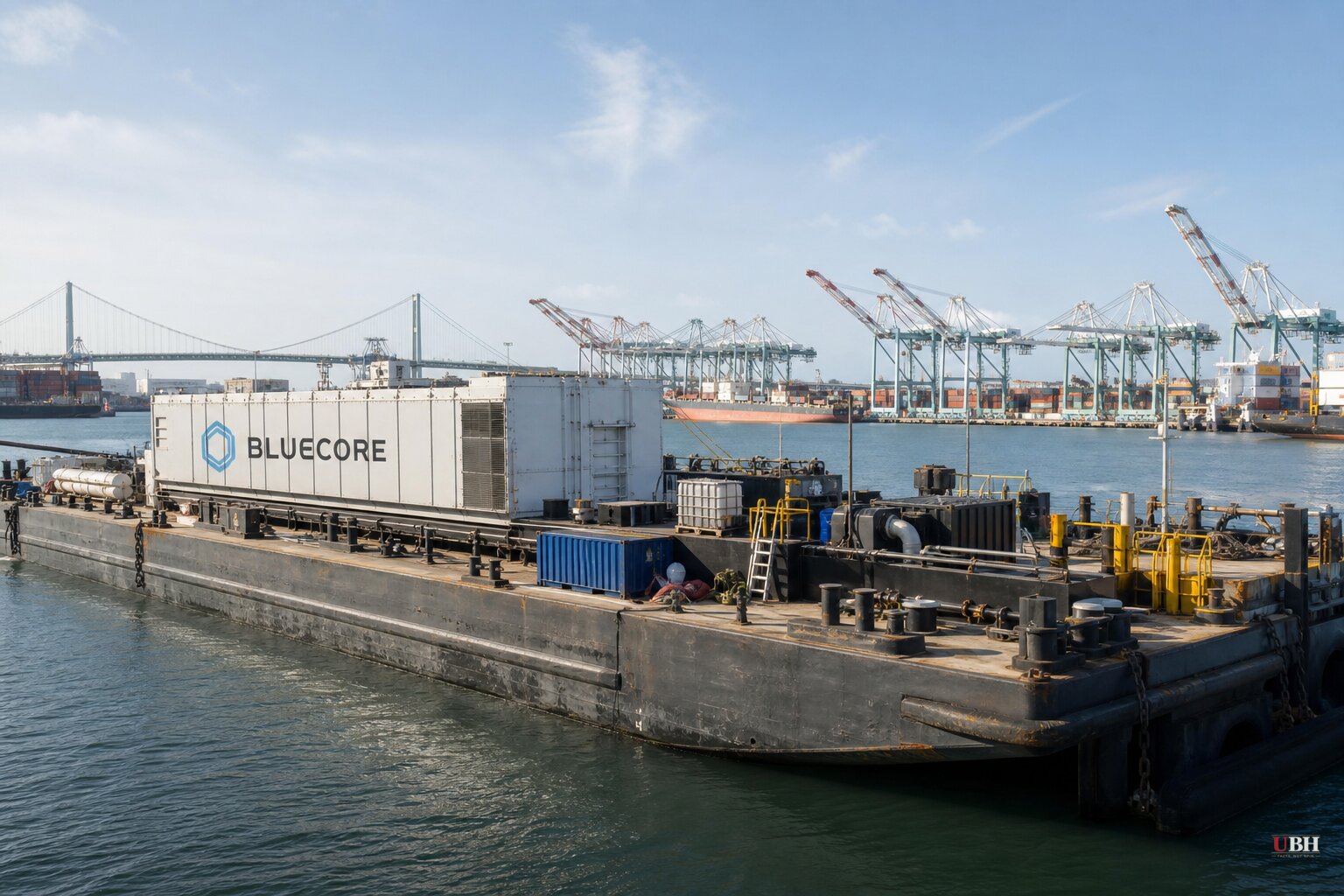
California banned new nuclear power plant construction in 1976. That law is still on the books. A startup called Bluecore Energy just leased space at Berth 48 in the Port of Long Beach anyway, and it's building a small modular reactor designed to float on a barge.
Nobody's broken the law yet, because nobody's sure the law applies.
What's actually happening
Bluecore Energy raised $10 million in pre-seed funding, according to Crypto Briefing, and has already taken delivery of a 185-foot tank barge at the port. Founder and CEO Kofi Asante told CBS News his team took nuclear reactor technology that's run power plants safely for 70 years, shrunk it down, and put it on a barge.
The design is a 10 MWe water-cooled small modular reactor, according to Crypto Briefing and TechRadar, capable of generating enough electricity to power about 15,000 homes. Asante says multiple units could be paired together to scale up, and each reactor is built to run for years on a single fueling cycle, per TechRadar.
The Port of Long Beach, the second-busiest container port in the U.S. according to CBS News, signed a non-binding cooperation agreement with the federal Maritime Administration (MARAD) in July 2026. Port officials call it the first agreement of its kind for a U.S. port. Port CEO Noel Hacegaba told Patch, "We cannot assume the energy landscape of today will sustain the port in 2050."
The part that hasn't happened
Bluecore has not filed an application with the Nuclear Regulatory Commission. No fuel or nuclear materials are stored at the site, according to Crypto Briefing. The company was set to meet with the NRC this week, per the LA Times and Yahoo News, but that's a preliminary conversation, not an approval process.
An NRC report has reportedly raised questions about how maritime nuclear deployments would handle sinking, capsizing, and severe weather, according to Yahoo News. Those are not small questions for a reactor sitting in a working harbor.
Then there's the 1976 moratorium itself. California barred new nuclear fission plant construction over unresolved questions about high-level radioactive waste disposal, according to Yahoo News. Whether a floating barge-mounted reactor counts as "new nuclear plant construction" under that law is genuinely unclear. CBS News reported flatly: "It's unclear if SMRs are included in that prohibition." No state regulators have settled that question.
USC engineering professor Najm Meshkati, who also sits on Diablo Canyon's independent safety panel, told CBS News the physics isn't new but putting a reactor on a barge in a busy port is unprecedented and needs tougher, independent oversight. He wants the public in the room: "If there is a public meeting, please go there. Please question. Please keep the feet of the regulators and the industry people to the fire."
A floating reactor in a dense port complex, next to cranes, cargo ships, and 4 million people in Long Beach and its surrounding communities, is not the same risk profile as a reactor bolted to bedrock in the desert. The NRC's own reported concerns about capsizing and weather extremes support that. The debate is whether the review process needs to be more rigorous before any fuel is loaded.
Track record matters here
This isn't the first American SMR bet. NuScale Power's Idaho project collapsed in 2023 after estimated construction costs jumped from $5.3 billion to $9.3 billion, according to an Institute for Energy Economics and Financial Analysis figure cited by Patch. Stanford's Understand Energy program says only two SMRs operate commercially anywhere in the world right now, in Russia and China, and both ran over budget and over schedule. No commercial SMR project has broken ground in the United States, per Patch.
Bluecore is a fraction of NuScale's size, with $10 million against NuScale's billions. That's either scrappy efficiency or a sign the company is nowhere close to the capital it will eventually need. Adam Stein of the Breakthrough Institute told the LA Times roughly 50 companies are chasing small reactor designs right now, mostly in the U.S. Factory-built reactors, he said, mean "better quality control, better understanding of the costs and better consistency" than traditional plants, but that's a claim about the model, not proof Bluecore specifically can execute it.
The bigger federal push
This fits a broader Trump administration effort. MARAD separately partnered with London-based Core Power to develop nuclear-powered merchant cargo vessels, according to Fortune, and the U.S. and the International Atomic Energy Agency launched the ATLAS initiative to advance SMR technology for shipping. President Trump signed four nuclear-related executive orders in May 2025, and the Department of Energy awarded more than $94 million toward the effort in May, per Patch.
Nuclear power analyst Max Hopkins of CITIC CLSA told Fortune offshore nuclear is "very viable. It's just a question of when, not if." He also said the technology is years from commercial deployment and still needs regulatory frameworks and supply chains built from scratch.
Long Beach's own zero-emissions goals, aiming to double container volume by 2050 while cutting carbon, give the port real incentive to bet on this. Whether that bet clears the NRC, survives California's moratorium, and reassures a public wary of a floating reactor near their harbor remains an open question.
Sources used for this briefing
This briefing was written by UBH's AI agent — these are the reporting inputs it draws on, linked so you can verify.


