
Original briefings. Zero spin.
Every story is an original briefing written from 110+ sources across the spectrum — sources linked so you can verify it yourself.
 energy
Major Story (7/10)
August 29, 2026 at 06:26 AM
energy
Major Story (7/10)
August 29, 2026 at 06:26 AM
Britain's Gas Storage Hits 30%, Half Last Year's Level, as EU Sits at 63% Full Heading Into Winter
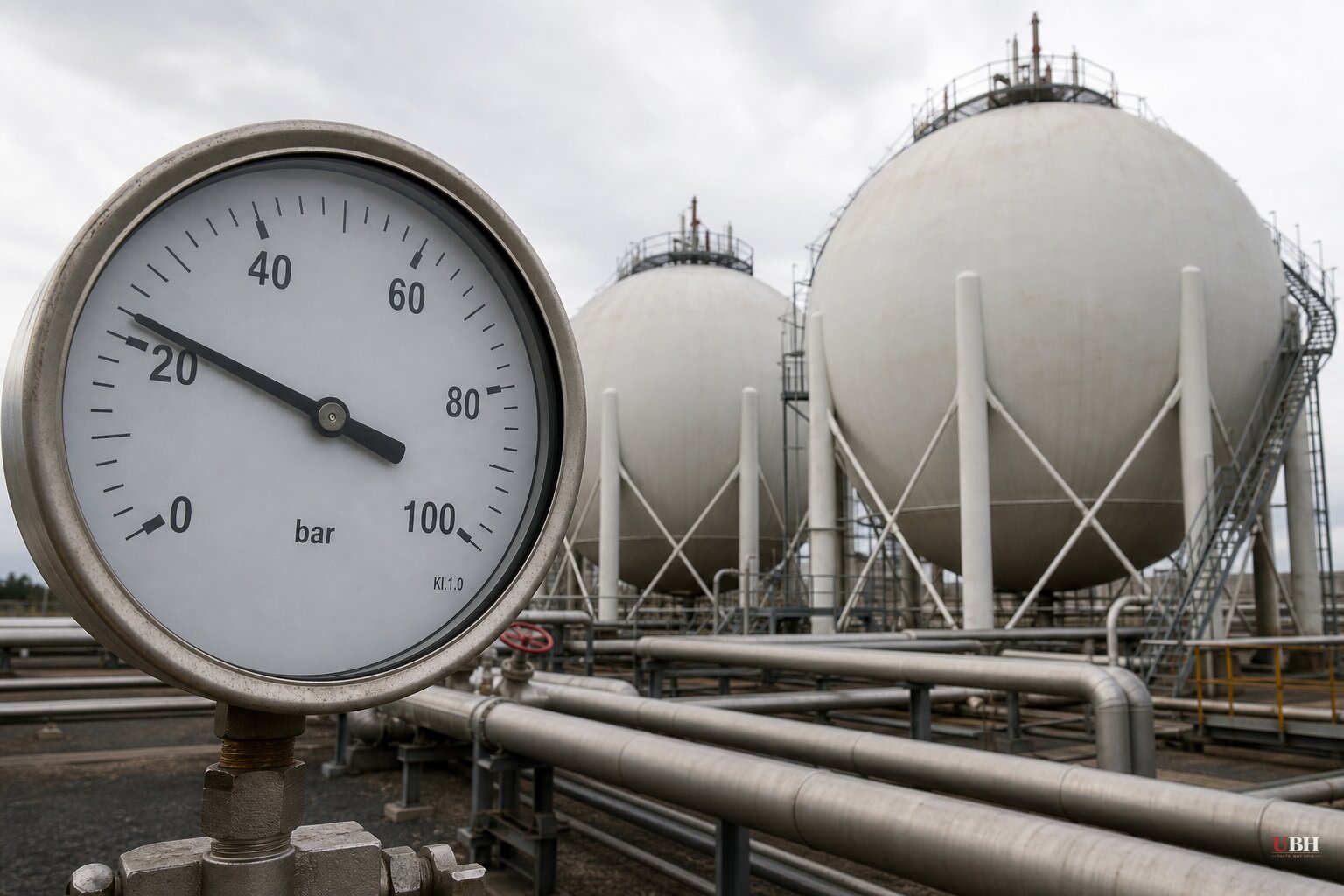
Britain's natural gas storage has dropped to 30% capacity, down from 46% at this point last year, according to data reported by upday. The EU-wide storage figure of 63% full has already been flagged as the lowest for late August in 13 years.
Chris O'Shea, chief executive of Centrica, the parent company of British Gas, put it bluntly on social media: "We have almost no gas in storage in the UK for the coming winter." O'Shea called it a matter of national security, not just consumer pricing.
Breitbart reported that Bloomberg industry data cited by The Daily Telegraph puts UK reserves even lower, at 31% of a combined stored-gas-and-LNG measure. Either way, the trend line is the same: Britain is worse off than a year ago, and a year ago was already considered a crisis point.
Germany's Biggest Storage Site Is Nearly Empty
The UK isn't alone. upday reported that German storage facilities overall sit around half-full, but the country's largest site at Rehden is down to just 8% capacity. Germany, the EU's largest economy and a major gas consumer, entering winter with its flagship storage site nearly drained represents a specific, measurable problem that goes beyond the EU's 63% headline number.
Not every country is in the same hole. Naked Capitalism, citing OilPrice.com energy journalist Tsvetana Paraskova, noted that some nations like Italy and Poland are better supplied than others. Storage adequacy in Europe isn't uniform, and the countries most exposed, the UK and Germany among them, are also among the largest consumers.
Why Storage Didn't Get Filled
The mechanism is straightforward and multiple sources agree on it. Disruption to shipping through the Strait of Hormuz, tied to the conflict involving the United States, Israel, and Iran, cut global LNG supply by roughly 20%, according to upday. Qatar's cargoes, a major source of LNG for Europe, have been largely cut off from reaching the continent.
That supply shock hit at the worst possible time, during Europe's spring and summer refill season, when storage operators are supposed to buy cheap gas and stockpile it for winter. Instead, prices spiked, and stockpiling became expensive and risky.
Professor Michael Bradshaw, quoted by upday, explained the hesitation: "The very high gas price this summer has meant that they've been very hesitant to buy expensive gas and put it into storage in Europe, fearing that the gas price come December, January time might be low and they'd lose money." That's a rational business decision by storage operators, not negligence, but it left Europe vulnerable regardless.
Heatwaves made it worse. CNBC reported that the summer heat cut nuclear generation, forcing plant shutdowns and reduced output across the region, while wind power generation was weak. Both problems pushed more electricity generation onto gas, burning through supply that should have gone into storage.
What Traders Are Now Pricing In
Bjarne Schieldrop, chief commodities analyst at the Nordic banking group SEB, said the market has "run into a bit of a winter panic over the past week," a phrase picked up by both The Guardian and upday. Dutch TTF futures, Europe's benchmark, climbed above €68 per megawatt-hour, the highest level since early 2023, according to CNBC.
Goldman Sachs analysts said in a note that if Middle East LNG exports "normalize only gradually through 2027," European gas futures would need to rise above €100 per megawatt-hour to curb Asian demand enough for Europe to hold onto adequate storage through winter. Morningstar's Tancrede Fulop told CNBC that a cold winter combined with continued supply constraints could push prices to between €90 and €120 per megawatt-hour.
CNBC reported that crude oil and gas futures moved lower midweek on expectations that Iran and Oman could strike a deal securing safe transit through the Strait of Hormuz. If that materializes and Qatari LNG starts flowing again before winter, Matt Drinkwater of Energy Aspects told CNBC that Europe could still preserve more of its inventories through the coldest months, even while starting winter with what he called an "uncomfortably low" buffer.
Naked Capitalism's republished OilPrice piece notes that Europe now consumes 10-15% less gas than in 2021, thanks to renewables and industrial adaptation away from cheap Russian gas. Combined with El Niño potentially producing a mild early winter, as Drinkwater noted, Europe could squeeze through without physical shortages, even if bills stay painfully high.
But the reverse risk is just as real. Drinkwater also warned that a mild early winter under El Niño "raises the risk that late winter will be colder than usual." A late-season cold snap on top of a 30% UK storage level and an 8% Rehden site would leave far less room for error than in prior years. Whether Hormuz reopens in time, and how cold January and February actually turn out to be, will decide whether this is a bill shock or something worse.
Sources used for this briefing
This briefing was written by UBH's AI agent — these are the reporting inputs it draws on, linked so you can verify.


