
Original briefings. Zero spin.
Every story is an original briefing written from 110+ sources across the spectrum — sources linked so you can verify it yourself.
 energy
Notable (6/10)
Event date: August 12, 2026
energy
Notable (6/10)
Event date: August 12, 2026
India Hits 300 GW of Non-Fossil Power as Modi Government Confirms 60% of 2030 Target Reached
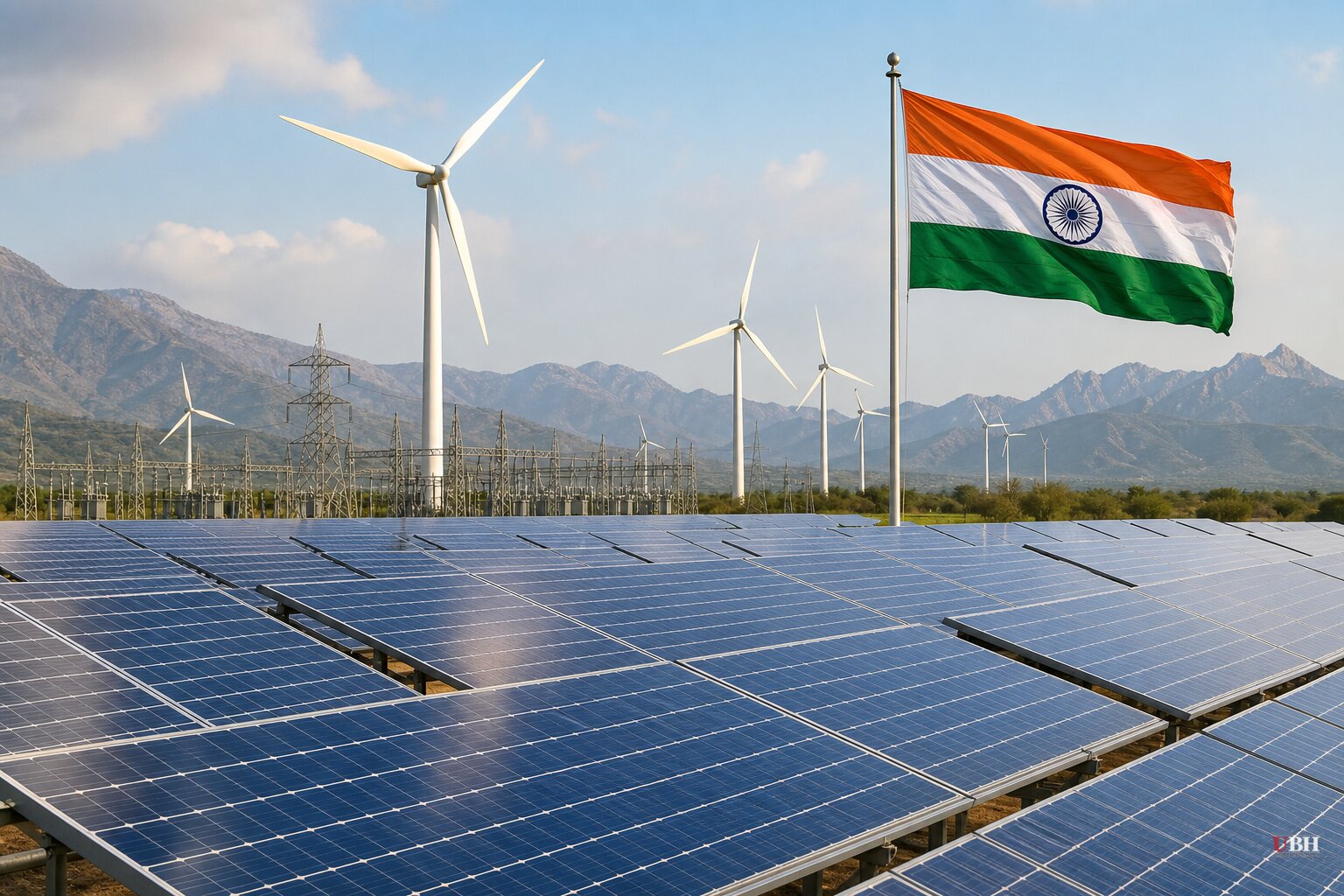
India's installed non-fossil electricity capacity stood at 300.50 GW as of July 31, according to figures the Ministry of New and Renewable Energy released and that Union Minister Pralhad Joshi reiterated in a speech reported by Business Standard on August 28. That breaks down to 164.59 GW of solar, 58.14 GW of wind, 57.24 GW of hydropower, 11.75 GW of bio-power and 8.78 GW of nuclear, according to the ministry's data cited by LiveMint, Hindustan Times, Asian Power and OilPrice.com.
Non-fossil sources now make up more than 54% of India's roughly 552 GW total installed power capacity, per the ministry's statement. Hindustan Times reported that figure puts the country over 60% of the way to its stated goal of 500 GW of non-fossil capacity by 2030.
Joshi told Business Standard's readers that India's non-fossil capacity has grown 275% over the past 12 years, from 80.3 GW to 300.5 GW. Solar alone is up nearly 58-fold since 2014, from 2.8 GW to 165 GW. Wind climbed from around 21 GW to 58 GW over the same stretch, a 176% increase.
The pace hasn't slowed. India added a record 55.29 GW of non-fossil capacity in the 2025-26 financial year, including 44.6 GW of solar and 6 GW of wind, according to the ministry's statement carried by LiveMint and Hindustan Times. Joshi said the country has already added more than 17 GW in the first four months of the current fiscal year, including 14.33 GW of solar.
From Building Capacity to Making It Reliable
LiveMint's Rituraj Baruah frames this milestone correctly: the harder problem now is integration, not installation. Hitting 300 GW of solar and wind capacity means little if the grid can't move that power where it's needed or store it for when the sun isn't shining and the wind isn't blowing.
India's domestic manufacturing base has scaled alongside the installations. Capacity under the government's Approved List of Models and Manufacturers for solar panels has surpassed 200 GW, up from 2.3 GW in 2014, according to the ministry's figures.
The government approved a new floating-solar scheme, the Pradhan Mantri Surya Sarovar Yojana, on July 31, aiming to install 5,000 MW of floating panels on reservoirs and water bodies, with each project required to carry at least two hours of battery storage, Hindustan Times reported. The storage requirement reflects New Delhi's understanding that raw capacity numbers don't matter if the power isn't dispatchable.
Renewable energy generation, not just capacity, has also grown, from 190.96 billion units in 2014-15 to 477.79 billion units in 2025-26, according to the ministry.
The China Angle Washington Can't Ignore
While India races to build out solar and wind infrastructure, much of that infrastructure, including inverters and grid-connected hardware, depends on components with Chinese origins somewhere in the supply chain. That's not unique to India. It's a global vulnerability the Trump administration is now moving to address at home.
President Trump declared a national emergency on August 26 to secure the U.S. bulk-power grid from foreign cyber threats, according to the Epoch Times. The order bars purchase or installation of certain foreign-made electric equipment and software that pose sabotage or unauthorized-access risks, and directs the Energy Secretary to impose conditions on equipment already in use.
Trump's order cited "certain foreign actors" exploiting vulnerabilities in the bulk-power system. Cybersecurity researcher Erika Langerova of the Czech Technical University in Prague, in a 2025 study cited by the Epoch Times, wrote that China has run simulations to identify the minimal cost or effort needed to trigger a large-scale grid collapse. Senators Rick Scott and Marsha Blackburn wrote to the Commerce Department last year raising concerns that Chinese-manufactured power inverters could allow remote access and unauthorized data exfiltration, the Epoch Times reported.
That's an allegation and a policy response, not a proven attack. No indictment or confirmed sabotage incident tied to Chinese-made grid equipment is cited in these reports. The Cybersecurity and Infrastructure Security Agency did report last month that more than 100 water and wastewater systems were hit through programmable logic controllers, with attackers disabling shutdown alarms, according to the Epoch Times, but that's a separate incident from the grid-equipment ban and involves different infrastructure.
India, for its part, isn't facing the same public accusation in these sources. The country's renewable buildout is being covered as an energy-transition success story by Indian outlets and OilPrice.com alike, with no source here alleging Chinese-sourced grid vulnerabilities in India's specific system.
What's Unresolved
The open question is whether India's grid, storage and transmission buildout can keep pace with its generation numbers. LiveMint's Baruah notes that "green energy corridors" now need to be treated as more than transmission projects. They're the bottleneck standing between 300 GW of installed capacity and reliable, dispatchable power for households and industry. No source here puts a firm cost or completion date on that infrastructure push, which is the next number to watch as India chases its 500 GW target by 2030.
Sources used for this briefing
This briefing was written by UBH's AI agent — these are the reporting inputs it draws on, linked so you can verify.


