
Original briefings. Zero spin.
Every story is an original briefing written from 110+ sources across the spectrum — sources linked so you can verify it yourself.
 energy
Major Story (7/10)
August 28, 2026 at 06:41 PM
energy
Major Story (7/10)
August 28, 2026 at 06:41 PM
Goldman Says Gulf Oil Exports Hit Two-Thirds of Pre-War Levels. Energy Secretary Chris Wright Says They're Already Above Normal. The Numbers Don't Match.
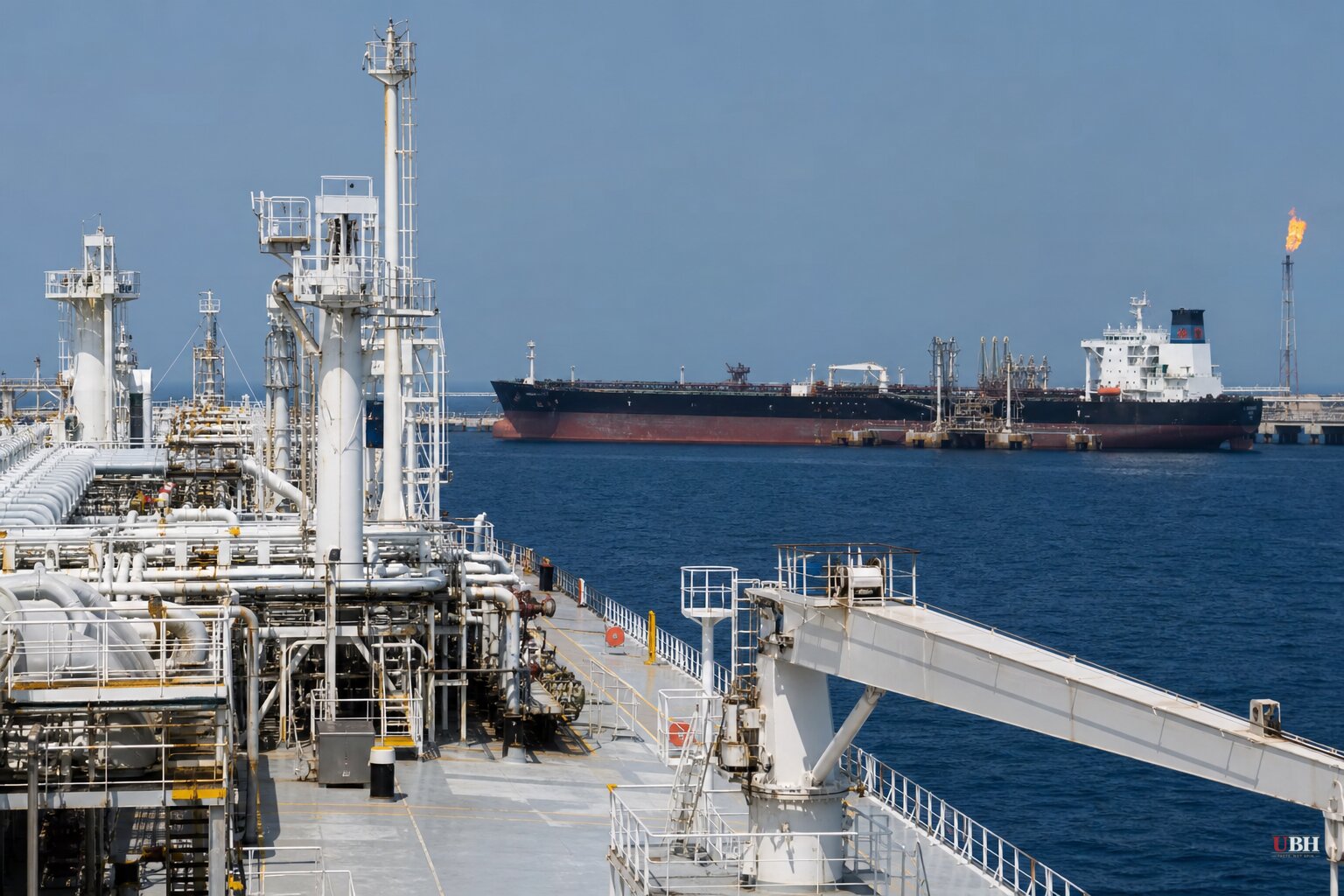
Persian Gulf oil exports have climbed back to roughly two-thirds of pre-war levels, according to Goldman Sachs analysts Daan Struyven and Yulia Zhestkova Grigsby. But there's a second number floating around Washington that doesn't square with it at all, and it's coming from the Trump administration itself.
The Goldman Numbers
Goldman's note, cited by the New York Post, Rigzone, and OilPrice.com, puts total crude and product exports from the region at 15 million to 16 million barrels a day. That's 7 to 8 million barrels below pre-war levels, but a sharp jump from the 5 to 6 million bpd low hit in March.
Oil transits through the Strait of Hormuz specifically are running close to U.S. officials' estimate of 8 to 10 million barrels a day, Goldman said. Bloomberg's Yongchang Chin, writing for Rigzone, noted that Brent has fallen to around $89 a barrel from more than $120 in April on the strength of that recovery.
Goldman credits a rise in "dark" tanker crossings, ships going dark by switching off transponders, plus more ship-to-ship transfers, for keeping supply moving despite the ongoing conflict. "The rise in dark crossings by specialized shippers, and in ship-to-ship transfers shows that producers and shippers are adapting to the Mideast conflict," the bank wrote.
Wright's Bigger Claim, and CNN's Pushback
Energy Secretary Chris Wright posted on X that oil exports from the Middle East rose above pre-war levels this week and have been running at normal levels for about a week, crediting a U.S. military coordinated plan with Gulf allies plus pipeline rerouting.
CNN Business dug into that claim and couldn't make it work. Kpler, an oil market data service using satellite imagery and transponder tracking, counted just 84 total vessels transiting the Strait of Hormuz over the entire week Wright was describing, including only nine on Sunday. That's down from more than 100 transits a day before the war. Kpler's Matt Smith put actual crude moving through the strait closer to 4 million barrels a day, a figure JPMorgan's analysis backs up.
"It is not possible to reconcile the disparity between what we see and what he is quoting," Smith told CNN.
A Department of Energy spokesperson pushed back, telling CNN the agency "maintains the best available data related to oil and oil products leaving the Arabian gulf" in coordination with the U.S. military, which tracks strait traffic daily. Pickering Energy Partners founder Dan Pickering acknowledged the government theoretically has better tools to see through dark shipping than commercial trackers, but conceded the number is "hard to verify" either way.
CNN did confirm one part of Wright's claim. Saudi Arabia's East-West pipeline has rerouted upward of 5 million barrels a day to the Red Sea, bypassing Hormuz entirely, and traffic through the Bab-al-Mandeb strait has stayed close to normal despite Houthi blockade threats.
The Pipeline Promise Runs Into a Wall
Treasury Secretary Scott Bessent told an NBC affiliate this month that the Strait of Hormuz is on track to become "irrelevant" within two years, with 50% to 70% of energy products rerouted through underground pipelines instead.
Energy analysts told NPR's Jane Arraf that's not realistic on that timeline. The UAE expects a $3 billion pipeline expansion to Fujairah port online next year, but a larger Saudi pipeline expansion is still years out, according to the International Energy Agency. IEA senior oil market analyst Rebecca Schulz told NPR that even after those projects finish, more than 10 million barrels a day, roughly half of pre-war volume, will still need to move through the strait for Gulf exports to fully normalize.
Former State Department energy envoy David Goldwyn told NPR the Hormuz constraint looks like "a somewhat permanent feature for the next few years," since Iran wants to keep extracting payment for passage and the U.S. hasn't achieved a military outcome that forces open navigation. Analyst Robert McNally called Bessent's "irrelevant" framing "way too strong and overstated."
The Strategic Cushion
The strategic cushion behind either number is thinning. The U.S. Strategic Petroleum Reserve has fallen below 300 million barrels, its lowest level in more than four decades, according to the New York Post.
Jeff Krimmel of Krimmel Strategy Group said current flows are enough to avoid chaos only if they hold. "If we have a stall or rollback in flows through the Strait, our depleting inventory cushion likely cannot offer sufficient protection to stave off chaos in the months ahead," he told the Post. ProcureAbility's Joe Adamski put it more bluntly: "There is no room to absorb another shock."
Gasoline prices haven't budged much regardless of whose export figure is right. AAA has the national average stuck above $4 a gallon, and ADM Investor Services reported this week that U.S. gasoline and distillate stocks are at their lowest seasonal levels in at least six years. Whether 4 million barrels a day are moving through Hormuz or 9 million, American drivers are paying the same price either way.
Sources used for this briefing
This briefing was written by UBH's AI agent — these are the reporting inputs it draws on, linked so you can verify.


