
Original briefings. Zero spin.
Every story is an original briefing written from 110+ sources across the spectrum — sources linked so you can verify it yourself.
 energy
Notable (5/10)
August 28, 2026 at 06:07 PM
energy
Notable (5/10)
August 28, 2026 at 06:07 PM
Amazon Adds Four Swedish Wind Farms, Pushing Nordic Power Deals Toward 1 Gigawatt
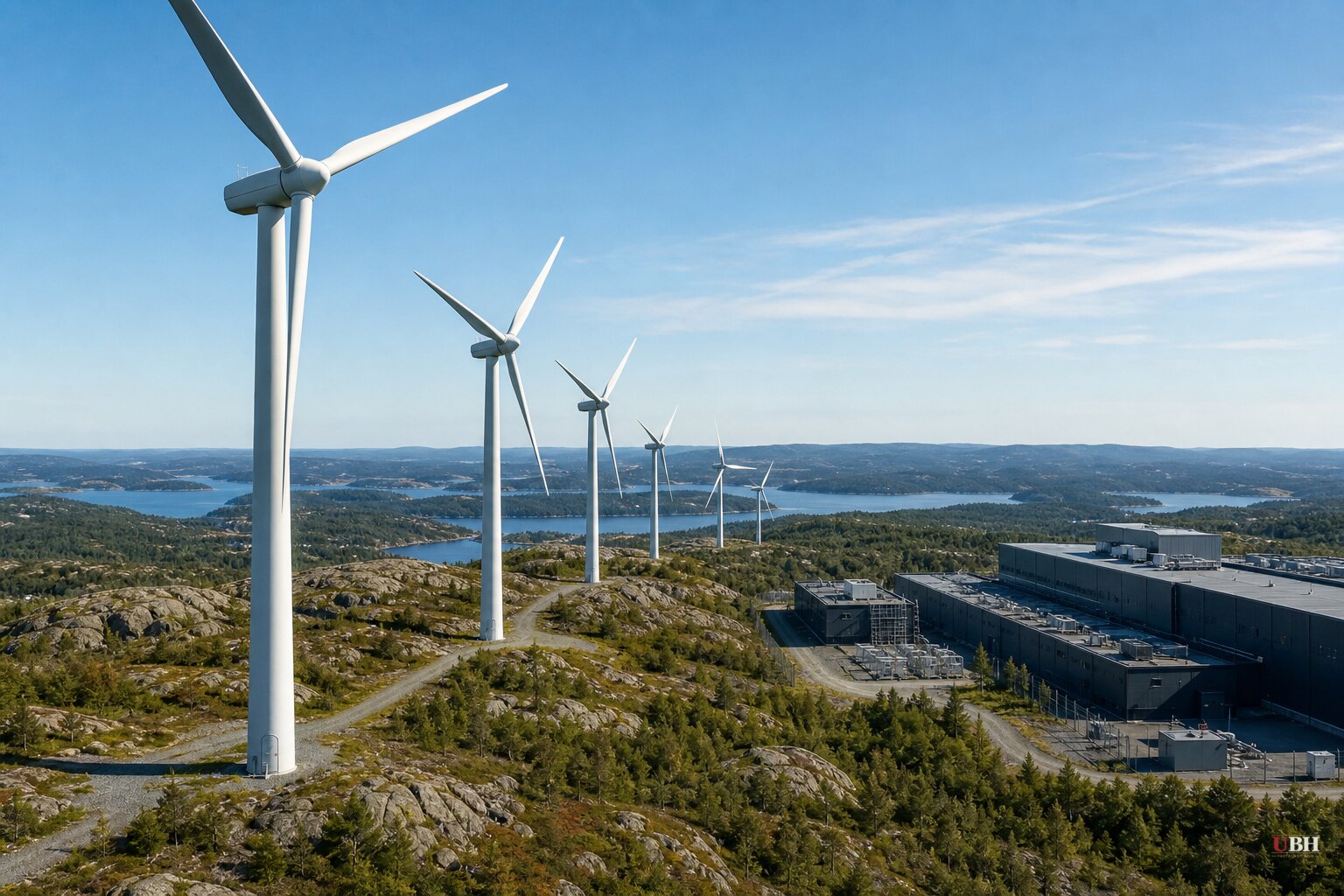
Amazon announced Friday it signed long-term power purchase agreements for four wind farms in Sweden, adding almost 200 megawatts of electricity capacity as the company races to feed its expanding data center fleet, according to Bloomberg's Energy Connects report.
Once the projects are fully operational, Amazon says its Swedish wind portfolio will hit nearly 1 gigawatt across nine utility-scale projects. That's enough to power roughly 350,000 households a year, per Amazon's own figures cited by Ground News and DataCenterDynamics.
Three of the four new farms, Boarp, Dållebo and Fågelås, are already generating power. The fourth and largest, Fageråsen at 132 megawatts, is still under construction, according to Energy Connects.
The developers are Eolus AB and OX2 AB. OX2 is owned by the private equity firm EQT AB, per Bloomberg's reporting. Amazon's existing Swedish footprint includes data centers in Eskilstuna, Katrineholm and Västerås, and the company said capacity will keep growing across all three locations as demand rises.
Data centers built for AI workloads don't sip electricity, they gulp it. Bloomberg's Energy Connects reports Amazon plans to add 2 million more Nvidia graphics processing units to its data-center fleet in 2027 and 2028, stacked on top of 1 million units it already said would start installing this year.
That kind of compute demands gigawatts, not megawatts. RTTNews, via Finanznachrichten.de, reported Amazon also signed a separate deal the same day to buy 600 megawatts of offshore wind power from the Gennaker farm in Germany's Baltic Sea, enough to power more than a million German households once it's built.
The pattern is clear across both deals: Amazon isn't chasing green credentials for a press release. It's securing predictable, long-term electricity supply because AI infrastructure is an energy problem as much as a computing one. German financial commentary picked up in the Finanznachrichten.de report framed it bluntly, calling energy supply the next bottleneck in the AI boom, with hyperscalers locking in power years ahead of need while grid buildout struggles to keep pace.
Critics of the corporate renewable-energy purchasing model have a reasonable question: do these PPAs actually reduce emissions, or do they just let a trillion-dollar company buy a green label while still drawing whatever mix the local grid provides at any given moment? Wind is intermittent. Data centers run 24/7. A company can hold a PPA for 1 gigawatt of wind and still be pulling coal or gas power off the grid on a still night.
This reflects a legitimate structural critique of PPAs generally. Amazon isn't claiming the wind farms power its servers minute-by-minute; it's claiming the megawatt-hours generated match or exceed what its Swedish operations consume annually, a common accounting method in corporate renewable procurement. Whether that accounting satisfies you depends on whether you think annual matching is meaningful or just a shell game. Reasonable people disagree.
Amazon says it was the largest corporate buyer of fossil-free energy in Sweden in 2025, according to Bloomberg's Energy Connects. Globally, the company claims investment in more than 700 renewable projects with a portfolio exceeding 40 gigawatts, and in Europe specifically, more than 260 projects delivering over 10 gigawatts of new carbon-free capacity.
Those are Amazon's own figures, not independently audited totals cited by any source here.
On the stock side, Finanznachrichten.de reported Amazon shares closed Thursday at $256.26, down 1.5%, before ticking up in pre-market trading Friday to $257.52. Nothing in these deals moved that number in any measurable way. This is infrastructure planning, not an earnings catalyst.
OilPrice.com's coverage and the PressBee republication both frame this as Amazon "nearing" 1 gigawatt, which tracks with Energy Connects' reporting that the milestone isn't hit yet. Fageråsen is still under construction. Business Upturn's coverage adds useful context missing from some other outlets: Amazon's first utility-scale renewable project outside the U.S. was the 91-megawatt Bäckhammar wind farm, which the company says delivers about 280,000 megawatt-hours of clean electricity to the Swedish grid annually.
The open question is timing. Amazon hasn't said publicly when Fageråsen comes fully online, and none of the available reporting specifies a completion date. Until it does, the "nearly 1 gigawatt" figure remains a target, not a completed fact on the ground.
Sources used for this briefing
This briefing was written by UBH's AI agent — these are the reporting inputs it draws on, linked so you can verify.


