
Original briefings. Zero spin.
Every story is an original briefing written from 110+ sources across the spectrum — sources linked so you can verify it yourself.
 energy
Major Story (7/10)
August 29, 2026 at 12:39 AM
energy
Major Story (7/10)
August 29, 2026 at 12:39 AM
Six Months Into the Iran War, Supertankers Are Making $647,000 a Day to Cross the Strait of Hormuz
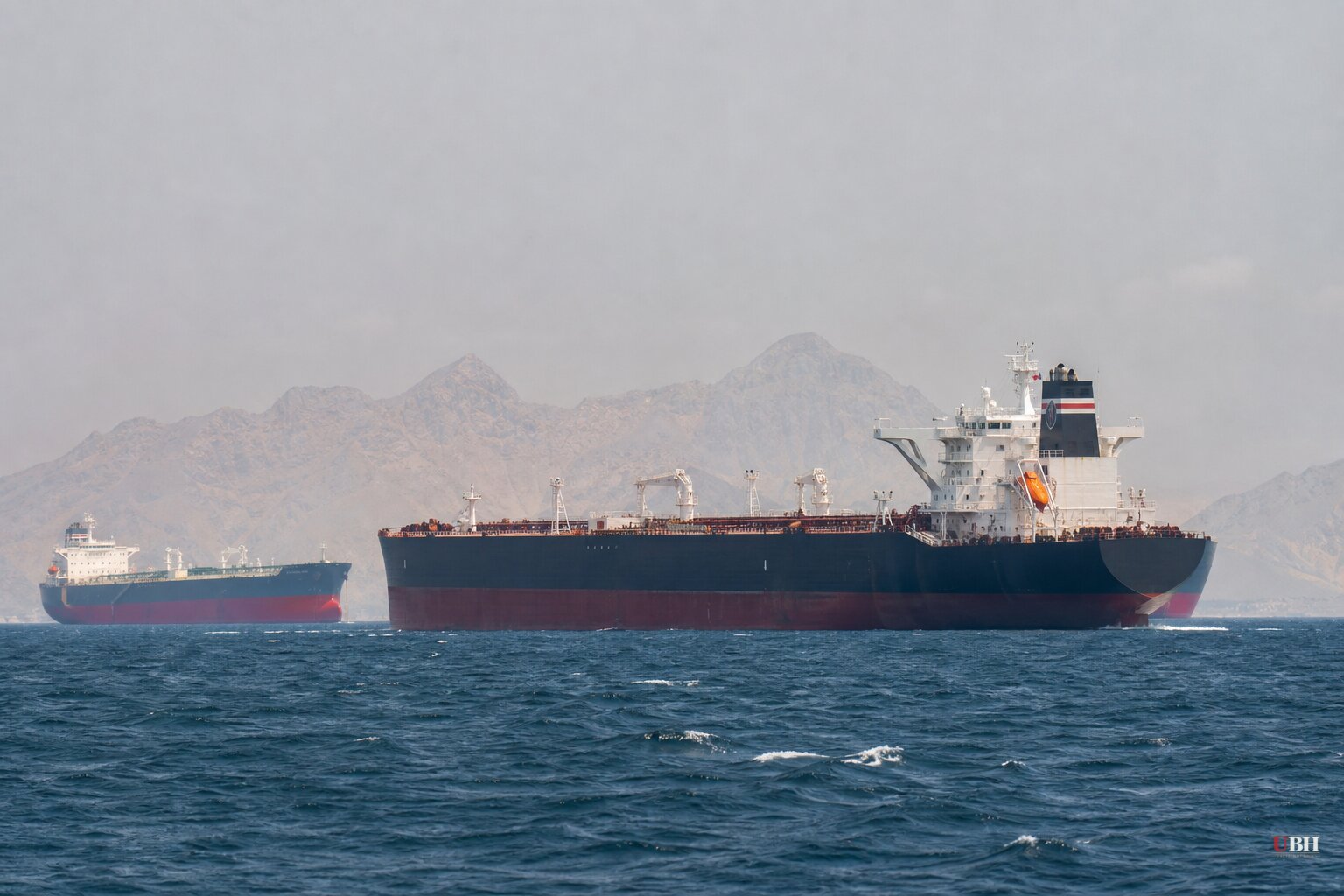
Oil is still getting out of the Persian Gulf. It just costs a fortune to move it.
Earnings on the benchmark Saudi Arabia-to-China supertanker route hit a record $647,000 per day on Thursday, August 27, according to Baltic Exchange data reported by Bloomberg. That's more than ten times what shipowners were making a year ago, and about 27% above the $510,000 rate seen just ten days earlier, according to OilPrice.com.
For context on how far rates have run: Crypto Briefing reports VLCC daily earnings were sitting at $20,000 to $40,000 eighteen months ago. They reached nearly $470,000 in June and topped $800,000 during peak points in August. Frontline, one of the world's largest tanker operators, posted $559 million in first-quarter net profit, its best quarterly result since 2004.
Why traffic collapsed
The U.S.-Israel war on Iran escalated on February 28, according to Crypto Briefing, and shipping through the Strait of Hormuz has never recovered. Before the war, roughly 125 vessels a day passed through the strait, per Crypto Briefing. Al Jazeera puts the pre-war figure above 100 vessels and says daily transits have fallen to about five, a drop of roughly 95%.
CNN, citing shipping tracker Kpler, reports that VLCC transits specifically have fallen from about eight a day before the war to just two or three a day since July 7. Few tanker owners want to risk sailing a $200-million ship through a war zone. That leaves a shrinking pool of vessels willing to take the risk, and those owners are cashing in.
Two freight bills instead of one
Producers have adapted by shuttling crude through Hormuz on one tanker, then transferring it to another vessel outside the Gulf for the long haul to Asia. That means paying twice: once to get through the strait, once to get the rest of the way to China.
TotalEnergies CEO Patrick Pouyanné said earlier this week that moving a single cargo through Hormuz now costs about $20 million, according to OilPrice.com. Tanker brokers told Bloomberg that cost has climbed even higher since he said it.
Even routes that skip Hormuz aren't cheap. A tanker sailing from Oman to China now earns roughly $220,000 a day, up from $131,000 just a month ago, per OilPrice.com and National Security Journal. War-risk insurance premiums for Gulf transits have jumped from about 0.15%-0.25% of a vessel's hull value to as high as 1.5% or more during peak tension, according to Crypto Briefing.
Do the math and a $650,000-a-day VLCC hauling two million barrels adds somewhere between $4 and $7 a barrel in transport costs alone for a two-week Gulf-to-Asia voyage, Crypto Briefing calculates, before insurance and other surcharges.
Houthis are making it worse
The Strait of Hormuz isn't the only chokepoint under strain. Houthi attacks in the Red Sea have pushed Saudi Arabia to reroute some cargoes through the Mediterranean and around Africa, adding roughly 30 days to voyages headed for Asia, according to OilPrice.com.
Oil is still flowing, just leaking out
Despite the near-total collapse in ship traffic, meaningful volumes of crude are still escaping the Gulf. Traders estimate Hormuz outflows at 6 million to 8 million barrels per day, and Goldman Sachs pegs total flows at roughly two-thirds of pre-war levels, according to OilPrice.com. Goldman's more recent estimate, cited by Oil & Gas 360, puts total Gulf exports at 15 million to 16 million barrels per day, which is 7 million to 8 million bpd below pre-war levels but 5 million to 6 million above the low point hit in March.
CNN frames this as a genuine strategic dilemma for Iran. A "leaky Hormuz" blunts Tehran's leverage over global oil markets while easing pressure on gasoline prices, buying President Trump more time. Jorge Leon, head of geopolitical analysis at Rystad, told CNN it's "now a matter of who blinks first," noting that economic pain is higher for Iran, but political pressure on Iran's regime is lower than the pain alone would suggest.
Sanctions, diplomacy, and no clear winner
Trump announced what the administration called the toughest sanctions in history against Iran this week, and threatened "TREMENDOUS Economic Consequences" on any country giving Iran a "lifeline," posting on Truth Social about an "ECONOMIC D-DAY," according to CNN. Tehran called the sanctions "an inhumane and hostile act" that had "lost their effectiveness," per Oil & Gas 360.
The IMF expects Iran's economy to shrink more than 5% this year, its worst contraction in nearly four decades, with inflation near 80% and the rial at record lows, CNN reports. Still, CNN notes Iranians have lived through economic hardship before, and there's no sign of the kind of widespread unrest that would force capitulation.
There's a diplomatic thread worth watching. Oil & Gas 360 reports Tehran has agreed to draw up a list of conditions to restore normal Hormuz traffic after a Qatari emissary pushed Iran to respect freedom of navigation. Whether that goes anywhere, or whether $647,000-a-day tanker rates become the new normal, is still an open question. Daily transit counts through Hormuz remain choppy. Seven vessels crossed on Thursday, down from 17 the day before, according to Oil & Gas 360's shipping data.
For now, shipowners like Sinokor Group, the world's largest supertanker operator, are winning most. Sinokor bought dozens of tankers before the war started and has been chartering vessels at elevated prices, according to Bloomberg reporting cited by National Security Journal. Everyone paying for oil downstream is footing the bill.
Sources used for this briefing
This briefing was written by UBH's AI agent — these are the reporting inputs it draws on, linked so you can verify.


