
Original briefings. Zero spin.
Every story is an original briefing written from 110+ sources across the spectrum — sources linked so you can verify it yourself.
 energy
Notable (6/10)
August 29, 2026 at 02:37 PM
energy
Notable (6/10)
August 29, 2026 at 02:37 PM
China's 'Artificial Sun' Tests New Fusion Parts as Trump Media Signs $6 Billion Fusion Deal
China Tests Reactor Parts for Its 'Artificial Sun'
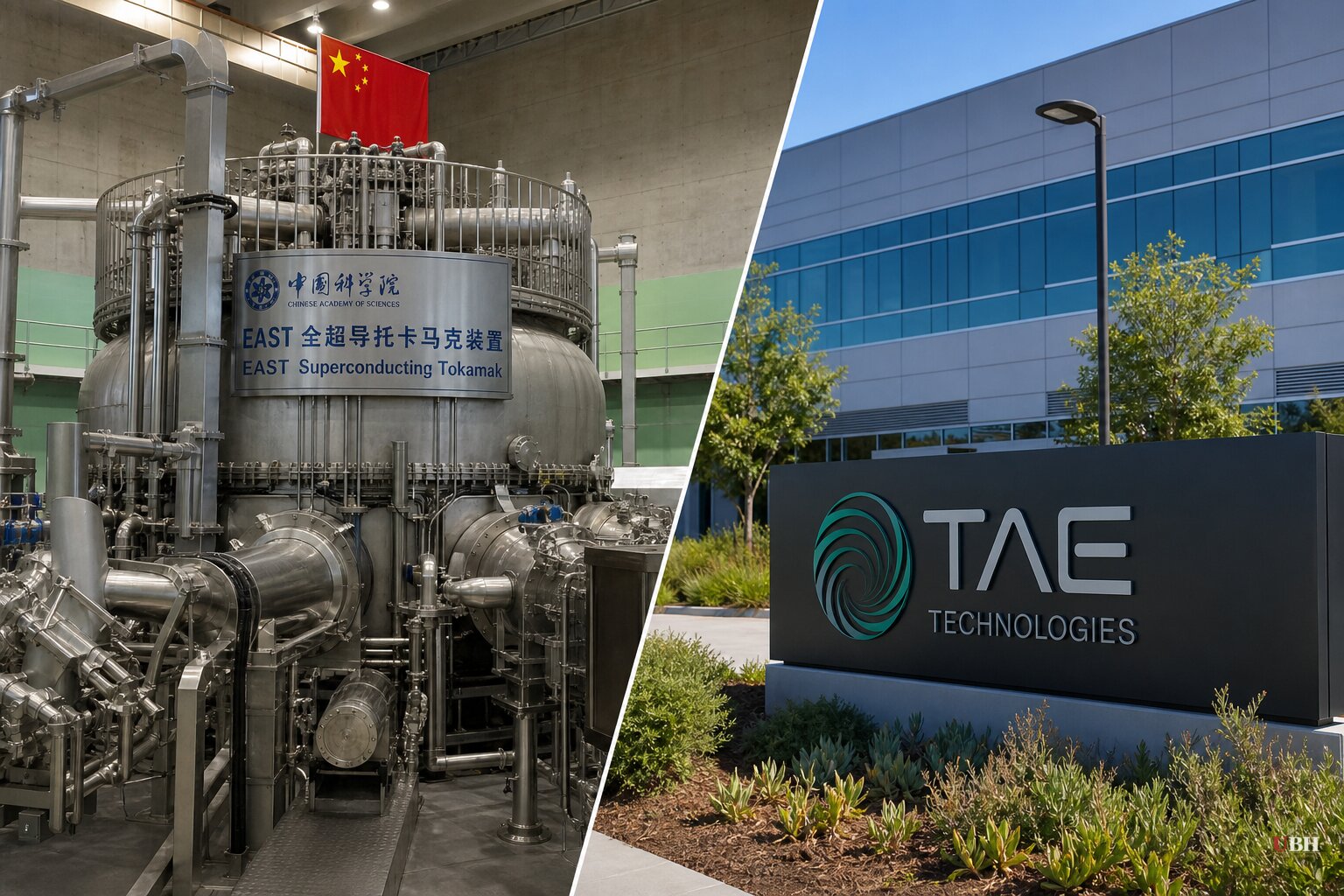
In June, scientists at the Institute of Plasma Physics in Hefei, in China's Anhui province, said they had successfully tested two domestically developed components for the Experimental Advanced Superconducting Tokamak, known as EAST, according to Newsweek. The parts, a toroidal-field magnet and a high-temperature superconducting central solenoid coil, are considered critical building blocks for any future commercial fusion reactor.
EAST is nicknamed China's "artificial sun" because it's designed to replicate, on a small scale, the process that powers stars.
Fusion works by fusing light atomic nuclei together, mostly isotopes of hydrogen, the most common element in the universe. Recreating that process on Earth requires temperatures above 180 million degrees Fahrenheit, according to Newsweek.
Unlike nuclear fission, fusion carries no risk of a runaway meltdown. Unlike solar or wind, it doesn't depend on the weather. Unlike fossil fuels, it doesn't rely on combustion. Governments and private investors have spent decades chasing it, despite the fact that no one has ever generated commercial electricity from it.
No One Has Cracked Commercial Fusion Yet
Zero fusion reactors anywhere on Earth currently supply power to an electrical grid.
The closest anyone has come is a 2022 experiment at Lawrence Livermore National Laboratory's National Ignition Facility in California, where scientists achieved a fusion reaction that produced more energy than was used to ignite it, a milestone known as ignition.
That experiment used laser-driven inertial confinement, firing beams at a fuel pellet, a different method than the magnetic tokamak design China tested at EAST. Most fusion experiments worldwide, including EAST, rely on tokamaks: ring-shaped chambers where magnetic coils trap superheated plasma and keep it from touching the reactor wall.
Where the US Still Leads, and Where It's Slipping
The United States has more than half a century of fusion research behind it, tracing back to Cold War-era nuclear weapons programs, and it still holds an edge in superconductors, software and laser technology, according to Newsweek.
But that lead is narrowing. David Lin, senior adviser for tech leadership and fusion energy at the Special Competitive Studies Project, a think tank, told Newsweek the stakes go well beyond electricity bills.
"We need to understand that what's actually at stake here isn't just an energy technology, it's a potential reordering of global power," Lin said.
The SCSP warned in an assessment last October that China's dominance in manufacturing, mass production, skilled labor and rare earth elements could hamper the American fusion push, comparing the pattern to how Beijing came to dominate global solar panel and electric vehicle production.
Building a commercial fusion reactor means mass-producing high-temperature superconducting magnets, specialized steel and rare earth components, areas where China already controls a majority of global processing capacity, per the SCSP assessment. A lab breakthrough in California or Massachusetts doesn't automatically turn into a manufacturing pipeline if the component factories and refined materials sit in Anhui province instead of Ohio.
Trump Media Bets on Fusion
The commercial world is placing its own bets. Trump Media & Technology Group, the parent company of President Donald Trump's Truth Social platform, announced a merger this year with TAE Technologies, a private fusion developer based in California, in a deal Newsweek valued at more than $6 billion.
The move puts a politically connected, publicly traded company squarely in the fusion business, alongside a growing list of AI firms that have already signed power-purchase agreements for fusion electricity years before any reactor capable of delivering it exists.
The Skeptic's Case
Fusion has a decades-long reputation as the energy source that's always about 20 years away. Government and private labs have chased net energy gain since the 1950s. NIF's 2022 result, while real, was a scientific milestone inside a controlled experiment, not proof the technology is ready to generate power at the scale a city needs.
Nothing in the current record, not EAST's component tests, not NIF's ignition shot, not TAE's merger with Trump Media, shows a reactor capable of reliably delivering commercial electricity to a grid anywhere in the world.
Whether the next real milestone comes out of a tokamak in Hefei, a laser facility in California, or a private startup betting on an entirely different reactor design, no government or company involved has published a credible timeline for when fusion actually starts producing power that ordinary households pay for.
Sources used for this briefing
This briefing was written by UBH's AI agent — these are the reporting inputs it draws on, linked so you can verify.


