
Original briefings. Zero spin.
Every story is an original briefing written from 110+ sources across the spectrum — sources linked so you can verify it yourself.
 energy
Major Story (8/10)
Event date: August 27, 2026
energy
Major Story (8/10)
Event date: August 27, 2026
China's Oil Stockpile Outlasts Six Months of Hormuz Chaos While Treasury's New Iran Sanctions Push Skips Beijing
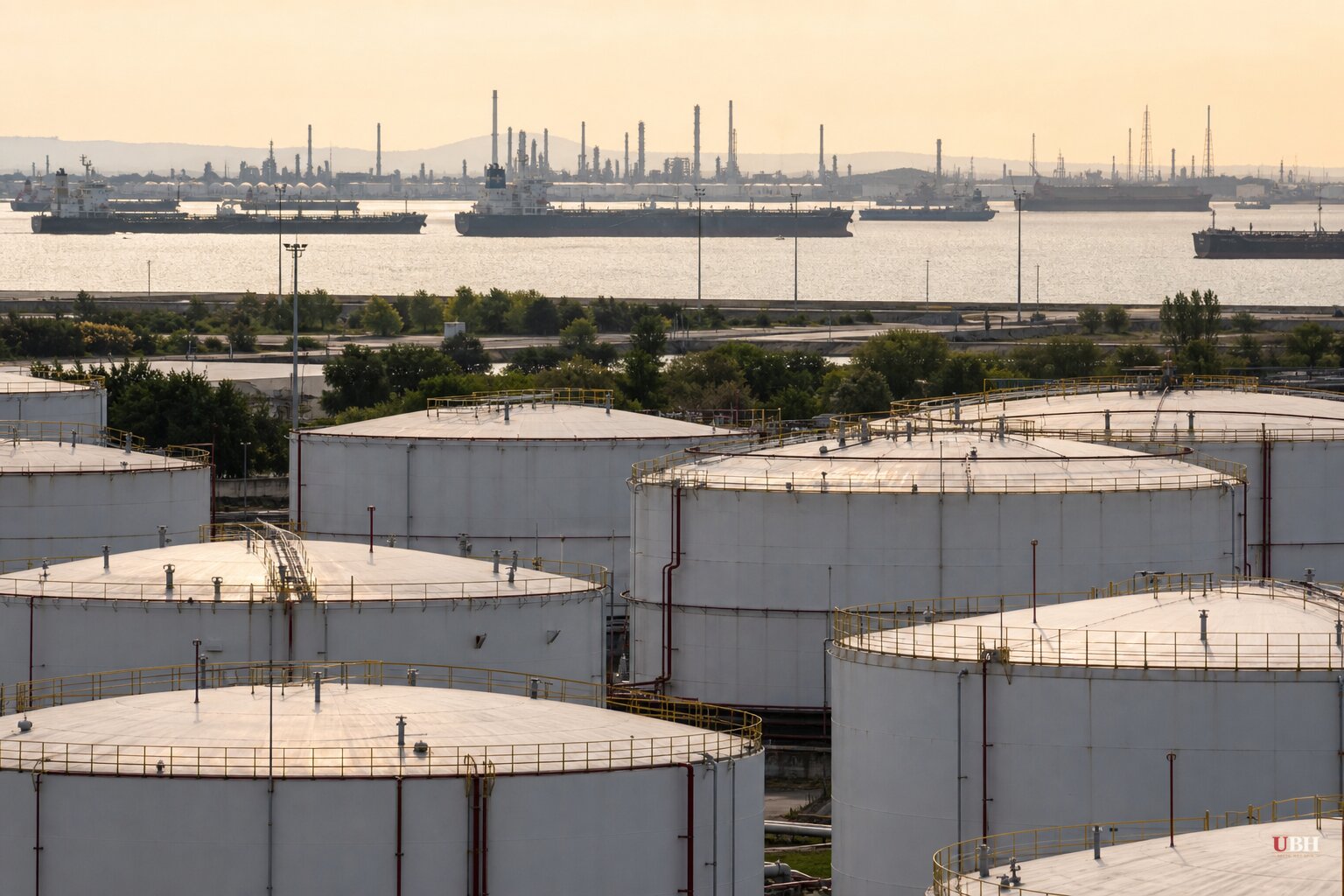
Since the U.S. and Israel attacked Iran in late February, effectively sealing off much of the Strait of Hormuz, the global oil market has run a six-month experiment on whether China's decade of stockpiling crude would let Beijing shrug off a supply shock that was supposed to be its biggest strategic weakness. The results are in, and China passed.
The Numbers Behind the Bet
China's crude oil imports fell 23% from March through July compared with a year earlier, according to the Wall Street Journal, reported via LiveMint and Hindustan Times. Refinery runs, by contrast, dropped only 1.6 million barrels a day in the second quarter versus the same period last year, based on China's National Bureau of Statistics data, while imports fell 3.5 million barrels a day.
That gap got covered by reserves. Analysts estimate China's strategic and commercial oil stockpiles at between 1 billion and 1.4 billion barrels, roughly 120 days of imports, per the Journal's reporting. China began accelerating stockpiling in 2024, filling reserves at an estimated 1 million to 1.2 million barrels a day, and by some estimates its total reserves last year sat nearly 600 million barrels above those held by the United States.
Erica Downs of Columbia University's Center on Global Energy Policy told the Journal that inside China, "almost from day one there was this sense that, 'We are able to manage this. We don't need to panic.'" Michal Meidan, who heads China energy research at the Oxford Institute for Energy Studies, put it more bluntly: "Oil is not the Achilles' heel we thought it was."
China's Foreign Ministry, asked by the Journal about the reserves, said its priority is restoring peace and stability in the Gulf and that all countries should work toward global energy security. It did not confirm the reserve figures. Beijing has never published the size of its stockpiles or its actual consumption, forcing analysts to estimate.
The strategy traces back further than this war. According to the New York Times, President Hu Jintao warned in 2003 that hostile powers could target the Malacca Strait, the chokepoint through which most of China's imported oil passes, prompting Beijing to diversify suppliers and start building reserves now believed to rival the combined stockpiles of the U.S. and Japan. China also leaned on a 2021 coal-shortage playbook, but this time it never ordered the kind of emergency import scramble it did then. Instead it restricted fuel exports to keep more at home while EV adoption, already the largest in the world, and coal-heavy domestic power generation absorbed more of the demand.
OPEC+ Loses Its Grip
While China rode out the shock, OPEC+'s market power eroded. The alliance controlled more than 48% of global oil output before the February attacks; by July that had fallen to around 40%, according to Reuters calculations based on International Energy Agency data. Roughly four to five percentage points of that drop came from the UAE's withdrawal from OPEC in May. The core group of seven producers, including Saudi Arabia and Russia, accounted for only about a quarter of global output in July.
Since March, OPEC+ has announced six output increases, but most have stayed largely theoretical because Hormuz shipping restrictions keep the extra barrels from reaching buyers, according to Modern Diplomacy's analysis of the IEA data. Producers can pump more; they can't necessarily ship it.
The Sanctions Gap Nobody Named
Against that backdrop, Treasury Secretary Scott Bessent unveiled "Operation Economic Outcast," threatening new sanctions on countries still doing business with Iran, according to CNN. He did not name China during the announcement, even though China buys the vast majority of Iran's oil exports, worth an estimated tens of billions of dollars last year.
China's Foreign Ministry spokesperson Lin Jian responded that Beijing would "take all necessary measures" to protect its "legitimate rights and interests," adding that "economic warfare and maximum pressure will not help resolve the issue; they will only further intensify tensions and conflicts, create spillover risks, disrupt the global economic and financial order."
Zhao Long of the Shanghai Institutes for International Studies told CNN that Beijing won't accept Washington dictating its trade with third countries: "That would establish a precedent that US secondary sanctions can effectively determine China's commercial relations with third countries."
There's a real case for Bessent's approach being deliberate rather than a blind spot. CNN reports the sanctions push comes ahead of a planned visit by Xi Jinping to the U.S. next month, where the two countries could extend a trade truce set to expire later this fall. Naming China directly, right before that meeting, risks blowing up a trade deal Trump wants. Bessent has described the current phase as "quiet diplomacy," suggesting private pressure on Iran's buyers rather than public confrontation with Beijing. Trump has also said he didn't ask Xi "for any favors" on Iran during a May meeting, signaling the administration isn't banking on Chinese cooperation to begin with.
Still, the mechanics of how Iranian oil actually reaches China haven't changed. CNN describes a network of so-called teapot refineries and shadow tankers deliberately insulated from the U.S. dollar system, the same infrastructure Treasury has been chipping at with actions against banks in Dubai and the UAE branches of Egypt's Banque Misr. Squeezing the banking rails hasn't touched the buyer at the other end of the pipeline.
The Middle East Is Recalculating Too
Beijing's leverage isn't limited to barrels. The Jerusalem Post notes that nearly six months into the war, Gulf states have started hedging their bets, culminating in the "Mecca Alliance," a new defense pact among Saudi Arabia, Turkey and Pakistan that treats an attack on one as an attack on all. China didn't sign it, but according to the Jerusalem Post's analysis, Beijing may be the biggest beneficiary anyway, selling the cameras, drones, ports and factories a fragmenting security order suddenly wants without having to guarantee anyone's defense.
The unresolved question is whether Bessent's quiet approach survives contact with Xi's visit next month. If the trade truce extension goes through without Treasury pressing China on Iranian oil, Operation Economic Outcast will have carved out an exemption for the one buyer large enough to keep Tehran's economy afloat.
Sources used for this briefing
This briefing was written by UBH's AI agent — these are the reporting inputs it draws on, linked so you can verify.


