
Original briefings. Zero spin.
Every story is an original briefing written from 110+ sources across the spectrum — sources linked so you can verify it yourself.
 energy
Notable (6/10)
Event date: August 28, 2026
energy
Notable (6/10)
Event date: August 28, 2026
COP17 Ends With $1.3 Billion Land Pledge, Drought Deal Punted to 2028
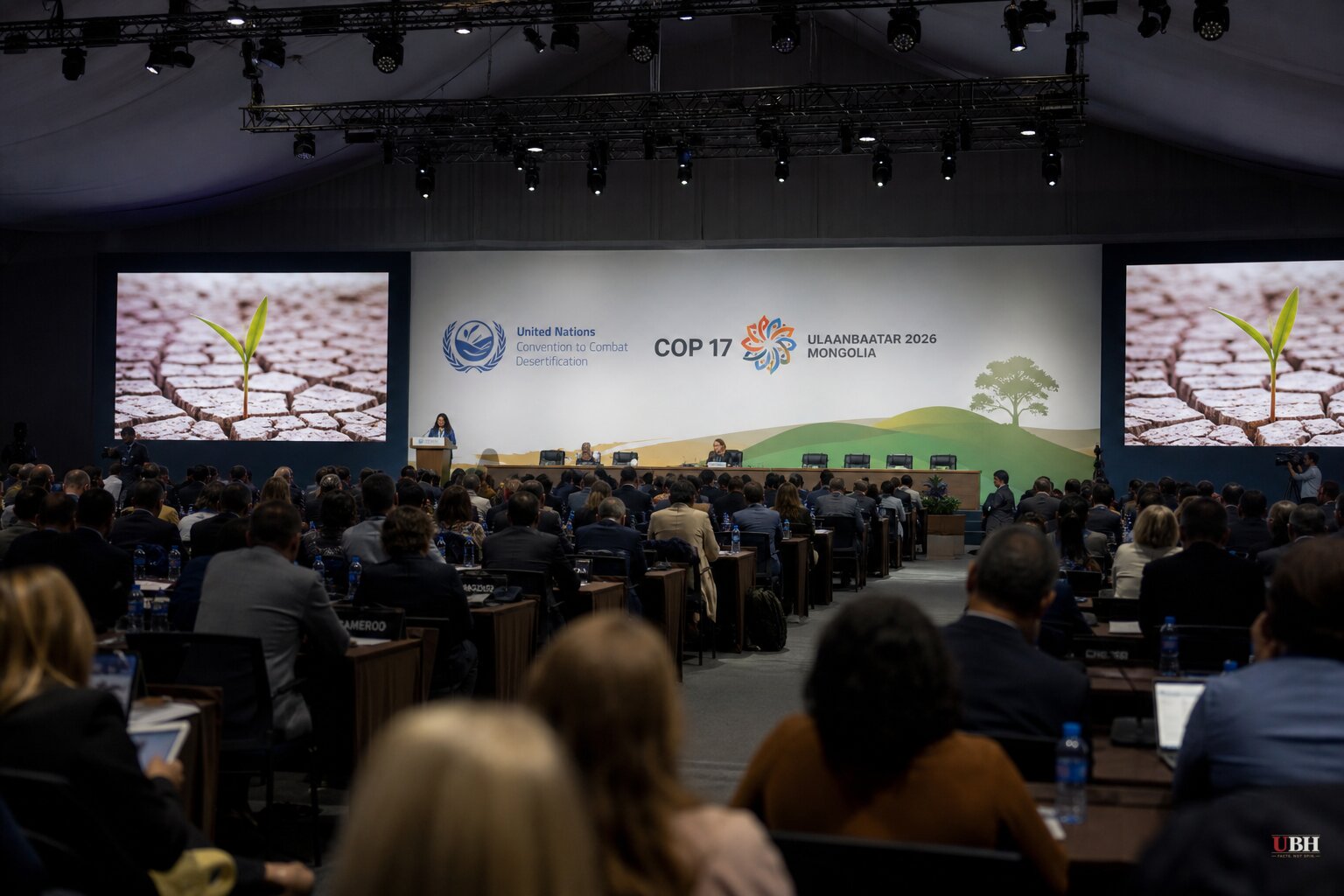
The 17th UN Convention to Combat Desertification summit closed Friday, August 28, in Ulaanbaatar, Mongolia, after twelve days of talks among representatives of 197 parties, according to Premium Times and The Diplomat. The headline number: $1.3 billion in pledged financing for land restoration and drought resilience across 23 countries on five continents.
Break down that $1.3 billion and it's less impressive than the topline suggests. According to the UNCCD's own figures, cited by Premium Times, only $644.5 million counts as new finance, and of that just $216.4 million is confirmed and actually moving toward implementation. The rest is aspirational.
The biggest piece is the Rangelands Flagship Initiative, $1.2 billion spread across 45 projects meant to support sustainable grazing and pastoralist livelihoods on land that covers 54% of Earth's surface and supports roughly 500 million herders, per Premium Times. A second piece, the Drought Resilience Investment Facility, is designed to mobilize up to $400 million, according to Ground News.
What didn't happen matters more. Parties failed to reach a binding decision on drought management and instead agreed to keep talking, with a decision now pushed to COP18 in Egypt in 2028, according to both Premium Times and The Diplomat.
Wetlands International calls it a failure
Richard Lee, head of communications for Wetlands International, who attended the summit, didn't mince words. "Incredibly, governments have failed to agree an approach to tackling drought despite the ever growing list of drought disasters around the world," Lee said, pointing to Europe's drought this year and forecasts of an El Niño-linked drought risk stretching from southern Africa to the Amazon.
Lee argues the two-year delay isn't just a scheduling issue. "Delaying a decision on drought for at least another two years will cost more than time: communities and economies across the world will pay the price," he said, adding that Wetlands International will now lean harder on wetland restoration projects in the Sahel and East Africa since governments punted.
Lee's concern reflects the views of an organization working directly on the ground in drought-hit regions. The reporting shows no UNCCD official disputing that a two-year delay carries real costs. What's less clear is whether a binding global drought mechanism would have moved faster than the patchwork of national plans already in place. More than 70 countries now have national drought plans, up from just three in 2013, according to The Diplomat.
The financing gap nobody's closing
UNCCD Executive Secretary Yasmine Fouad told reporters at the closing press conference that Ulaanbaatar "will not be judged by what was announced inside this conference" but "by what happens next," according to Premium Times. That's a low bar to clear given the numbers Ground News reported: the UNCCD says $355 billion is needed annually through 2030 to address land degradation, against roughly $77 billion currently invested. A $1.3 billion pledge, most of it not yet confirmed, doesn't move that needle much.
The contradiction back home
While Mongolia hosted 25,000 participants pledging billions for drought resilience, several of the governments at the table are retreating from the renewable-heavy climate policies they championed a few years ago. German Chancellor Friedrich Merz said this year that phasing out nuclear power "was quite simply a strategic mistake," and called for policies that "better align climate targets, market realities, companies, and jobs," according to reporting cited by the Epoch Times.
Energy analyst Alex Epstein, in comments to the Epoch Times, argued Europe's grid problems stem from building renewable capacity without reliable backup power, and pointed to Spain's 16-hour electricity outage last year as a warning sign. He also noted that Microsoft has increased emissions since promising to be "carbon negative" by 2030, and Google quietly removed its pledge to run on carbon-free energy by 2030 from its website.
None of that proves land restoration financing is a bad idea. Desertification affects 3.2 billion people, according to Fouad's own remarks to Euronews, and the food, water, and migration pressures tied to it are documented, not speculative. But the gap between what wealthy nations pledge at UN summits and what they're actually doing with their own power grids at home is now wide enough that even their own leaders are calling it out.
The next real test comes at COP18 in Egypt in 2028, when parties are supposed to finally decide on a drought framework they couldn't agree on this year. Whether the $216.4 million in confirmed new finance from COP17 actually reaches the ground in the meantime, and whether any of the other roughly $1 billion in pledges convert into real money, remains unverified.
Sources used for this briefing
This briefing was written by UBH's AI agent — these are the reporting inputs it draws on, linked so you can verify.


