
Original briefings. Zero spin.
Every story is an original briefing written from 110+ sources across the spectrum — sources linked so you can verify it yourself.
 finance
Notable (5/10)
August 20, 2026 at 05:40 AM
finance
Notable (5/10)
August 20, 2026 at 05:40 AM
SoftBank's Intel Stake Hit 67% of Its US Portfolio, and Son Never Bought a Share Last Quarter
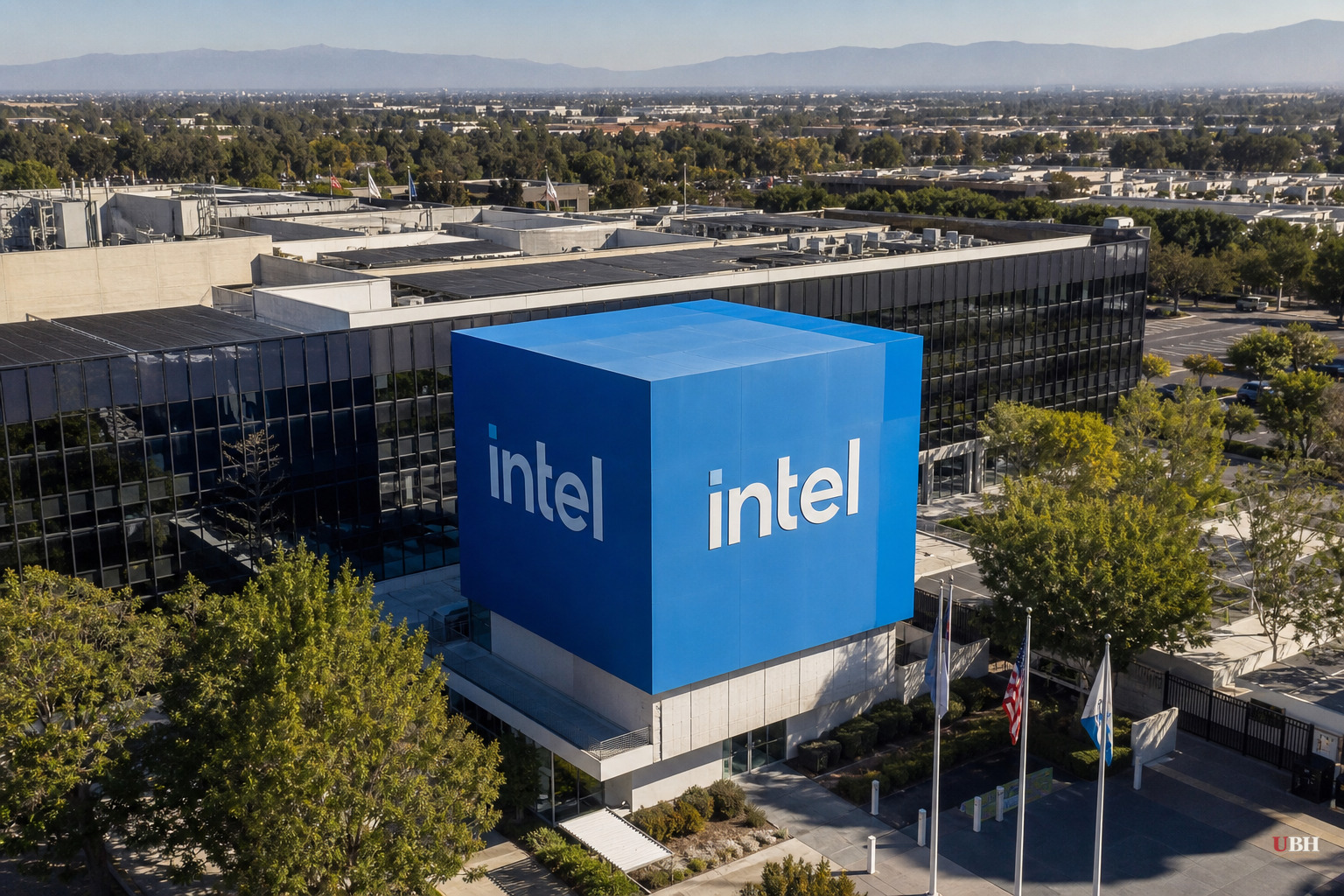
SoftBank Group's 13F filing, submitted to the SEC on August 14, shows the Japanese conglomerate holding 86,956,522 shares of Intel worth roughly $12.14 billion as of June 30. That's about 67% of its entire $18 billion disclosed US equity portfolio, according to the filing and reporting from The Motley Fool, TradingView, and Livemint.
SoftBank didn't buy a single additional share during the second quarter. The count on June 30 was identical to the count on March 31. Founder Masayoshi Son made no new trade. Intel's stock price simply exploded, and the arithmetic of a 13F, which reports positions at quarter-end market value, did the rest.
The Motley Fool laid this out clearly. SoftBank's Intel stake dates to an August 2025 deal to buy $2 billion of stock at $23 a share. By March 31, that position was worth $3.8 billion, about a third of the US portfolio. Then Intel ran toward its 52-week high of $142.35, and the same shares were suddenly worth $12.1 billion. Nothing SoftBank did changed. Intel's price changed.
For comparison, SoftBank's next-largest US holding, warehouse-automation company Symbotic, sits at roughly $1.79 billion, about 9.85% of the portfolio. T-Mobile US is third at $1.68 billion, or 9.23%. Intel is worth close to seven times the next-biggest position combined.
Between June 30 and August 14, Intel shares fell 26.59%, from $139.63 to $102.50, according to figures cited by inkl and billionaires.africa. The Motley Fool noted shares closed even lower on the Tuesday before its report, at $96.69, meaning the same 86,956,522 shares were worth about $8.4 billion at that price, roughly $3.7 billion less than the filing's headline figure. The 67% number was already stale math by the time anyone read it.
Intel's underlying business gave Son something real to point to. The company posted second-quarter fiscal 2026 revenue of $16.128 billion, up 25.4% year over year, its strongest top-line growth in more than 15 years, according to inkl and TradingView. Non-GAAP earnings per share came in at $0.42, nearly double the $0.22 consensus estimate. Data Center and AI revenue jumped 59% to $6.262 billion. CEO Lip-Bu Tan called it the strongest revenue growth in more than 15 years and said Intel has beaten financial expectations for seven straight quarters.
Tan backed his own words with cash. He bought 105,263 Intel shares at $95 each through a family trust last week, a $10 million open-market purchase at the same price as Intel's concurrent $20 billion secondary offering, according to inkl. His beneficial stake now tops 1.3 million shares. That offering itself was upsized from an initial $15 billion proposal to $20 billion, priced at $95 a share for 210.5 million new shares. CFO David Zinsner said capital spending will exceed $20 billion in 2026 and rise further in 2027, funding that management says tracks actual customer commitments rather than speculation.
Some of Intel's run-up traces to politics, not just fundamentals. Shares surged after President Trump posted on social media on June 18 that Apple had agreed to partner with Intel on domestic chip design and manufacturing. Neither company has formally signed or finalized any such arrangement, and analysts estimate high-volume production of Apple chips is still two to three years away, according to inkl and billionaires.africa. That's a real gap between the headline that moved the stock and what's actually been contracted.
Son used SoftBank's annual shareholder meeting in Tokyo to defend the broader AI trade in near-theological terms. Reuters, cited by Breitbart, reported Son telling shareholders it is "blasphemy against AI" to call the current rally a bubble, insisting "AI's potential will be unlocked" and that the technology remains in its early stages. He also revealed SoftBank is exploring an investment in Tokyo Electric Power Co. to expand AI data center capacity in Japan, and said the company is manufacturing robots at a "physical AI plant," claiming it may be first in the world at doing so at scale.
A single institutional holder controlling two-thirds of its own disclosed US portfolio in one stock isn't a diversified strategy. It's a leveraged bet dressed up as conviction. Whether Intel's turnaround is durable or whether the rally is running ahead of signed contracts, particularly the unconfirmed Apple arrangement, remains an open question.
SoftBank's roughly 87 million shares amount to less than 2% of Intel's total shares outstanding, so the position isn't a control stake. But a mark-to-market swing of the size already seen between June and August, nearly $3.7 billion evaporating in six weeks, shows how much of SoftBank's American equity book now moves on Intel's daily price alone. The next 13F, due in November, will show whether Son held, trimmed, or added.
Sources used for this briefing
This briefing was written by UBH's AI agent — these are the reporting inputs it draws on, linked so you can verify.


