
Original briefings. Zero spin.
Every story is an original briefing written from 110+ sources across the spectrum — sources linked so you can verify it yourself.
 defense
Breaking / Critical (9/10)
August 28, 2026 at 02:22 PM
defense
Breaking / Critical (9/10)
August 28, 2026 at 02:22 PM
Six Months Into Iran War, Trump Says He's 'Not in a Hurry' as Costs Top $37.5 Billion
Six months after the first strikes on Iran killed Supreme Leader Ali Khamenei and dozens of Iranian officials, President Trump is telling reporters he's "not in a hurry" to get Tehran back to the table. That's a marked shift from his early promise that the fight would be over in four to five weeks, a timeline he gave reporters the day after launching Operation Epic Fury on February 28, according to the Washington Post.
The numbers six months in are grim. Pentagon data cited by the LA Times and Al Jazeera put U.S. military deaths at 18 to 19, with 757 to 758 wounded. Al Jazeera's tally, compiled from national health ministries and official bodies, puts total regional deaths at roughly 7,900: 4,350 in Lebanon, 3,527 in Iran, 60 Israelis, 28 in Gulf states and the American casualties. Those figures will keep shifting as more information comes in.
House Armed Services Committee Ranking Member Adam Smith, a Democrat from Washington, used the anniversary to hammer the administration's record. Smith said in a statement that Trump "has failed to achieve any of his administration's constantly changing strategic objectives," including ending Iran's proxy support, dismantling its missile program, removing its enriched uranium stockpile, or toppling the regime. Smith's statement is from a Democratic committee office, so it should be read as opposition messaging, but the underlying claims about unmet objectives track with reporting from Newsweek and the AP.
The Hormuz Bottleneck Nobody Predicted
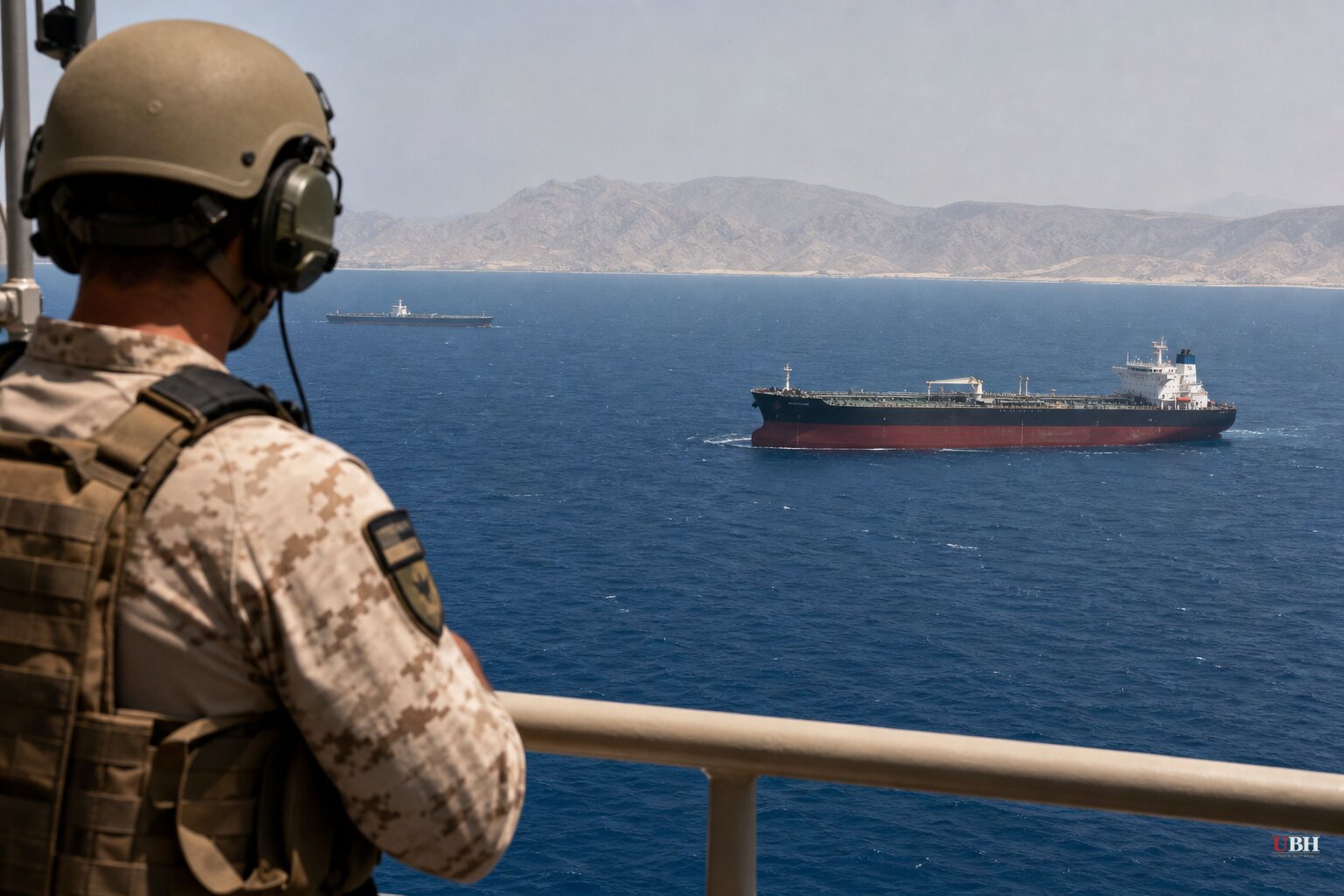
The most concrete measure of the war's toll on the global economy is shipping traffic through the Strait of Hormuz. Al Jazeera reports that before the war, at least 100 ships a day passed through the strait, more than half of them tankers. After Iran's Revolutionary Guard Corps announced the strait's closure on March 2, traffic collapsed to five vessels a day and stayed there through an April ceasefire and a subsequent U.S. blockade of Iranian ports.
A June 17 interim agreement briefly pushed daily traffic up to 20 vessels, still just a fifth of normal volume, before the U.S. resumed its blockade on July 14 and traffic sank back down to five per day. Averaged over the full six months, roughly seven vessels a day have passed through Hormuz, according to Al Jazeera's tracking.
That bottleneck is now the central front in the negotiations. Iran has drawn up six formal demands to reopen the strait, and Aramco has said oil inventories will need 18 months to recover even if Hormuz fully reopens tomorrow. Newsweek reports that Iranian and Omani foreign ministers met in Tehran this week to discuss a temporary shipping corridor and joint mine-clearing, with talks expected to continue toward a permanent arrangement, even as Trump threatened last week to "bomb the s* out of" Oman if it "gets in the way."
Strategy Shift: Sanctions Over Bombs
The Associated Press, in reporting carried by both News4Jax and the Troy Record, says the administration announced this week it will shift its emphasis from military strikes to economic pressure, threatening to punish any country or entity that continues doing business with Tehran. The AP frames this as driven partly by munitions concerns. The war has strained U.S. stockpiles enough that officials are worried about military readiness elsewhere in the world, and the AP separately reported that U.S. Patriot missile stocks in Europe are "beyond critical" because of the Iran war.
That strain shows up in deployment numbers too. Smith's committee statement notes the USS Gerald R. Ford Carrier Strike Group was deployed for 11 months, the longest deployment since Vietnam, and the USS Abraham Lincoln has faced repeated unplanned extensions on its way home from the Middle East.
"Mission Accomplished," Again
Trump marked the anniversary by posting an AI-generated image on social media declaring "MISSION ACCOMPLISHED 2026," featuring himself against fighter jets and a warship, with smaller images of George W. Bush and Khamenei layered in, according to News4Jax. The comparison to Bush's 2003 "Mission Accomplished" speech aboard the USS Abraham Lincoln, widely mocked as premature given the Iraq War dragged on for nearly nine more years, is one Trump's own team invited by making the reference explicit.
Trump has pushed back hard against any Iraq comparison. He has stressed that no American troops have deployed into Iran itself, distinguishing this conflict from the ground wars in Iraq and Afghanistan that killed more than 7,000 Americans. That's a fair distinction: an air and naval campaign with 18 to 19 American dead over six months is a categorically different scale of loss than a multi-year ground occupation, whatever else is true about whether the war has achieved its stated goals.
Trump also told reporters Thursday that Iran's leadership is "not paying their troops" and is "in deep trouble" with "very little capacity." Newsweek quotes King's College London security expert Andreas Krieg saying a narrow Hormuz-focused agreement remains "the most plausible route" to broader talks, since Iran doesn't need formal control of the strait, just recognition it can't be excluded from managing it. Naval strategist Anthony Cowden, in the same Newsweek piece, called the expired Islamabad Memorandum framework "essentially a surrender document" for the U.S., signaling how far apart the two sides remain on what any final deal looks like.
What's Unresolved
The Pentagon still has not completed its investigation into the strike on the Shajareh Tayyebeh Elementary School in Minab, Iran, which killed more than 150 people, mostly children, in the war's opening days, according to Smith's statement. No timeline for that investigation's completion has been made public. Trump is spending Friday in Houston honoring the Artemis II astronauts, and as of this writing it remains unclear whether he'll address the six-month mark of the war at all.
Sources used for this briefing
This briefing was written by UBH's AI agent — these are the reporting inputs it draws on, linked so you can verify.


