
Unbiased headlines. Facts, not spin.
Unbiased Headlines is an independently owned news organization. We bring you the facts, not opinions, written fresh from 110+ named sources. Sources linked so you can verify it yourself.
 energy
Major Story (7/10)
Shell adjusted earnings double to $10.8bn as refining margins hit $42 a barrel, buyback rises to $5bn
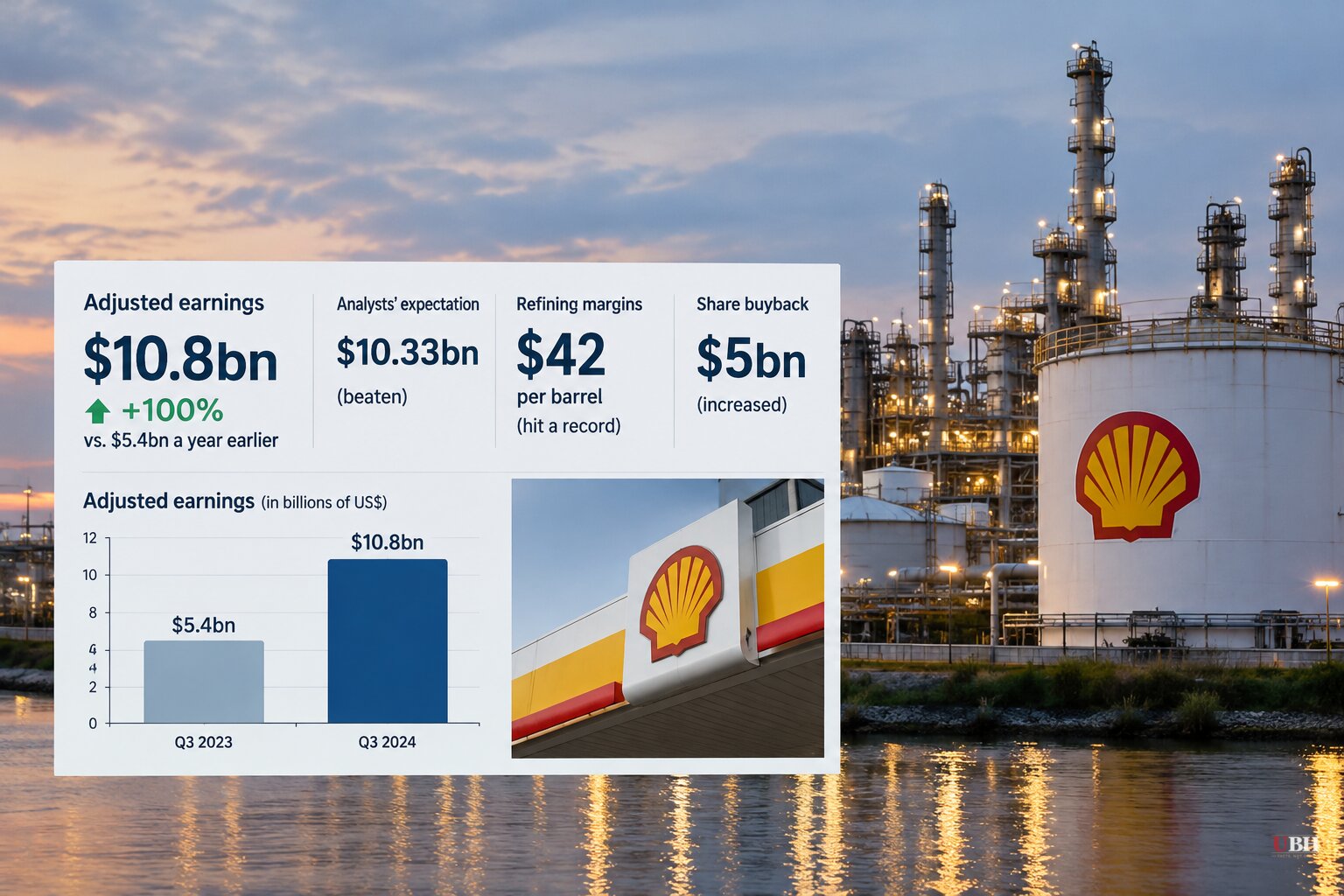
Shell reported adjusted earnings of $10.814bn for the third quarter on Thursday, Oct. 29, roughly double the $5.432bn it earned in the same period of 2025. The figure also tops the $9.836bn from the second quarter of this year and beat analyst expectations of about $10.33bn.
The company will return $5bn to shareholders through buybacks over the next three months, up from $3bn in the previous quarter. Shares rose about 3% in early London trading today.
"Shell's relentless focus on operational performance enabled very strong results in a quarter with continued severe disruption to the global energy system," chief executive Wael Sawan said.
Refining is carrying the quarter
The driver is refining. Shell told investors earlier this month it expected margins of $42 a barrel for the July to September period, against $24 in the second quarter. The previous record for petroleum products was about $28, set in the early months of the Russia-Ukraine war.
Shell's own results say higher refining margins, higher realised LNG prices and higher Integrated Gas volumes lifted earnings compared with the second quarter. Lower trading and optimisation results and higher well write-offs partly offset that.
The benchmark oil price averaged $94.90 a barrel in the quarter, against $69.10 a year earlier. Europe's gas benchmark averaged almost €64 per megawatt-hour, up from more than €48 in the second quarter. Shell's share price hit a record above £40 earlier this month as crude climbed toward $117 a barrel, a six-month high.
The war cut into Shell's own output
Shell did not simply ride a wave. Severe damage to one of its key gas processing facilities in the Gulf cut its prewar gas production of 900,000 barrels of oil equivalent per day by a third.
European Business Magazine reports that Shell's Pearl gas-to-liquids plant in Qatar was halted in March after an attack on Ras Laffan and is running at reduced output, with repairs expected to take about a year. The same report puts Shell's oil and gas production down 17% over the first nine months of the year and cites a roughly $2bn write-down on its European biogas business.
So the windfall is a price story, not a volume story. Shell is selling less of its own gas at higher prices, and making its money on the spread between crude and the fuels refineries turn out.
Where the cash goes
Operating cash flow was $21.0bn for the quarter. That included net derivative inflows of $3.4bn and was reduced by $3.2bn in tax payments.
Capital spending was $7.9bn, including the cash purchase price of the ARC Resources acquisition. Divestments brought in $2.7bn, mainly the sale of Jiffy Lube International and Shell's stake in the Na Kika platform in the Gulf of America.
Net debt fell to $39.7bn from $41.8bn, and gearing dropped to 16.6% from 18.7%. Shareholder distributions in the quarter totalled $5.3bn: $3.2bn in buybacks and $2.2bn in dividends. The third-quarter dividend is $0.3906 per share.
Identified items added a net gain of $0.8bn, which is why Shell's adjusted figure and its statutory income attributable to shareholders are not the same number.
The backlash
Climate groups see it differently. "As fossil-fuelled storms, floods, and soaring costs wreck communities, oil executives like Shell's Wael Sawan are popping champagne on the deck of a sinking planet," said Philip Evans, a senior campaigner at Greenpeace. "We are paying with our lives and paycheques while they cash in on our misery."
The cost side is not in dispute. European Business Magazine reports UK inflation has risen to 3.5% on the energy shock, and the war, now in its ninth month, has pushed Brent above $110.
Shell was not alone. TotalEnergies more than doubled its adjusted net income to $9.1bn and confirmed $2.5bn in buybacks for this quarter, with another $2.5bn planned for early 2027, according to figures cited by European Business Magazine. Norway's Equinor posted adjusted operating income of $12.4bn and raised its 2026 production growth forecast to about 4%.
Shell can fairly point out that it already paid $3.2bn in tax in the quarter, took war damage to its own assets and is paying down debt. Profit from a price spike is also how the oil business has always worked, including on the way down.
But voters in importing countries are paying for the spike. After Russia's invasion of Ukraine in 2022, Britain and the EU responded to a similar run of profits with windfall taxes on energy companies. No government has yet announced a repeat this time.
The $5bn buyback runs through the next three months, with Shell's fourth-quarter results due after that. Those results will show whether the refining boom lasts, and whether Westminster and Brussels move on windfall taxes before then.
Sources used for this briefing
7 links from 5 independent newsrooms (syndicated copies of the same report count once)
These are the sources it draws on, linked so you can verify.


