
Unbiased headlines. Facts, not spin.
Unbiased Headlines is an independently owned news organization. We bring you the facts, not opinions, written fresh from 110+ named sources. Sources linked so you can verify it yourself.
 energy
Major Story (8/10)
Event date: September 29, 2026 ·
Goldman Puts Global Refinery Outages at 5.8 Million Barrels a Day, Above Its Own Worst Case
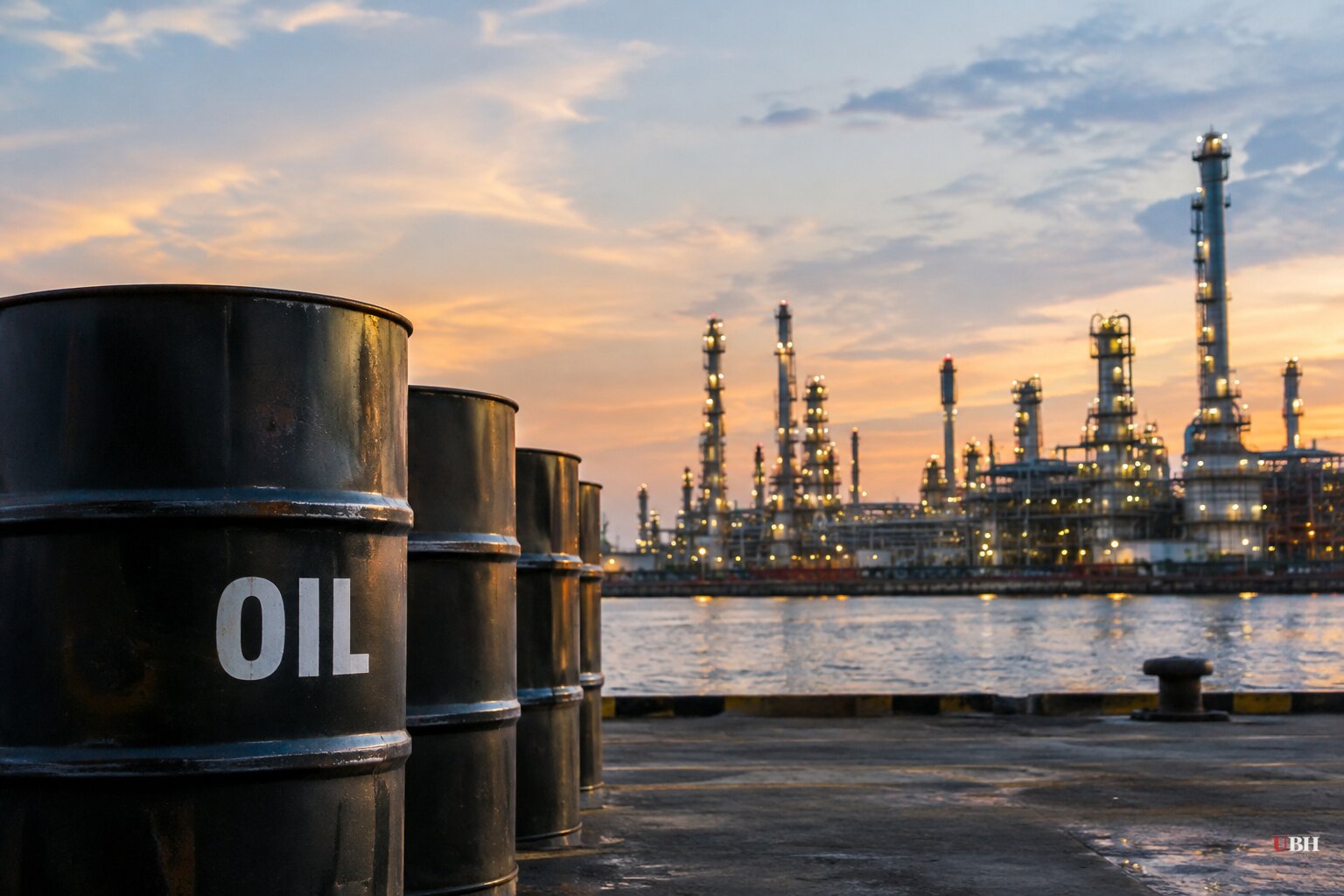
The Houthis' claim of a strike on Saudi Arabia's Ras Tanura refinery grabbed headlines this week. The larger number came from Goldman Sachs. Its commodities team said in an Oct. 27 report that refinery outages have blown past the firm's worst-case scenario.
Middle East outages run about 1.6 million barrels per day above average. Russian outages run about 4.2 million barrels per day above average. The 5.8 million combined total tops the 5 million barrels per day that Goldman used as its worst-case assumption in its "Nightmare Refining Crisis" report last month.
Goldman's conclusion is blunt: diplomacy can lower crude prices, but "damaged refinery facilities cannot be restarted through negotiations." The firm expects the product shortage to last into next year.
No spare capacity left
The United States was the one place with room to spare. Goldman says U.S. refinery utilization has reached its highest level since 1998, so that cushion is gone.
The Dallas Fed reached a similar conclusion earlier this month. In an Oct. 8 report, analysts Jesse Thompson and Garrett Golding said refinery damage, shipping constraints and export restrictions have sidelined as much as 10 percent of global refining capacity. Crack spreads, the gap between crude and wholesale fuel prices, now exceed levels reached after Russia's 2022 invasion of Ukraine.
The analysts said the pricing reflects supply constraints "rather than retailer or distributor markup." The AAA national average gasoline price was about $4.36 a gallon on Oct. 8, against about $3.12 a year earlier. It is the first October the average has topped $4.
Crude is moving. Fuel is not.
Goldman's figures show how uneven the recovery is. Persian Gulf crude exports have returned to 92% of last year's level. Aviation fuel exports are at 54%, diesel at 34% and gasoline at 10%.
Refined products are harder to move. They are flammable and vary by specification, so the ship-to-ship transfers used to work around the Strait of Hormuz are difficult to apply.
Freight is part of the squeeze. Crude freight hit a record $24 per barrel this month, about eight times last year's roughly $3, according to Goldman. Some product tankers have been shifted to carry crude, which cuts the shipping capacity left for gasoline, diesel and jet fuel.
Clarksons, the London research firm, puts the daily cost of hiring a supertanker from the Gulf to China at $1.6 million. It was $65,000 last year and $230,000 just before the war began. Tom Kloza of Gulf Oil says getting a barrel out of the Gulf used to cost about $2 and now costs about $33.
The United Kingdom Maritime Trade Operations has reported multiple commercial vessels struck by projectiles in the Strait in recent days, including at least two crude tankers.
Russia and the Gulf
Ukraine's drone campaign is the biggest single driver on the Russian side. A Washington Post analysis found at least two-thirds of the 36 major Russian refineries tracked by S&P Global Energy were hit between April 1 and Aug. 31, at a rate of one strike every three days. More than half of the 54 strikes it examined appear to have damaged desalting and distillation units, parts that sanctions have made hard to repair. The Moscow refinery hit on June 16 was still offline in September, according to Kpler.
The Wall Street Journal reported this week that Ukraine has launched more than 100 drone attacks on about 30 Russian refineries. Industrial Info Resources estimates the combined capacity of the damaged plants has fallen from 6.1 million barrels per day to 1.6 million. Russia has banned diesel exports and curbed gasoline exports.
President Trump struck a deal with Vladimir Putin for 300,000 tons of Russian diesel next month. Analysts cited by OilPrice.com put that at roughly 75,000 barrels per day, a small fraction of U.S. demand.
In the Gulf, Saudi authorities have not confirmed the Houthi claim on Ras Tanura, which has 550,000 barrels per day of capacity. Iranian retaliatory strikes earlier this year already damaged refineries in Gulf states. International Energy Agency chief Fatih Birol warned this week that crude and gas prices will stay elevated next year, and that "the prices for products are even much higher."
The domestic argument
Not everyone blames the war alone. A Fox News opinion column argues the Iran war "explains the timing" of high heating costs but not the vulnerability. The column says state policy is the problem. It points to the 130 operable U.S. refineries, down from 301 in 1982, and to New York's blocking of the Constitution Pipeline. It also criticizes New York City's Local Law 97 emissions fines.
The Dallas Fed report adds a long-term view. China and the Middle East added 4.4 million barrels per day of refining capacity from 2019 to 2025. Europe and North America lost 2.1 million as older plants closed amid thin margins, regulatory costs and aging equipment.
What comes next
Goldman flagged one more pressure point. Scheduled fall maintenance is down 27% from last year, but the work has been pushed back, not canceled. Around next May, scheduled maintenance is expected to reach about 7.7 million barrels per day, above this year's peak of about 6 million. Asia outside China is expected to exceed 140% of average levels.
Goldman warned that the delay raises the risk of unplanned outages and could "significantly" shrink diesel and jet fuel exports. Inventories are already thin: Singapore middle distillate stocks are down 44% from a year ago, and European jet fuel stocks in Amsterdam, Rotterdam and Antwerp are down 56%.
Demand has eased, with European oil demand and U.S. gasoline demand each down about 2%. Goldman assesses that as insufficient to rebalance the market.
Sources used for this briefing
7 links from 6 independent newsrooms (syndicated copies of the same report count once)
These are the sources it draws on, linked so you can verify.


