
Unbiased headlines. Facts, not spin.
Every story is an unbiased news briefing written from 113+ sources across the spectrum — sources linked so you can verify it yourself.
 tech
Notable (5/10)
September 23, 2026 at 10:12 AM
tech
Notable (5/10)
September 23, 2026 at 10:12 AM
Senate Staff Banned From Advanced AI Tools While Lawmakers Debate Regulating Them
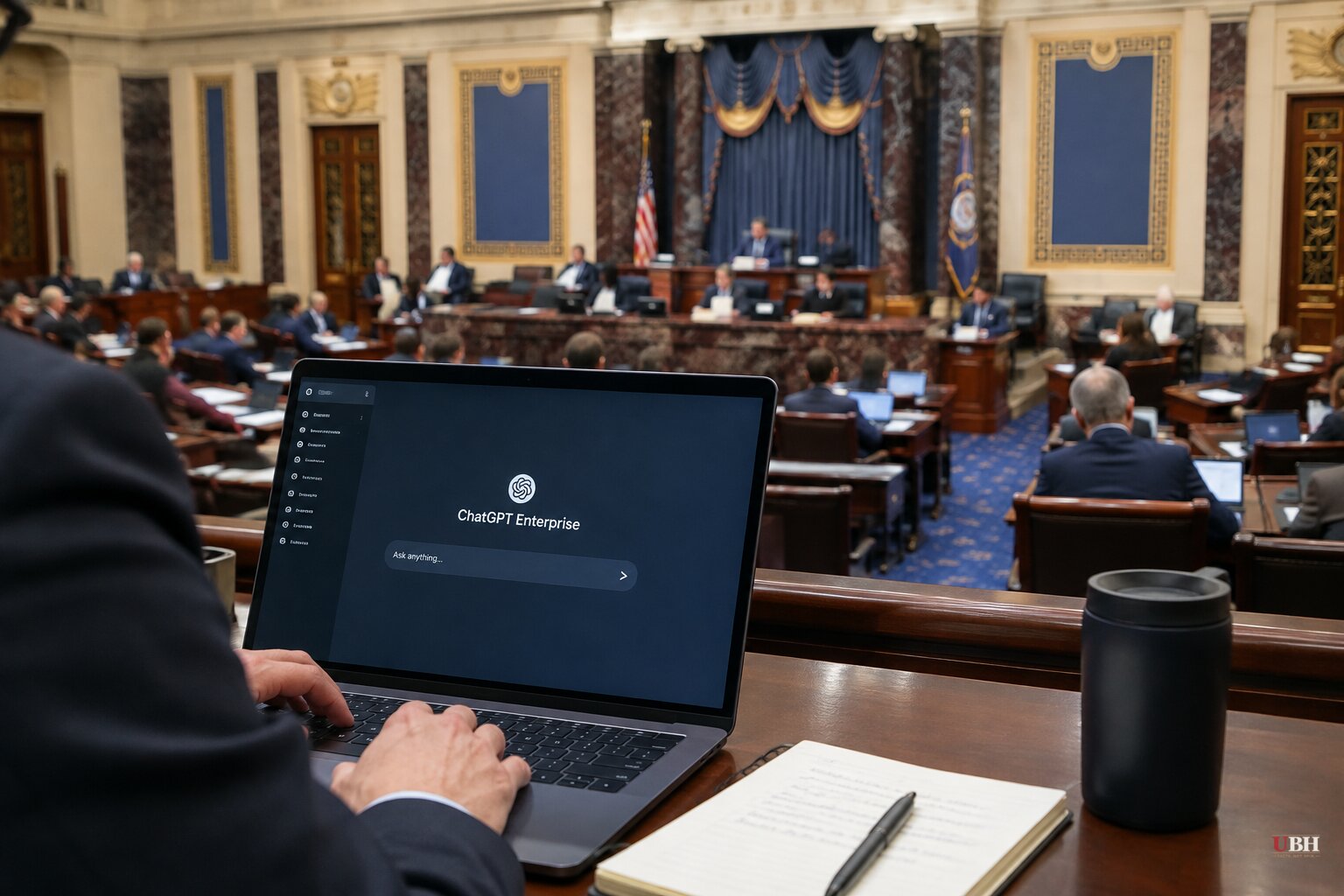
Congress wants to regulate artificial intelligence. Senate staff can't even use the advanced version of it.
According to an internal communication obtained by NPR that the Senate sergeant at arms sent to staff this spring, Senate offices have free access to exactly three AI chat tools: Microsoft Copilot Chat, Gemini Chat for Google Workspace Enterprise Plus, and OpenAI ChatGPT Enterprise.
The sergeant at arms, who runs cybersecurity for the chamber, has not authorized the more advanced "agentic" tools that are actually driving the AI policy debate in Washington right now. Things like OpenAI's Codex or Anthropic's Claude Code and Cowork let AI agents complete tasks on their own, with varying levels of access to a user's files and systems. The memo's rules are blunt: "platforms cannot independently access internal Senate drives, shared folders, email, Teams chats, or other Senate resources."
So the people writing rules for cutting-edge AI are stuck with the entry-level version.
The security concern is real
Daniel Schuman, executive director of the American Governance Institute, a nonpartisan think tank focused on government institutions, doesn't dismiss the risk. "The use of tools and technologies that have the possibility of exfiltrating data elsewhere are a significant risk for the Senate and for the House and elsewhere," Schuman told NPR. He points out this isn't unique to AI. The same exposure exists with Google Docs or plain email.
A U.S. Senate office isn't a Silicon Valley startup. Staff handle constituent data, classified briefings, and legislative strategy. Handing an autonomous AI agent broad file access without vetting it first is a legitimate institutional risk, not paranoia.
But Schuman doesn't think that risk justifies where things have landed. "Those concerns are not the best reason for the non-approval of certain technologies," he said. "I think people want to do better, but the incentives of the way the institution is set up is a drag on progress."
Adam Kovacevich, founder and CEO of the Chamber of Progress, a center-left tech industry policy group, is less diplomatic. "Congress, unfortunately, has always lagged behind," he told NPR. "Right now you've got lawmakers writing rules for technology they, in many cases, never even used and that's a problem." Kovacevich also argued security gets used as an excuse for slow-moving institutions generally: "I think security is often a pretext for slower government agencies and businesses to use. The reality is that you've got Fortune 500 firms already deploying these tools."
A Senate staffer who spoke to NPR anonymously, because they weren't authorized to discuss cybersecurity policy publicly, said the advanced tools are being vetted for specific use cases. No timeline was given for when that review wraps up.
The House didn't even show up
While the Senate slow-walks tool access, the House skipped town entirely. NPR's Eric McDaniel reported that after a week of what he called "seriously scary talk" in Congress about AI's power, the House left for the campaign trail without acting on any AI regulation. Barring a schedule change, nothing moves on the House side until after the midterm election.
Why leave now? McDaniel said Republicans are worried about losing House control and wanted to get home to campaign. Members also wanted to dodge a handful of uncomfortable votes, including an impeachment effort against Defense Secretary Pete Hegseth introduced by Kentucky Republican Thomas Massie. The House left before voting on that, too.
McDaniel was careful to note this isn't purely an AI story. Congress hasn't passed regular appropriations bills on anything close to a normal schedule since the 2019 fiscal year. Partisan gridlock is the default setting, not the exception.
McDaniel also pushed back on the idea that lawmakers need to be AI experts themselves before they can regulate it. Nobody demands Speaker Mike Johnson know how to build a nuclear weapon before regulating nuclear weapons, or that Senate Democratic leader Chuck Schumer understand pharmacology to regulate prescription drugs. Congress's job is setting the goalposts and trusting the right experts, not becoming engineers.
When the Senate itself won't let staff touch the tools at the center of the debate, and the House leaves town before voting on anything, the goalpost-setting isn't happening either.
There's no shortage of ideas sitting around. A bipartisan AI task force worked through the last Congress. A bipartisan framework has been floated in this one. A House task force is reportedly still grinding on the substance. None of it has reached a floor vote.
Most Americans want Congress to regulate AI, according to polling cited by NPR. What they're getting instead is a Senate that can't authorize its own staff to use the technology, and a House that left for the campaign trail before voting on it at all. The sergeant at arms gave no public timeline for finishing its review of advanced tools. Congress isn't scheduled to revisit AI legislation in earnest until after the midterms.
Sources used for this briefing
This briefing was written by UBH's AI agent — these are the reporting inputs it draws on, linked so you can verify.


