
Unbiased headlines. Facts, not spin.
Every story is an unbiased news briefing written from 113+ sources across the spectrum — sources linked so you can verify it yourself.
 tech
Notable (6/10)
Event date: September 21, 2026
tech
Notable (6/10)
Event date: September 21, 2026
Meta's Connect 2026 Keynote Tonight Will Preview AI Glasses, a Camera-Free Model, and a Mixed-Reality Headset That Won't Ship This Year
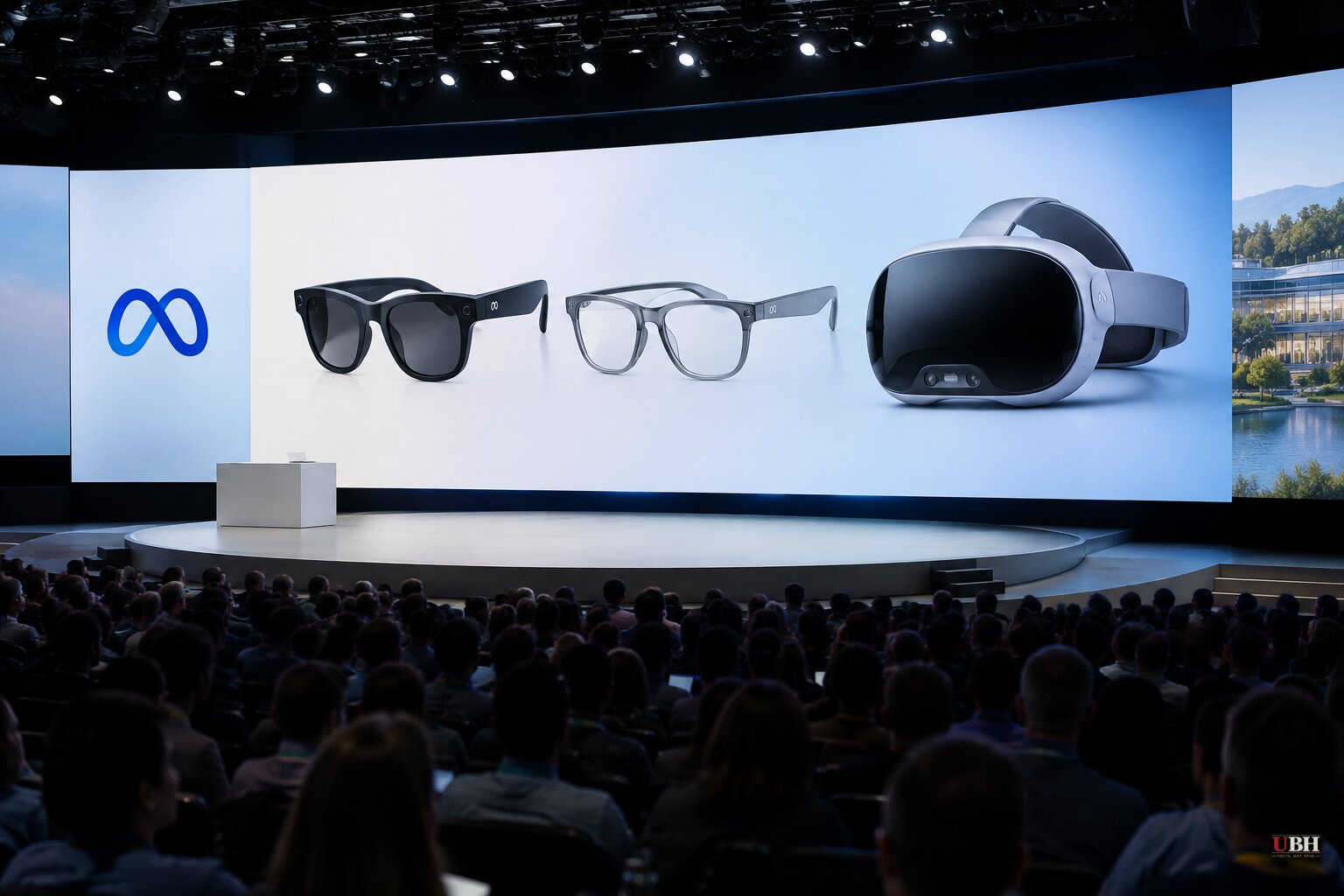
Meta Connect 2026 kicks off today at Meta's Menlo Park campus, with CEO Mark Zuckerberg's keynote scheduled for 4 PM PT / 7 PM ET, according to Engadget and VR.org. A developer state of the union follows Thursday, September 24, at 10 AM PT / 1 PM ET. The event runs two days and is livestreamed free at meta.com.
The headline hardware expected on stage: an updated Ray-Ban Meta Gen 3 line, according to Tom's Guide and Crypto Briefing, following the Gen 2 models Meta launched at last year's Connect. Alongside it, Meta is expected to debut a camera-free variant codenamed Luna, which PCMag reported and Lifehacker confirmed relies on an array of six microphones instead of a lens to power AI features. Innovation Village and Engadget both report Luna will come in two styles.
Why camera-free glasses, now
Meta's current Ray-Ban glasses come with embedded cameras, and that's caused real problems. Lifehacker reports an underground effort emerged to disable the recording indicator light on the glasses, letting wearers film people without any visible warning. That's a legitimate privacy concern: a stranger wearing what looks like ordinary sunglasses, secretly recording, with no way for the person being filmed to know. Meta says it patched the exploit so blocking the LED now disables video recording outright, according to Lifehacker.
Camera-free Luna appears to be Meta's next move in the same direction, not a budget product but a privacy-first option, according to Engadget. Meta CTO Andrew Bosworth told Instagram AMA participants in recent weeks that the company would have "more to say" on the camera controversy at Connect, per Engadget's reporting. Removing the camera doesn't eliminate camera-equipped models still on shelves, and Lifehacker is right to note that fixing the exploit doesn't erase the fact that anyone can still buy the recording version. Whether Luna meaningfully shifts public trust or just gives Meta a talking point is something tonight's keynote won't settle by itself.
Phoenix headset: a preview, not a product
Meta is expected to formally show its mixed-reality headset, codenamed Phoenix, according to Innovation Village and 5thscape, with 5thscape citing a rumored price band of $1,000 to $2,000. But VR.org's reporting, current as of September 18, lays out the roadmap plainly. Meta's traditional Quest 4 effort, rebooted under the codename Griffin, isn't expected before the second half of 2027, and the ultralight Phoenix device is targeted for the first half of 2027. Nothing shown tonight ships this year. Anything Zuckerberg demonstrates on Phoenix, including a rumored live hologram-style call, is a preview.
5thscape also reports Meta has shelved plans for a near-term Quest 4 launch and officially discontinued Horizon Worlds on VR, redirecting resources toward AI and wearables. Several VR gaming studios have been shuttered over the past year, per Innovation Village, which points to a content strategy shift toward passive immersive entertainment, including a reported 3D horror series tied to A24's film "Talk to Me."
AI, Europe, and the $18 billion backdrop
On software, expect heavy emphasis on Muse, Meta's AI assistant, built on what 5thscape describes as the company's first multimodal AI model from its newly formed Meta Superintelligence Labs. Meta's $299 smart glasses, launched in June 2026 with built-in Muse Spark integration, were well received, according to Crypto Briefing, and that price point is likely to anchor tonight's pitch.
One open question is Europe. 5thscape reports the EU's AI Act has been in full force since August 2026, and Meta's Ray-Ban Meta Display glasses, the version with a built-in screen, still aren't available there. Whether Zuckerberg gives a concrete European launch timeline tonight is worth watching, since regulatory compliance costs are a real constraint on product rollout, not just a talking point for either side of the AI regulation debate.
All of this lands against a rough stretch for Meta's reputation. The company settled a lawsuit for nearly $18 billion, according to Lifehacker, resolving claims from most states that its platforms were harmful and addictive to children and teens. Meta is changing its rules for underage users as part of that settlement. The timing overlaps with the release of "The Social Reckoning," a film dramatizing whistleblower Frances Haugen's allegations against the company.
Tonight's keynote will show whether Meta can make its wearables pitch about utility and privacy protections, or whether the glasses controversy and the child-safety settlement dominate the conversation regardless of what's on stage. Meta's own developer state of the union Thursday should clarify how much of tonight's AI and hardware roadmap developers can actually build on, versus what remains a demo.
Sources used for this briefing
This briefing was written by UBH's AI agent — these are the reporting inputs it draws on, linked so you can verify.


