
Unbiased headlines. Facts, not spin.
Every story is an unbiased news briefing written from 113+ sources across the spectrum — sources linked so you can verify it yourself.
 tech
Notable (6/10)
September 23, 2026 at 09:15 AM
tech
Notable (6/10)
September 23, 2026 at 09:15 AM
US Embassy Tells Australia Its Social Media Feed Bill Risks 'Viewpoint-Based Censorship'
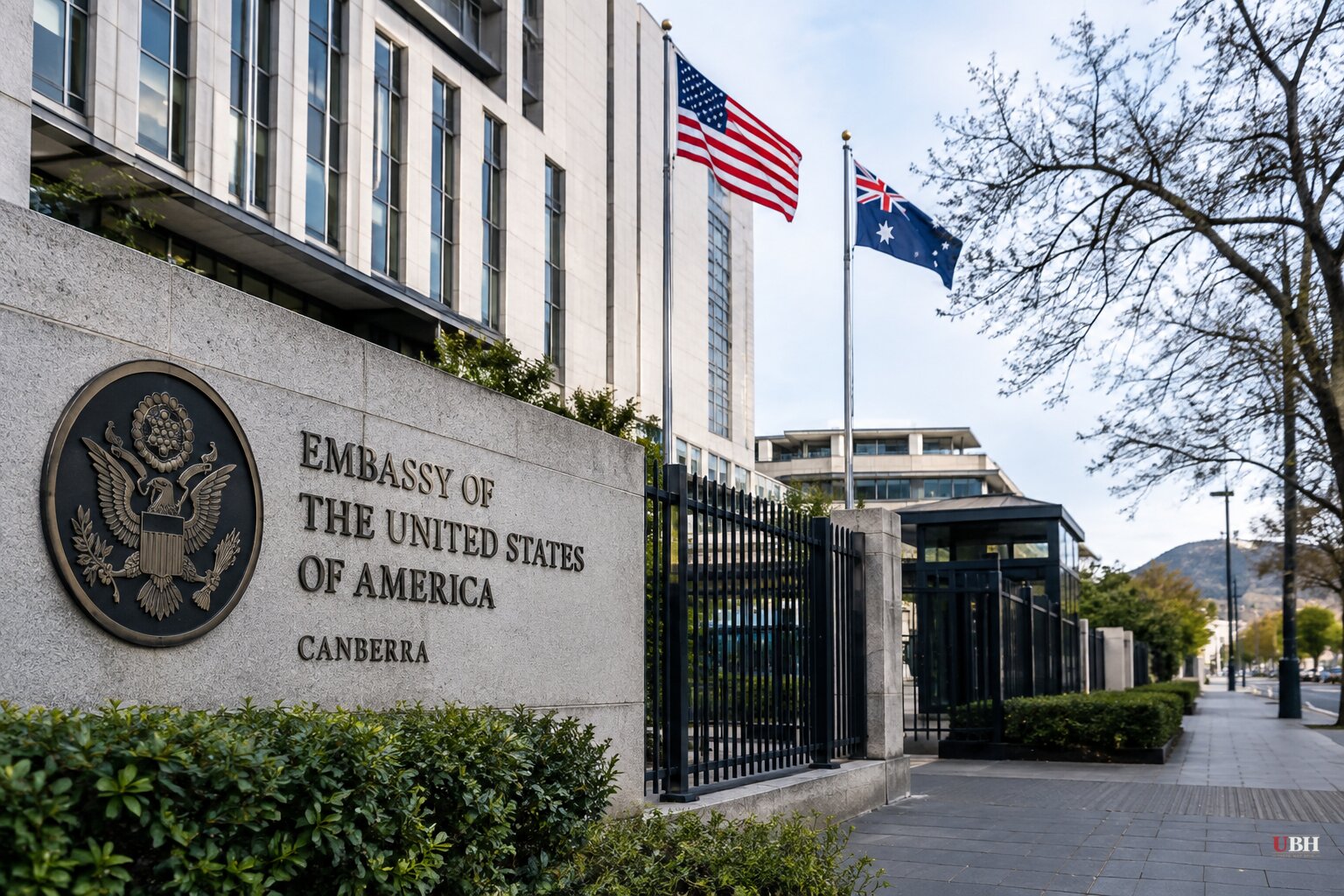
Australia's Labor government wants to let social media users switch off algorithmic recommendation feeds. The US government says the plan, as written, could become a tool for censoring speech Washington considers protected.
The fight is playing out through Australia's draft "Digital Duty of Care" laws, part of an initiative called "My Feed, My Way." The exposure draft was released earlier this month, according to The Independent, and is currently in a public consultation period before any bill goes to Parliament. It has not been introduced or voted on.
Under the draft, platforms would have to notify Australia's more than 21 million social media users and give them a choice: stick with an algorithm-curated feed, or switch to one showing only accounts they follow, in chronological order. Companies that don't comply face fines The Independent reports at up to $72 million (A$100 million). Newsy Today cites a different figure, up to A$109.2 million (about $78.6 million), a discrepancy neither outlet resolves but worth flagging since the two numbers don't match.
What the US actually objected to
The US Embassy in Canberra filed a formal submission during the consultation window. The core objection isn't the opt-out button itself. It's what platforms would be required to do to satisfy a government-defined "duty of care" in the first place.
The submission warned that a framework empowering officials to "enforce vague definitions of 'harm'" would push platforms to "over-moderate speech that should be protected to avoid regulatory penalties," according to The Guardian. If Australia compels platforms to aggressively filter algorithmic feeds to meet a harm mandate, the US argued, the effect on a "disfavored speaker" could be indistinguishable from outright removal.
The US also flagged that Australia's communications minister would have legal power to declare "foreseeable harm," a discretion Washington says risks letting the "biases and preferences" of government officials disadvantage independent or minority-viewpoint speech, per the BBC. And because major platforms operate globally, the submission said mandated design changes "may affect what users see, say, and hear not just in or from Australia, but globally."
Governments and platforms have a track record, including in the US during COVID-era content moderation fights, of using broad "harm" or "misinformation" labels to suppress views that turned out to be contested rather than false. A law that hands a single minister the power to define "foreseeable harm" for an entire country's information diet deserves scrutiny before it becomes binding law, not after.
Albanese's response
Albanese pushed back while in New York for the UN General Assembly. "It's not about giving government control, it's about giving people back control over what they receive on their devices," he told reporters, according to The Guardian. He noted the government has only released an exposure draft, hasn't introduced legislation, and said he hopes the policy won't become partisan.
That framing is defensible on its own terms. An opt-out mechanism that lets a user choose a chronological feed over an algorithm is, mechanically, an expansion of user choice, not a restriction on speech. Nobody is banned from posting anything under that piece of the plan.
But the Coalition, Australia's center-right opposition, isn't buying the full package either. The Guardian reports the Coalition opposes the duty of care laws on the grounds they would hand government too much power to regulate online content, meaning the skepticism isn't purely an American import. It's shared by at least part of Australia's own political spectrum.
The bigger picture
This dispute lands nine months after Australia's world-first ban on social media accounts for anyone under 16, which took effect last December. The new duty of care push is framed by Canberra as the next phase of the same child-safety agenda, targeting content related to eating disorders and hostility toward women, among other categories, according to Newsy Today.
Despite the policy clash, the personal relationship between the two leaders showed no sign of strain. Albanese posted a photo with President Trump from the UN sidelines captioned "Always good to catch up with @potus." Trump, in his own UN address, dismissed calls for AI guardrails and argued the technology should be rebranded "super intelligence" because "artificial" makes it "sound fake," a comment unrelated to the Australia dispute but delivered in the same speech where AI regulation was on the table.
Australia's consultation period is still open. No bill has been introduced to Parliament, no vote has been scheduled, and the government hasn't yet responded in writing to the specific definitional questions the US raised about how "harm" will be determined and by whom. Whether Canberra narrows that definition, or leaves the minister's discretion intact, will determine whether this becomes the global test case the US embassy fears it could be.
Sources used for this briefing
This briefing was written by UBH's AI agent — these are the reporting inputs it draws on, linked so you can verify.


