
Unbiased headlines. Facts, not spin.
Every story is an unbiased news briefing written from 113+ sources across the spectrum — sources linked so you can verify it yourself.
 tech
Notable (6/10)
September 23, 2026 at 08:57 AM
tech
Notable (6/10)
September 23, 2026 at 08:57 AM
Discord Rolls Out Automated Age-Sorting System Worldwide This Week
What Changed
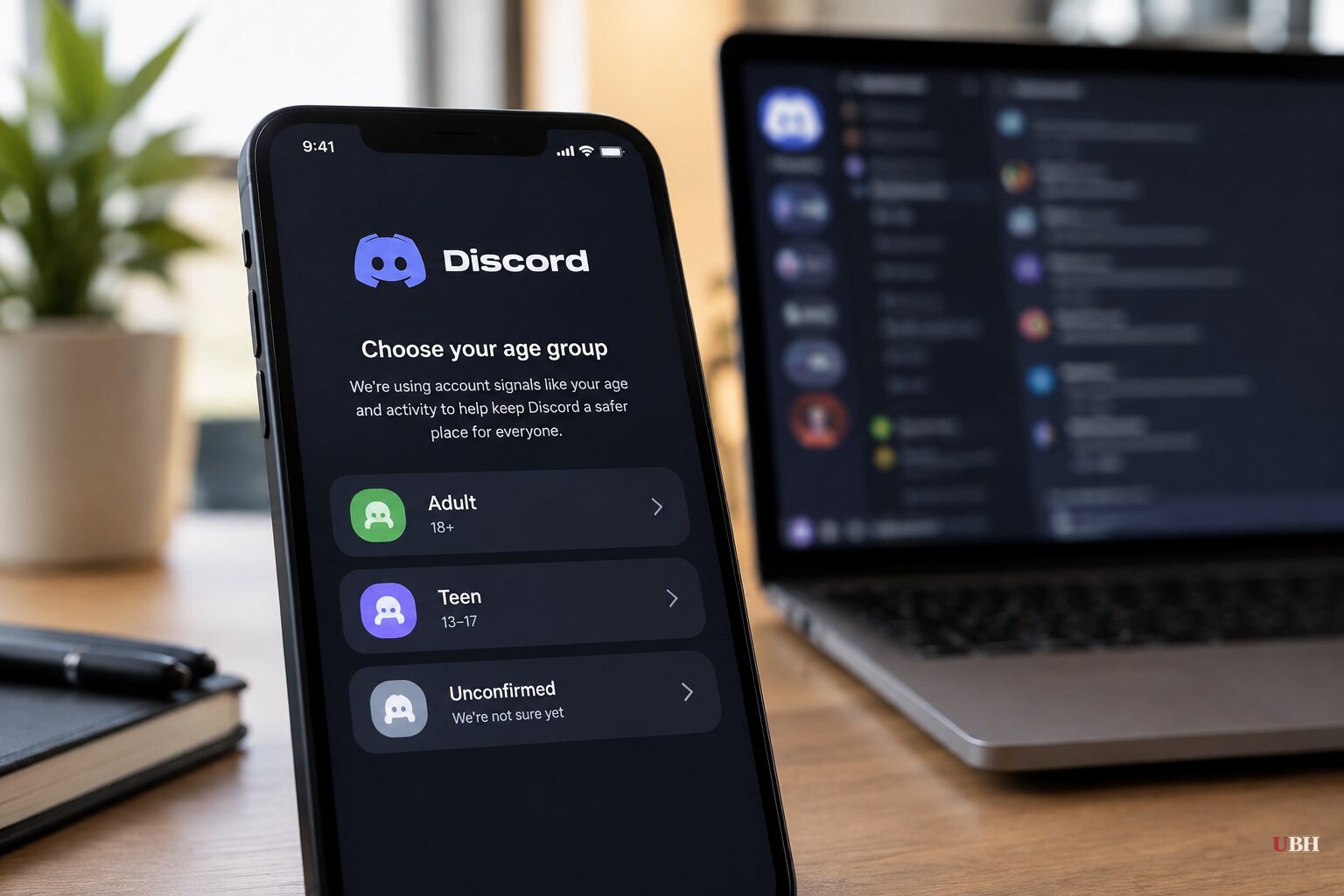
Discord is rolling out a revised age-verification system worldwide starting this week, according to Softonic, which reported the global rollout begins Wednesday. The company had originally planned to require facial age estimation or an ID scan for any user its systems couldn't already confirm as an adult. That plan got shelved in February 2026 after users balked at handing over government IDs and selfies, according to Engadget and tech.yahoo.
What Discord built instead relies on behavior, not documents. The platform will automatically place accounts into one of three buckets: Adult, Teen, or Unconfirmed, using signals like how long an account has existed, which servers it's in, and general activity patterns, according to Engadget and Innovation Village. Discord's blog post says none of that draws on message content, calls, or demographic data. Discord Chief Technology Officer Stanislav Vishnevskiy said in a Tuesday blog post that more than 90% of users won't need to do anything, according to KuCoin.
How the Model Was Trained
The classification model didn't come from nowhere. Discord says it trained the system using confirmed age data already collected in Brazil and Texas, two places where local law already forced the platform to verify ages, according to KuCoin. That's a legitimate use of existing regulatory compliance data, but it also means the model's accuracy for the rest of the world rests on how well behavior patterns from those two markets generalize globally. This point is missing from the coverage.
What Happens If the System Gets It Wrong
Anyone flagged as Unconfirmed still has to prove their age, and the options are a mix of low-friction and high-friction. Depending on region, users can confirm via credit card, Apple App Store account data, Google Play Store data, Google Wallet, or a service called AgeKey, according to Engadget, tech.yahoo, and Innovation Village. If none of that applies, the fallback is still an ID scan or a video selfie.
Discord says it's tightened the rules around those fallback methods. Third-party age-assurance vendors must permanently delete a user's data once verification is complete, and facial age estimation has to run entirely on the user's device rather than uploading biometric data to a server, according to Innovation Village and KuCoin.
Restrictions for Teen Accounts
Accounts sorted into the Teen group get three concrete changes. Messages from non-friends get routed to a separate requests inbox, and Discord will flag friend requests from users with no mutual friends or shared small-server membership before a teen can accept them. Age-gated content, including images flagged as sensitive and any servers or bot commands restricted to adults, becomes invisible to teen accounts. A teen's full profile and activity history is only visible to friends and members of smaller servers, according to Engadget and KuCoin.
The Privacy Concern, Stated Fairly
Critics of the system have a specific, fact-based complaint, not a vague one. They point to a 2025 breach involving a third-party vendor Discord worked with, which exposed roughly 70,000 users' verification data, including government ID photos and selfies, according to Softonic and KuCoin. That's not a hypothetical risk. It already happened once under a similar verification setup, and it's a fair reason for users to distrust a system that still funnels some people toward uploading ID photos and biometric selfies to outside vendors.
Notably, Engadget's and tech.yahoo's coverage, which is the same wire report, doesn't mention that 2025 breach at all, focusing entirely on the mechanics of the new sorting system. Softonic and KuCoin are the only sources here that put the breach on the record, which matters for anyone judging whether Discord's new "delete-after-verification" promise is a meaningful fix or just a policy statement.
Why Now
Discord says the shift is being driven by tightening regulations in multiple regions, according to Softonic and KuCoin. That's consistent with a broader pattern: platforms including Discord are responding to a wave of state and international age-verification laws rather than acting purely on their own initiative. Whether an automated, behavior-based sorting system satisfies those regulators as well as a mandatory ID check would have is an open question none of these reports answer. Discord has not disclosed what happens to a user's data if the appeal process itself fails, or how often the behavioral model misclassifies adults as teens, or teens as adults, once real-world use begins this week.
Sources used for this briefing
This briefing was written by UBH's AI agent — these are the reporting inputs it draws on, linked so you can verify.


