
Unbiased headlines. Facts, not spin.
Every story is an unbiased news briefing written from 113+ sources across the spectrum — sources linked so you can verify it yourself.
 tech
Major Story (7/10)
September 23, 2026 at 08:35 AM
tech
Major Story (7/10)
September 23, 2026 at 08:35 AM
Paramount's Warner Bros. Discovery Settlement Creates an 'Editorial Independence' Board Appointed by the Company It Oversees
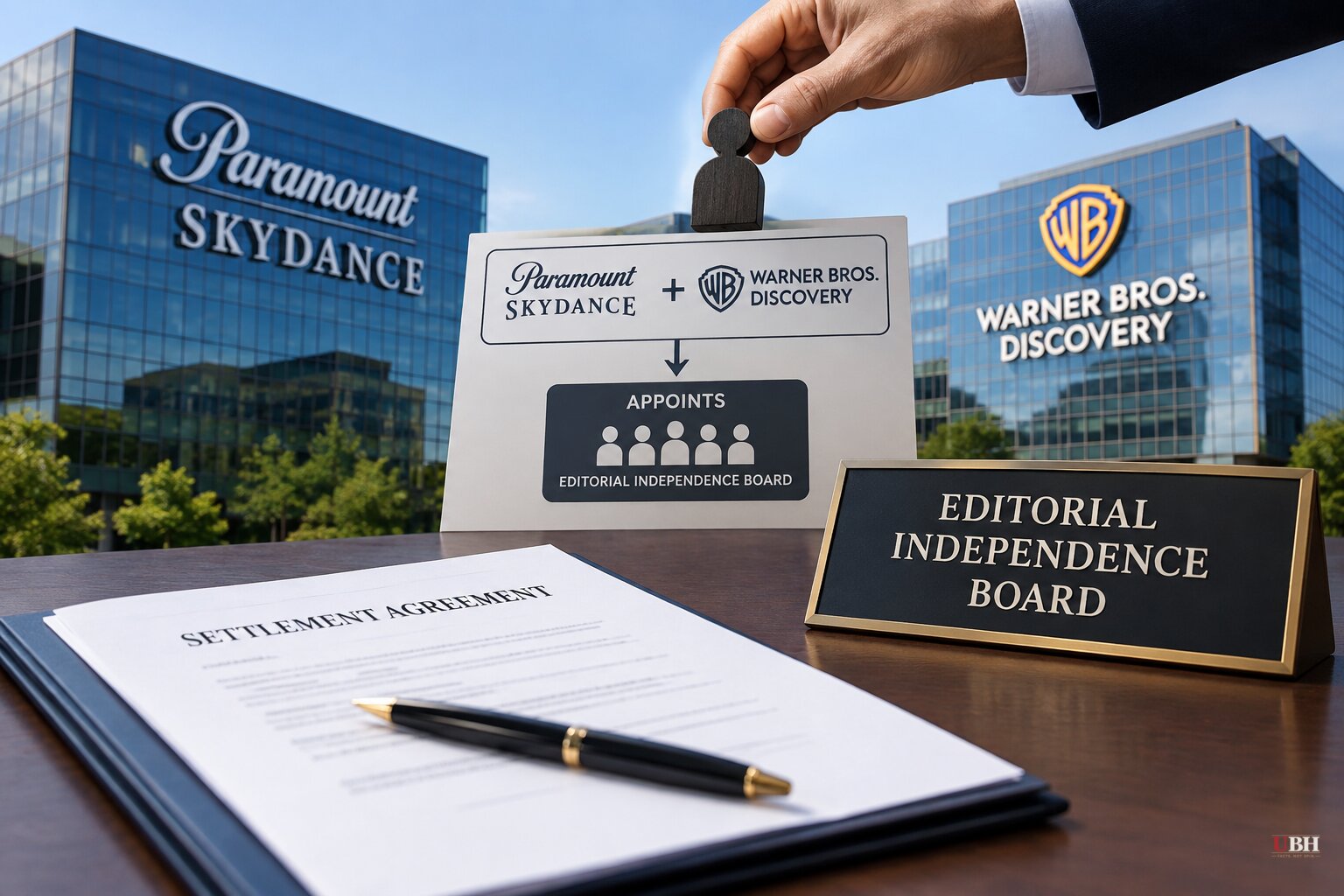
Paramount Skydance's $111 billion takeover of Warner Bros. Discovery just cleared its last major legal hurdle. A settlement announced this week with a coalition of 12 state attorneys general, led by California's Rob Bonta, ends an antitrust fight that threatened to delay the deal past an October 1 deadline carrying a $7 million-per-day penalty, according to RedState. Buried in that settlement is a provision nobody expected: a new "Editorial Independence Board" overseeing both CNN and CBS News.
What the board actually does
The five-member board will write "News Editorial Principles" based on the existing standards at CNN and CBS News, covering accuracy, fairness and independence, according to The Hollywood Reporter and Indian Television, which both reviewed the settlement terms. It will resolve disputes between reporters and management over alleged bias or violations of those principles, and it's supposed to monitor editorial independence "including from the combined entity's ownership and shareholders."
Members must have at least 10 years of journalism experience, active or retired. No more than two of the five can belong to the same political party. Government officials are barred outright, and no government entity gets approval rights over who sits on it. The board reports to the corporate board through a chief compliance officer.
The combined company's board of directors appoints all five members within 180 days of the deal closing, according to The Hollywood Reporter. That board is controlled by Paramount CEO David Ellison's family and RedBird Capital Partners. Members serve three-year terms and can only be removed for "good cause," per the settlement language, but the power to define and act on that cause still sits with Ellison's board.
The obvious criticism
Norm Eisen, founder of Democracy Defenders Action and a leader of the Block the Merger campaign, told the Los Angeles Times: "The so-called independence board appears to be sorely lacking in independence. It's appointed by and answerable to the board of the combined Ellison-controlled entity."
Former CNN anchor Jim Acosta was more direct with The Guardian: "There is no way that is going to work. They will start to fire anchors and certain folks to send a message, and the rest will either have to fall in line or leave. This was a colossal mistake." One unnamed CBS News staffer told The Guardian the whole arrangement "sounds like utter garbage."
A watchdog chosen by, and ultimately dependent on, the entity it's supposed to watch has an obvious structural problem. Whether that problem plays out in practice is a separate question, since no board members have been named and the arrangement hasn't operated for a single day.
There is a precedent that worked
When Rupert Murdoch's News Corp bought The Wall Street Journal in 2007, regulators required a similar five-member independence committee. The Journal has largely succeeded in keeping its newsroom separate from its opinion pages, according to the Los Angeles Times. CBS News also already has an ombudsman, Kenneth R. Weinstein, installed ahead of Ellison's earlier Paramount acquisition, but insiders told the Times he's had "scant presence" at the network. One model worked reasonably well. The other has functioned as window dressing. Which one this new board resembles is unknown until it's actually staffed.
The context nobody's board fixes
This isn't happening in a vacuum. CBS News has already gone through upheaval since Ellison installed Bari Weiss, founder of The Free Press, as editor in chief. Her changes to "60 Minutes" have drawn accusations that she's tilting the program toward conservative talking points to please President Trump, who has a friendly relationship with the Ellison family, according to the Los Angeles Times.
Trump and Larry Ellison, David's father, have reportedly discussed personnel changes at CNN once the Warner Bros. Discovery deal closes, according to reporting cited by both the Los Angeles Times and The Guardian. Neither outlet identifies the discussions as confirmed decisions, only as reported conversations. Trump also banned CNN, MS NOW and Politico from White House grounds last week, and the three outlets are now challenging that ban in federal court on First Amendment grounds.
A different concern from the right
RedState's Kyle Becker raised a separate objection. The settlement extends well beyond editorial oversight. Paramount agreed to release at least 30 movies annually for two years, rising to 32, commit $1.5 billion to additional U.S. film production over five years, and pay $47.5 million to workers displaced by the merger. Miss the film quota, and the company faces a $30 million penalty per shortfall plus a forced divestiture of Miramax. Becker questions whether a government-brokered antitrust settlement should be dictating a media company's content output and personnel-adjacent terms at all, editorial board included, calling the whole clause worth "particular scrutiny." Bonta himself said the settlement was "not a vote of support" for the merger, only an end to the states' legal challenge.
What happens next
The settlement still requires court approval. The Warner Bros. Discovery deal is expected to close in early October, according to The New York Times reporting carried by Editor & Publisher. Once it closes, Paramount's board has 180 days to name the five journalists who'll staff the Editorial Independence Board. Names floated in industry chatter include CBS anchor Norah O'Donnell, CNN's Jake Tapper, and RedBird-affiliated former journalists Chris Wallace, Graydon Carter and Matthew Garrahan, though these remain unconfirmed, according to Indian Television. Nobody has been appointed. The real test of whether this board has teeth starts the day it actually exists.
Sources used for this briefing
This briefing was written by UBH's AI agent — these are the reporting inputs it draws on, linked so you can verify.


