
Unbiased headlines. Facts, not spin.
Unbiased Headlines is an independently owned news organization. We bring you the facts, not opinions, written fresh from 110+ named sources. Sources linked so you can verify it yourself.
 energy
Major Story (7/10)
Event date: November 6, 2026 ·
Senate Leaders Eye Nov. 9 Vote on Bipartisan Permitting Bill as Democrats Split on Lame-Duck Rush
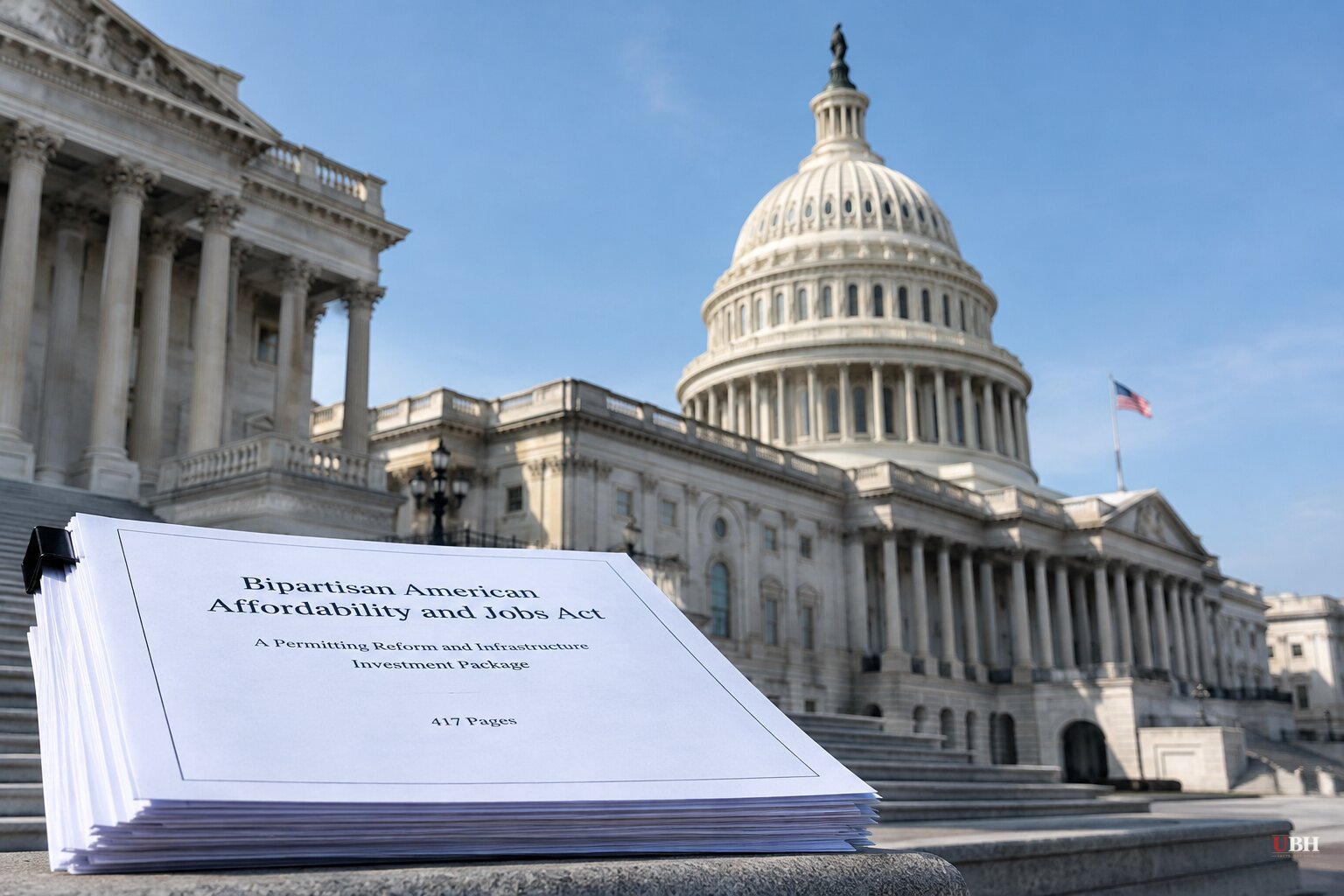
Since the Sept. 30 introduction of the Bipartisan American Affordability and Jobs Act, known as BAAJA, the bill has become the first big test of whether a Congress headed for divided control can still pass energy policy. Democrats won control of Congress in Tuesday's midterms. Senate leaders now want to start voting on the bill as early as Monday, Nov. 9.
No vote has happened yet. The first step is a procedural vote to take up the bill, and it needs 60 senators under Senate rules.
What is in the bill
The 417-page bill comes from Sens. Shelley Moore Capito (R-W.Va.) and Sheldon Whitehouse (D-R.I.), the chair and ranking member of the Environment and Public Works Committee. It is also from Sens. Mike Lee (R-Utah) and Martin Heinrich (D-N.M.), the chair and ranking member of the Energy and Natural Resources Committee.
According to Engineering News-Record, the four reached a deal with the White House in late September. The bill would shorten National Environmental Policy Act review timelines for energy infrastructure. It would also shorten the window for filing legal challenges against new projects.
The sponsors say a project that has received its permits would keep them except in extraordinary circumstances, violations of law, or by court order. Developers say that certainty is what they need before committing capital.
The bill also requires data center developers to cover the costs tied to the power they use. The sponsors describe it as covering all transmission costs associated with their operations. Whitehouse and Heinrich have pointed to that provision as protection for household electric bills.
The House passed its own permitting bill, the SPEED Act, in December 2025. The two measures would have to be reconciled before anything reaches the president.
Who is pushing, and who is resisting
Industry is lined up behind it. In an Oct. 21 letter to House and Senate leaders, a coalition including the American Petroleum Institute, Associated Builders and Contractors and chapters of the Associated General Contractors urged quick passage. They called the bill the result of "years of good-faith bipartisan negotiations" and said modernizing permitting "can help improve energy affordability, strengthen economic competitiveness, unlock investment and restore confidence in the nation's ability to build critical infrastructure."
Heinrich said in a statement that the bill "will help us get to 'yes' or 'no' on energy projects faster, while protecting important environmental safeguards."
Opponents see something else. Environmental advocates and some House Democrats say the bill would erode protections and make it easier to approve fossil fuel projects and data centers without enough review or community input. On an Oct. 28 press call, Daisy Maldonado of Fight Chichuan Desert Extraction said a proposed 520-mile gas pipeline serving data centers in New Mexico and Texas would add pollution to a region already out of compliance with national air quality standards. Rep. Rashida Tlaib (D-Mich.) called the bill a "gift to big oil and big tech."
Josh Freed, a senior vice president at Third Way, disputes the claim that the bill is a gift to data center developers.
The Washington Post's opinion section has gone after the House Democratic side directly. In a piece headlined "Jeffries flirts with derailing long-overdue permitting reform," it argued that a small group of liberals, emboldened by the midterm results, is trying to blow up the compromise. It said failure would signal that incoming Democratic majorities are not as serious about affordability as they claimed on the campaign trail. It also noted that unions for the building trades and electricians are fighting to get the bill done. That is the Post's opinion, not a statement from House Democratic leaders.
Star Parker, writing for the Daily Signal, made the same affordability argument from the right. She noted that despite support from the Democratic committee leaders, it is not certain enough Democratic senators will back the procedural vote.
The affordability clock
The politics are tangled because both parties campaigned on prices. NPR's Mary Louise Kelly put it this way after the midterms: voters are fed up with the cost of gas, food, health care and housing.
Martha Gimbel, executive director of the Yale Budget Lab and a former Biden Council of Economic Advisers official, told NPR that raising supply takes time. Anything Congress passes and the president signs, she said, takes a while to show up in prices. In her words, there is pressure on Congress to act sooner rather than later.
That is the sponsors' case for moving now. Environmental groups argue the reverse. In their view, the new balance of power is the reason to wait. The sponsors have said they do not expect a better deal after January.
One fact complicates the clock. Nobody has yet shown the bill, as written, would cut electricity prices by any specific amount. The projections come from sponsors, trade groups and advocacy think tanks, all of which have a stake.
What happens next
The immediate question is whether the Senate reaches 60 votes on Monday, Nov. 9, to begin consideration. If it does, the Senate would still have to pass the bill. The House would then have to reconcile it with the SPEED Act it passed in December 2025, all inside a lame-duck session.
Whether House Democratic leadership, including Rep. Hakeem Jeffries, will take up a Senate-passed bill is unresolved.
Sources used for this briefing
7 links from 7 independent newsrooms (syndicated copies of the same report count once)
These are the sources it draws on, linked so you can verify.


