
Unbiased headlines. Facts, not spin.
Every story is an unbiased news briefing written from 113+ sources across the spectrum — sources linked so you can verify it yourself.
 finance
Major Story (7/10)
Event date: September 18, 2026
finance
Major Story (7/10)
Event date: September 18, 2026
Senate Kills Crypto Bill, So the SEC Just Wrote Its Own Rules Instead
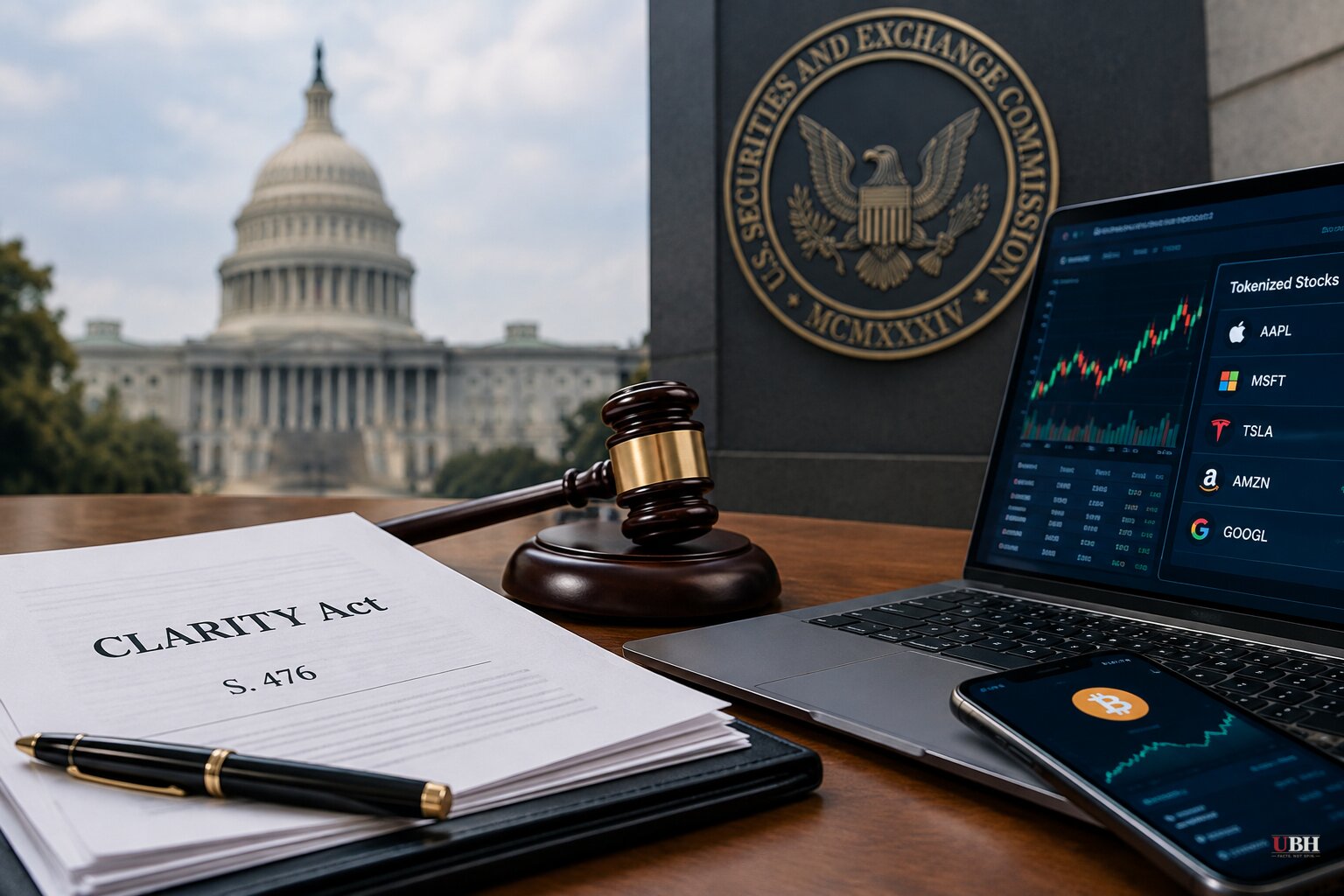
Congress had its shot at writing crypto rules. It blew it. So the regulators are doing the job themselves.
On Tuesday, September 15, the Senate failed to advance the Digital Asset Market Clarity Act, pulling 49 votes in favor when 60 were needed to break a filibuster, according to The Daily Upside. The bill, which had already passed the House in 2025, would have split crypto oversight between the SEC and the CFTC, handing the smaller CFTC direct rule-making power over crypto spot markets. The industry reportedly spent hundreds of millions of dollars lobbying for it.
It died anyway. Massachusetts Senator Elizabeth Warren and other Democrats pushed for tougher ethics rules on elected officials' crypto holdings. Separately, a coalition of banking trade associations sent Senate leaders a letter the day before the vote demanding a stronger "circuit breaker" that would let the Treasury Department cut off crypto firms from paying stablecoin interest if it triggers a run on bank deposits. Their argument, in their own words: "A circuit breaker that activates only after substantial deposit flight has already occurred is not a safeguard at all." That's a legitimate concern from an industry that would eat the consequences if a stablecoin run hit actual bank balance sheets, and it deserves to be taken seriously rather than dismissed as bank lobbying.
The SEC Didn't Wait
Two days after the vote failed, on September 17, the SEC issued its "Innovation Exemption," granting five-year conditional relief that lets automated market makers and liquidity pools trade tokenized versions of U.S.-listed stocks on permissioned platforms, according to law firm Dechert. These "tokenized securities venues" won't have to register as national securities exchanges, and liquidity providers won't have to register as dealers, as long as token holders get the same dividend and voting rights as regular shareholders. Synthetic tokens that mimic stock prices without conferring real ownership don't qualify.
Issuers get a say too. Under the order, a company can block unaffiliated firms from tokenizing its stock simply by objecting within 30 days of being notified, per Dechert's analysis. And the exemption doesn't touch the Investment Company Act, leaving it genuinely unclear how or whether tokenized ETF shares can trade on these venues at all.
SEC Chair Paul Atkins called the move a bridge, not a destination. "The Innovation Exemption is designed to resolve challenges that have prevented responsible innovation from taking root in the United States," Atkins said, adding that "this interim measure must be followed by durable rulemaking." Commissioner Mark Uyeda, at a same-day SEC roundtable on round-the-clock trading, said technology is no longer the obstacle to 24/7 stock markets. The open questions now are whether market participants and regulators can actually manage risk during overnight sessions.
This all sits inside a bigger push. On August 18, the SEC proposed "Regulation Crypto Assets," its first standalone rulemaking on crypto offerings, a roughly 400-page proposal creating new registration exemptions for startups and larger capital raises, a safe harbor letting a token's investment-contract status formally expire, and a mechanism preempting state securities registration for certain offerings, according to White & Case. Public comments are due by October 20, 2026.
On top of that, SEC staff quietly released new Q&A guidance clarifying how the March 2026 interpretive framework applies to staking tokens, token buyback programs, and marketing language, according to KuCoin. Once a crypto network is up and running, ordinary maintenance and development work generally won't count as the kind of "essential managerial efforts" that turn a token into a security under the Howey test. Announcing a buyback on an already-functioning network doesn't automatically trigger securities status either, staff said, though pitching a buyback as a profit mechanism before the network is functional still can.
The CFTC Moves Too, With One Commissioner
Just two days after the Senate vote, the CFTC filed its own rulemaking, "Regulation Crypto Asset Transactions and Regulation Crypto Asset Markets" (RIN 3038-AF80), with the White House's Office of Information and Regulatory Affairs, according to The Defiant. It's parked at the prerule stage, not a formal proposal, giving OIRA just 10 working days to review it instead of the usual 90. Notably, Michael Selig is currently the CFTC's only sitting commissioner, meaning the agency is pushing a market-structure rulemaking with a single vote at the top.
Markets are already reacting. Robinhood, which offers tokenized stocks overseas, saw its shares climb 5% on Thursday, September 17, the same day as the SEC's exemption order, according to The Daily Upside. Coinbase's tokenized stock offering on the Base blockchain, available only to non-US users, has seen its market cap hit $22 million with a 97-fold jump in holders over the past 30 days, per Crypto Briefing.
None of this replaces what Congress failed to deliver. Atkins himself said durable legislation "remains indispensable," and Daily Upside reported the industry likely won't get another shot at comprehensive reform until 2027. Every rule the SEC and CFTC write now under executive authority can be unwound by a future SEC and CFTC with different commissioners. The comment period on Regulation Crypto Assets closes October 20. Whether that turns into a final rule or another interim patch remains to be seen.
Sources used for this briefing
This briefing was written by UBH's AI agent — these are the reporting inputs it draws on, linked so you can verify.


