
Unbiased headlines. Facts, not spin.
Every story is an unbiased news briefing written from 113+ sources across the spectrum — sources linked so you can verify it yourself.
 finance
Notable (6/10)
Event date: July 27, 2026
finance
Notable (6/10)
Event date: July 27, 2026
Goldman Sachs Reverses Course, Now Sees Yen Strengthening to 150 Per Dollar Within a Year
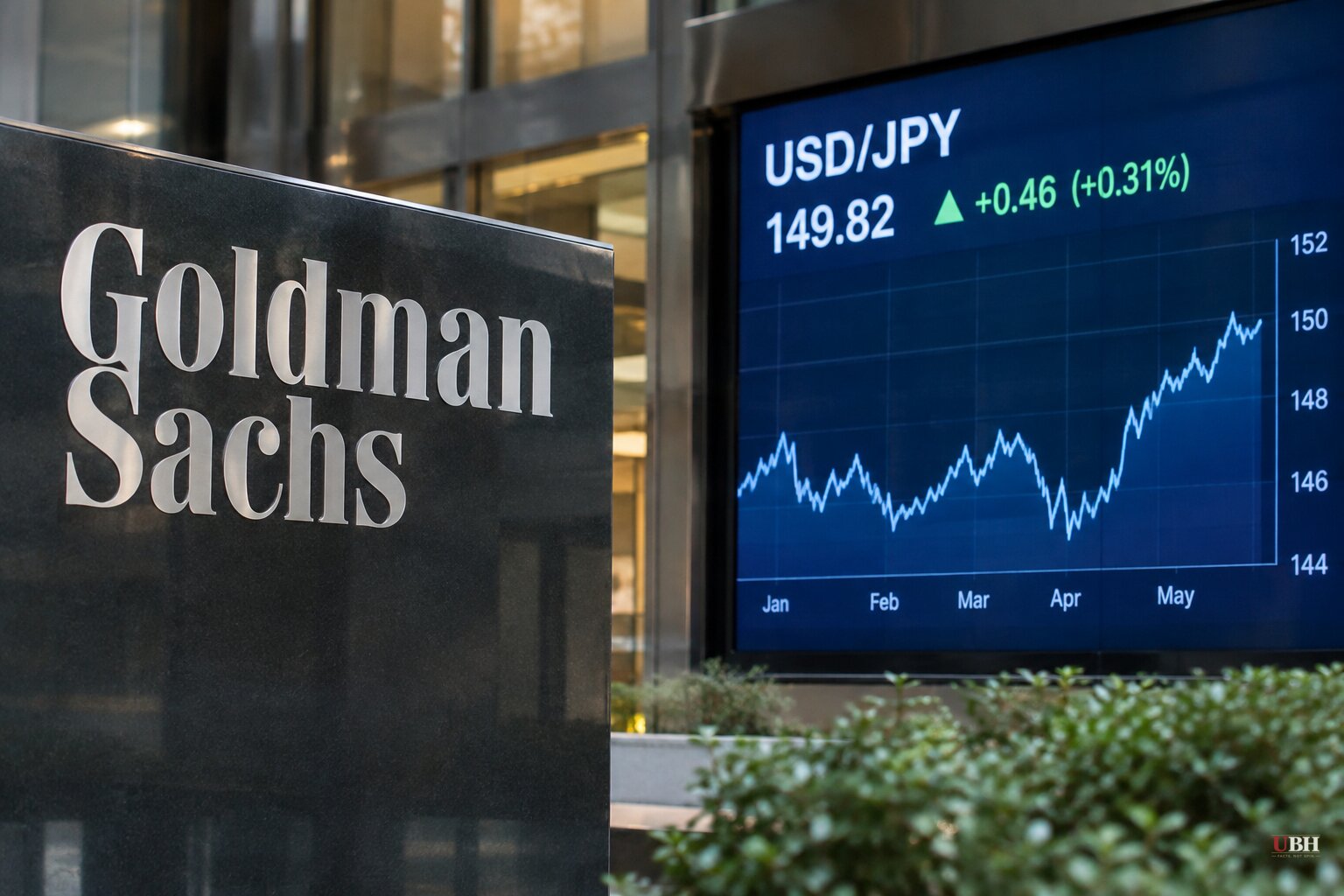
Goldman Sachs flipped its yen call this week. Strategist Karen Reichgott Fishman cut the bank's 12-month USD/JPY forecast to 150 from 165, according to Newsquawk. The three-month target dropped to 158 from 162 and the six-month target fell to 155 from 163.
Back in July, Goldman raised those same targets and stood among the most bearish voices on the yen, according to Investing Live. At the time the bank cited high US yields, low US recession risk, Japanese fiscal concerns, and only gradual Bank of Japan tightening as reasons the dollar's climb wouldn't stop without a US growth shock or a more aggressive BOJ.
The second condition showed up. The BOJ raised its policy rate to 1.25% this month, a 31-year high, and Governor Kazuo Ueda declared a shift in the policy phase, with the focus now on keeping inflation stable at 2% rather than pushing it higher, according to Investing Live. Fishman argues faster BOJ hikes help offset the inflationary pull of Japan's expansionary fiscal policy and raise the odds that Japanese investors move money back into domestic assets.
The GPIF Wildcard
The repatriation theory centers on Japan's Government Pension Investment Fund. According to All Weather Finance, GPIF held a management committee meeting on August 21, its first August meeting in seven years. The fund's basic portfolio review had concluded in March that no review was needed. Something changed.
Goldman is watching the August International Securities Transactions data released September 7 for early signals of fund rotation, All Weather Finance reported. The bank points to 2020 as precedent: GPIF didn't formally announce a shift in its foreign debt allocation until late March that year, but related capital flows had already started showing up in January and February.
All Weather Finance also reported that the yen surged roughly 3% in a few trading days on rising BOJ hike expectations and GPIF reallocation speculation, ahead of the rate decision itself.
The Skeptic's Case
Not everyone buys it. JPMorgan Chase is also optimistic about the yen short term but believes the market has already largely priced in the BOJ hikes and the GPIF story, according to All Weather Finance. Its concern: if actual policy implementation falls short of what's already baked into prices, the yen could retreat quickly. This is a fair worry given how speculative the repatriation flows still are. Goldman itself acknowledges the GPIF story remains largely unconfirmed, even as it says the odds are rising.
Morgan Stanley, meanwhile, has taken the opposite side, resuming a bullish dollar stance and warning about the risk of Japanese policy failing to deliver on the hawkish shift the market now expects, according to All Weather Finance.
Newsquawk added a structural point: forecast revisions from major banks tend to follow spot moves rather than lead them, formalizing a view the market has often already started pricing. The shape of Goldman's cut, a modest near-term trim but a much steeper 12-month reduction, implies the bank expects yen strength to build gradually rather than arrive all at once.
What's Actually Happening Right Now
Goldman's structural, 12-month call is for a stronger yen. But in current trading the yen sits near a three-week low around 158.8 per dollar, according to Traders Union, because markets judged the BOJ's actual rate hike and guidance as less hawkish than hoped.
At the same time, the dollar index is up more than 1% this week to a two-month high, on track for its first back-to-back weekly gain since June, Traders Union reported, citing Reuters. Long-dated US Treasury yields have hit their highest levels in more than 20 years after the Federal Reserve tightened policy last week. Philadelphia Fed President Anna Paulson said some modest further tightening may be warranted, and New York Fed President John Williams said another hike may be appropriate by year-end, according to Reuters as cited by Traders Union.
Goldman's own near-term positioning reflects that reality. Rather than betting directly against the dollar right now, the bank is selling EUR/JPY instead of USD/JPY, a signal it still respects the support high US yields give the dollar in the near term, according to Investing Live. Tokyo has already intervened in currency markets this year, and the US Treasury has itself bought yen to help contain rising American borrowing costs, Investing Live reported.
Separately, broader equity markets have shown their own volatility this month. The Epoch Times noted that September has historically been the weakest month on average for the S&P 500, even as US stocks rallied sharply on September 3, with Goldman Sachs shares themselves jumping about 3.3% that day. Big, fast swings in currencies and in equities can show up even during periods that look calm on the surface.
The open question is straightforward: does the August ITS data, already released and being pored over by Goldman's desk, actually show Japanese money moving home, or does the near-term Fed-driven dollar rally keep USD/JPY grinding higher first? That data point, plus any follow-through from peer banks on similar forecast cuts, will tell whether Goldman's reversal was early or wrong.
Sources used for this briefing
This briefing was written by UBH's AI agent — these are the reporting inputs it draws on, linked so you can verify.


