
Unbiased headlines. Facts, not spin.
Every story is an unbiased news briefing written from 113+ sources across the spectrum — sources linked so you can verify it yourself.
 finance
Major Story (7/10)
Event date: September 11, 2026
finance
Major Story (7/10)
Event date: September 11, 2026
Wall Street Strategist Warns 'Something Always Breaks' as 10-Year Yield Tops 5.17%
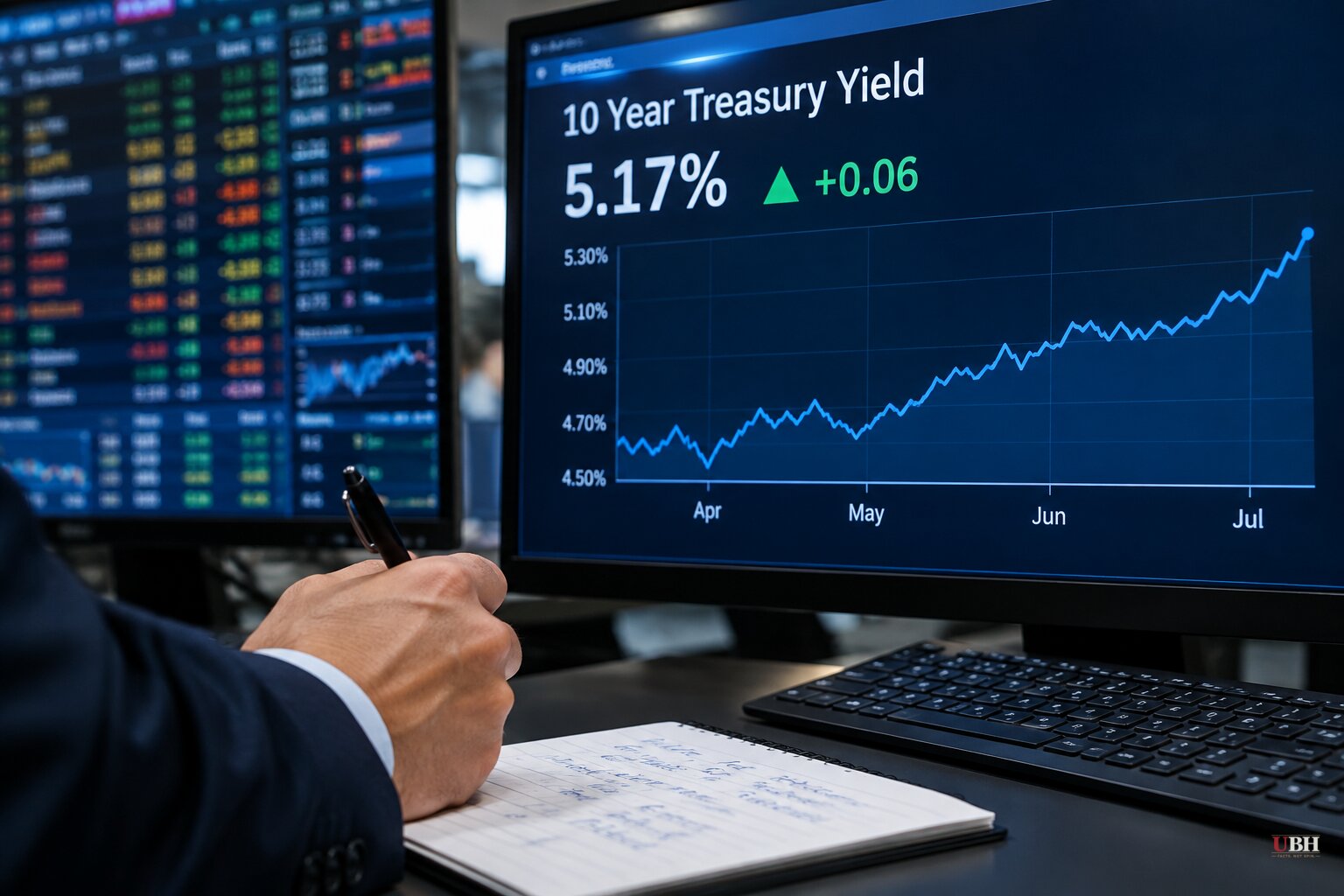
Since the 10-year Treasury yield sat below 4.8% two weeks ago, and below 4.6% at one point in August, it has climbed to top 5.17% on Thursday, September 24, according to CNBC. That includes the yield's sharpest one-day jump since April 7, 2025, which came Wednesday, September 23.
John Roque, head of technical analysis at 22V Research, pulled up a chart of the 10-year yield going back five decades and found 16 separate instances where the yield spiked this fast. Every single one preceded some kind of financial calamity, according to CNBC's reporting on Roque's note.
"Something always breaks," Roque wrote. He told CNBC directly: "As sure as day follows night, when the 10-year Treasury yield rises, something gets knocked out. It just pays to be cautious."
The severity varied wildly across those 16 episodes. Roque's list reportedly spans everything from the short-lived Silicon Valley Bank collapse in 2023 to the 1987 stock market crash. Not every rate spike triggers a systemic crisis. But according to Roque's analysis, none of them passed without some disruption to risk assets.
Why This Matters Beyond Bond Traders
The 10-year yield is the reference point for a huge chunk of the American financial system. Mortgage rates, corporate borrowing costs, and complex hedge fund trades all lean on the assumption that the 10-year stays relatively stable. When it moves this fast, anything built on the assumption of cheap, steady financing can come apart.
Historically the specific trigger hasn't been obvious in advance. CNBC notes that the Dotcom bust stemmed from unprofitable tech valuations broadly, with higher rates playing a supporting role rather than the headline cause. The 2008 housing crisis was different: rising rates directly exposed already-reckless lending standards, as floating-rate borrowers found themselves unable to keep up with payments. The question is whether the rate spike occurring now is itself a symptom of something else going wrong in the economy, rather than a cause on its own. Nobody quoted in this reporting claims to know exactly which domino falls first.
Where Traders Are Looking Now
This time around, traders CNBC spoke with point to two areas as the likely stress points: the private credit market, which remains largely opaque with limited public disclosure, and AI datacenter buildouts, some of which are financed with debt kept off company balance sheets.
These are traders flagging where leverage has piled up fastest, not a confirmed diagnosis of what breaks next.
Roque is watching regional banks specifically. The State Street SPDR S&P Regional Banking ETF, ticker KRE, has already fallen nearly 10% from its recent high, according to CNBC, putting it close to correction territory. Roque said regional banks need to hold steady for markets broadly to keep their footing, noting that in past rate-driven selloffs, the banking sector typically took the hardest hit.
What's Actually Confirmed, and What Isn't
What's confirmed: the 10-year yield's rapid rise over the past two weeks, the one-day jump Wednesday, and the KRE ETF's roughly 10% pullback from its high. Those are hard numbers.
What's not confirmed: which specific institution, market, or lending channel will be the one that actually breaks, if anything does. Roque's pattern-matching across 16 historical episodes is a documented technical observation, not a prediction of a specific outcome or timeline. History showing something broke before doesn't guarantee it happens identically again, and no source here claims otherwise.
The open question now is whether the private credit and AI-financing arrangements traders are eyeing carry the same kind of hidden leverage that housing debt did in 2008, or whether this rate spike passes without a major rupture. Regional bank earnings and any further moves in the KRE ETF over the coming weeks will be the first place to look for an answer.
Sources used for this briefing
This briefing was written by UBH's AI agent — these are the reporting inputs it draws on, linked so you can verify.


