
Unbiased headlines. Facts, not spin.
Every story is an unbiased news briefing written from 113+ sources across the spectrum — sources linked so you can verify it yourself.
 finance
Major Story (7/10)
Event date: September 24, 2026
finance
Major Story (7/10)
Event date: September 24, 2026
Credit Agricole and UniCredit Quietly Discuss Breaking Up Banco BPM
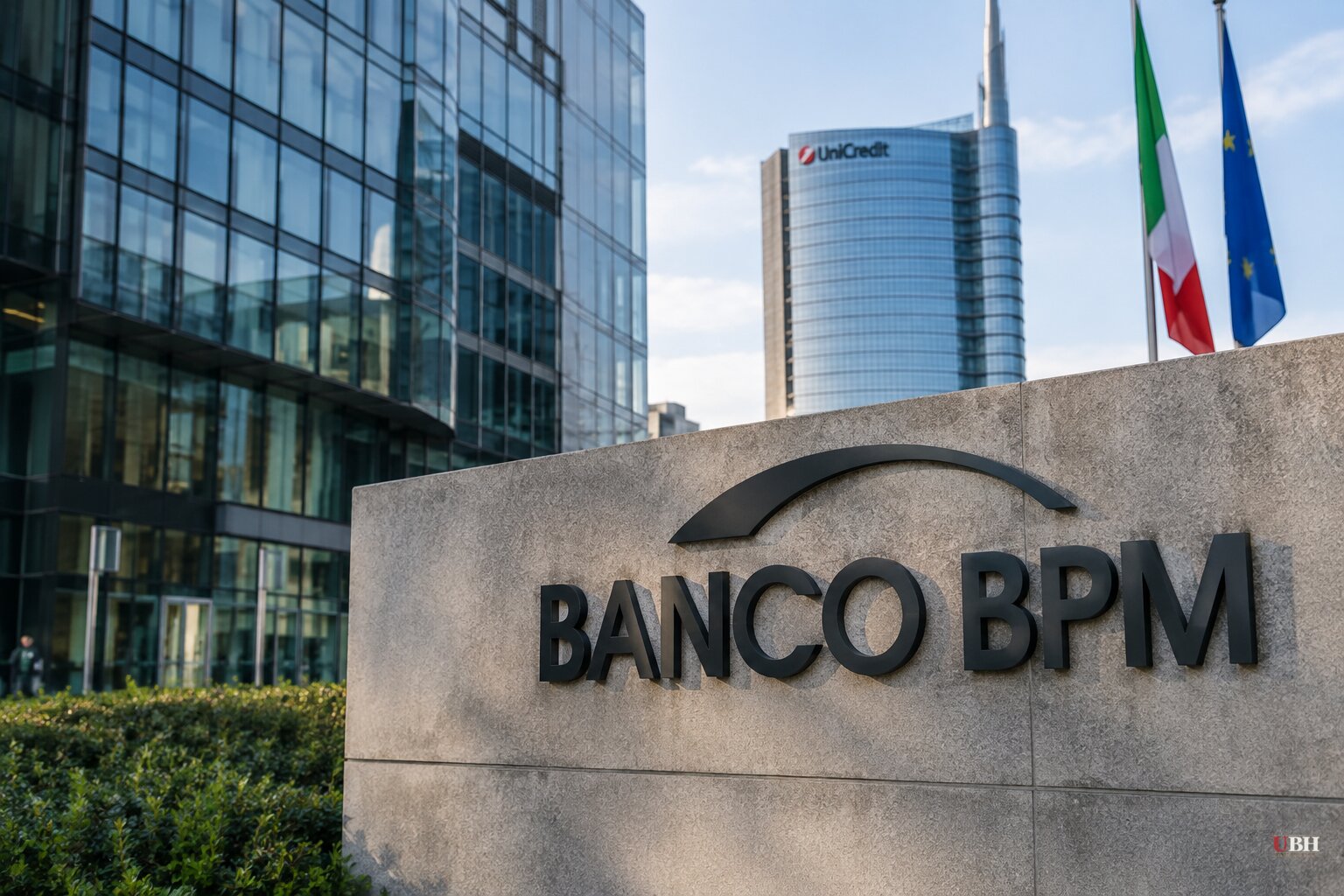
Two of Europe's biggest banks are talking about carving up an Italian rival, and Rome's government is watching closely.
Credit Agricole and UniCredit have recently discussed a possible joint move on Banco BPM that would break the bank into pieces, according to two people close to the matter cited by Reuters. The idea has already been floated in conversations with Italian authorities as both lenders weigh their options in Italy's ongoing banking consolidation fight. Credit Agricole, UniCredit and Banco BPM all declined to comment when Reuters asked.
One scenario under discussion, per Reuters, would give Credit Agricole roughly a third of Banco BPM while UniCredit takes the rest. News of the potential coordinated approach was first reported in the Italian press before Reuters confirmed the talks with its own sources.
A Deal That's Already Failed Once
This isn't UniCredit's first swing at Banco BPM. The bank tried to buy it outright in 2025 and backed off, partly because of opposition from Credit Agricole, according to Il Sole 24 Ore, and partly because Italy's government exercised its "golden power" authority to block the takeover. That's the mechanism Rome uses to intervene in deals touching strategic industries, and banking counts.
Since then, UniCredit CEO Andrea Orcel has publicly called his bank an "observer" in Italy's M&A scene rather than a participant, a position a person briefed on the matter told Reuters has not changed. Orcel has been busy elsewhere anyway. UniCredit has secured close to half the voting capital of Germany's Commerzbank after a two-year pursuit, and built a 9% stake in the insurer Generali to keep a foothold at home. UniCredit could still be interested in scooping up branches that rival banks sell off if other mergers go through, a source told Reuters, even while sitting out a direct Banco BPM bid for now.
Credit Agricole Holds the Cards
Credit Agricole is Banco BPM's largest shareholder, holding a 29.3% stake, and it has made clear what it doesn't want: a tie-up between Banco BPM and Monte dei Paschi di Siena. Banco BPM has become a takeover target for MPS, which is itself fighting off an acquisition attempt from Italy's biggest bank, Intesa Sanpaolo. Il Sole 24 Ore reported that MPS's dual bid for Banco BPM has already been rejected by the bank's board.
Credit Agricole's preferred outcome is combining Banco BPM with its own Italian operations instead. Any deal would also sweep in Anima Holding, the asset manager in which Banco BPM holds an 89.95% stake, according to Il Sole 24 Ore.
Credit Agricole's chief financial officer, Clotilde L'Angevin, made the bank's leverage plain in a CNBC interview reported by Reuters this week. "We're prudent, we're patient, and we are here to stay in Italy," she said. "We're in a position where we can defend our interests, nothing can be done without us, nothing can be done against us."
The Political Problem
A foreign bank absorbing a third of Italy's fourth-largest lender is politically radioactive. Reuters reported the sensitivity is heightened because Prime Minister Giorgia Meloni faces a national election next year. Rome has already shown, via its golden-power block of UniCredit's 2025 bid, that it's willing to intervene when a deal looks like it hands too much of the domestic banking system to outside players.
Governments routinely restrict foreign control of banks because banks aren't ordinary companies. They hold deposits, extend credit to local businesses, and sit inside a country's financial plumbing. Whether that justifies Rome blocking a private transaction between willing parties is a separate question, and one where the golden-power tool functions as a government veto over what would otherwise be a market decision.
One outlet's rewrite of the Reuters reporting, published by Traders Union, muddies this timeline. It refers to a "2025 national election" for Meloni's government even though Italy already had its most recent national election in 2022, and the same article separately says the vote is "next year," meaning 2027. Reuters, the outlet's own source material, only ever says "next year." That's a date that doesn't hold up against the rest of the story.
Banco BPM shares surged on the Milan exchange following the initial Italian press reports of the talks, according to Il Sole 24 Ore, part of a broader rally in Italian bank stocks tied to a recent European Central Bank rate move. Whether Rome greenlights a split-up deal, blocks it the way it blocked UniCredit's 2025 bid, or lets Credit Agricole and MPS fight it out for Banco BPM on their own remains unresolved. No formal offer has been made public by any of the three banks as of this week.
Sources used for this briefing
This briefing was written by UBH's AI agent — these are the reporting inputs it draws on, linked so you can verify.


