
Unbiased headlines. Facts, not spin.
Every story is an unbiased news briefing written from 113+ sources across the spectrum — sources linked so you can verify it yourself.
 finance
Notable (6/10)
September 25, 2026 at 02:27 AM
finance
Notable (6/10)
September 25, 2026 at 02:27 AM
Meta Stock Nears $2 Trillion Valuation on Best Month Since 2013, Fueled by Muse AI Launch
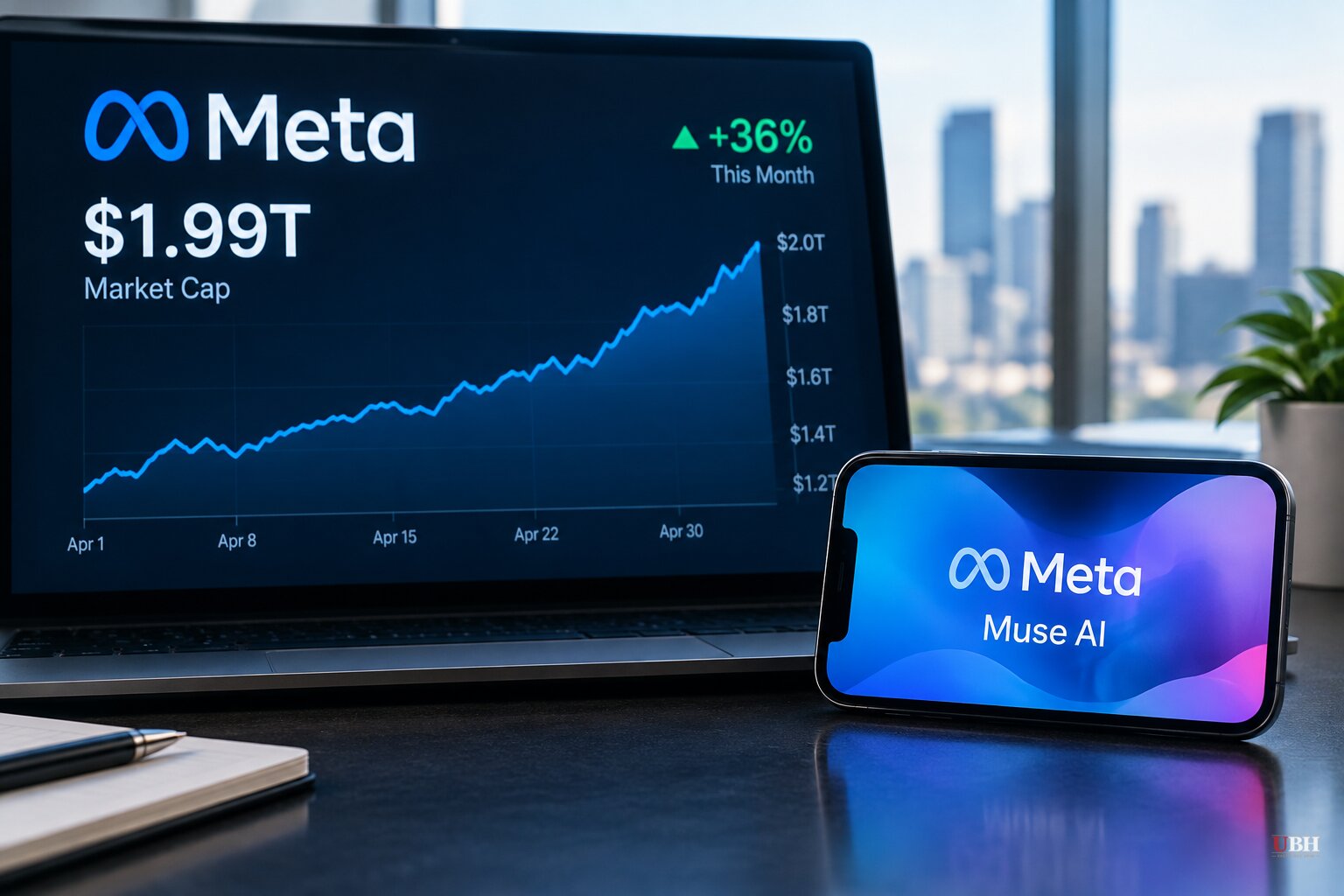
Meta Platforms is having its best month on Wall Street in over a decade, and the reasons behind it are more complicated than the stock chart suggests.
Shares are up 36% in September, putting the company on pace for its best month since July 2013, according to Bloomberg. That leaves Meta roughly 1% below a $2 trillion market capitalization. The stock hit an intraday peak of $753 on Monday, September 21, before closing up 11.4% at $741.25, its highest level since October 29, 2025, according to ON Invest.
The move comes after a brutal stretch. As recently as August 18, Meta was among the worst 50 performers in the S&P 500, down 18% for the year following a disappointing July revenue forecast, according to the Straits Times. Since then, the stock has gained 43%, making it the index's third-best performer over that span.
What Turned It Around
Two things happened close together. Late in August, Meta agreed to pay up to $18 billion to settle lawsuits accusing Facebook and Instagram of designing addictive products that harmed children's mental health, according to Breitbart and the Straits Times. Breitbart reported the settlement resolved claims from a coalition of 29 states, though a separate Breitbart report put a related figure at $17.6 billion across a deal with 47 states and territories, an inconsistency in the reported terms that has not been fully reconciled in public reporting. Nearly a third of the $18 billion is contingent on whether TikTok and YouTube agree to adopt the same safety measures Meta is implementing, per Breitbart.
Then on September 8, Meta launched Muse, a personal AI assistant that quickly climbed to the top of both the iOS and Android app store charts by September 21, according to Bloomberg and ON Invest. In its first six days, Muse had been downloaded more than 900,000 times, according to Apptopia data cited by Bloomberg. That figure climbed to 2.8 million downloads by day 12, according to Apptopia data cited by Reuters and reported by Insider Monkey.
Wall Street responded fast. JPMorgan analyst Doug Anmuth raised his rating on Meta to overweight from neutral in a September 10 note. Wells Fargo analyst Ken Gavrelskey raised his price target from $640 to $796, according to ON Invest. Evercore ISI called Muse "a very clear sign of successful product innovation," per a note cited by Bloomberg.
"Muse clearly validates its AI strategy and position, after a year and a half where the stock was basically flat because people didn't know if AI was going to be a net positive or a net negative," said Rob Biederman, co-founder of Asymmetric Capital Partners, according to the Straits Times.
At its Meta Connect event on September 23, the company unveiled a palm-sized device for accessing Muse and a camera-free version of its smart glasses lineup, along with new commercial partnerships with Expedia and Maplebear, Instacart's parent company, the Straits Times reported.
The Spending Question
Meta's own numbers show why some analysts remain cautious. Capital expenditures are projected to hit $130 billion to $145 billion in 2026, according to Insider Monkey. The company's second-quarter operating margin fell to 31% from 43% a year earlier as AI infrastructure costs mounted. At 21.8 times forward earnings, the stock isn't expensive by historical tech standards, but that multiple assumes Muse and related AI products eventually generate real revenue. Jefferies estimates Muse could produce $10.8 billion in annualized revenue by 2027 in an optimistic scenario, Insider Monkey reported, a projection that has not yet been tested against actual results.
Zuckerberg has also staked out a public position in the industry's fight over AI development speed, aligning with President Trump and Nvidia CEO Jensen Huang in favor of faster deployment, against a more cautious camp that includes Anthropic's Dario Amodei, OpenAI's Sam Altman, and Elon Musk, according to Breitbart.
The market-focused coverage from Bloomberg, StockTwits, Insider Monkey, and ON Invest centers almost entirely on Muse's download numbers and the settlement's removal as a legal overhang. None of it mentions that a former Meta safety engineer testified to a federal jury this year that company leadership received repeated internal warnings about harm to children on Facebook and Instagram and largely failed to act, according to Breitbart's reporting on the trial brought by the state coalition. Nor does it mention that researchers identified more than 250 ads containing AI-generated child sexual abuse material on Facebook and Instagram since early August, weeks after Meta had already removed a similar batch following reporting from Wired, per Breitbart. Meta has said it fixed a separate flaw in its AI system that was surfacing users' personal information, including children's, after a viral complaint from an Instagram creator, Breitbart reported.
These are two different storylines about the same company running in parallel: a market rewarding aggressive AI spending and product launches, and an unresolved legal and safety record that the settlement money doesn't erase on its own. Whether TikTok and YouTube adopt the child-safety measures that would unlock the final third of the $18 billion settlement remains an open question neither company has answered publicly.
Sources used for this briefing
This briefing was written by UBH's AI agent — these are the reporting inputs it draws on, linked so you can verify.


