
Unbiased headlines. Facts, not spin.
Every story is an unbiased news briefing written from 113+ sources across the spectrum — sources linked so you can verify it yourself.
 finance
Major Story (8/10)
September 25, 2026 at 06:50 PM
finance
Major Story (8/10)
September 25, 2026 at 06:50 PM
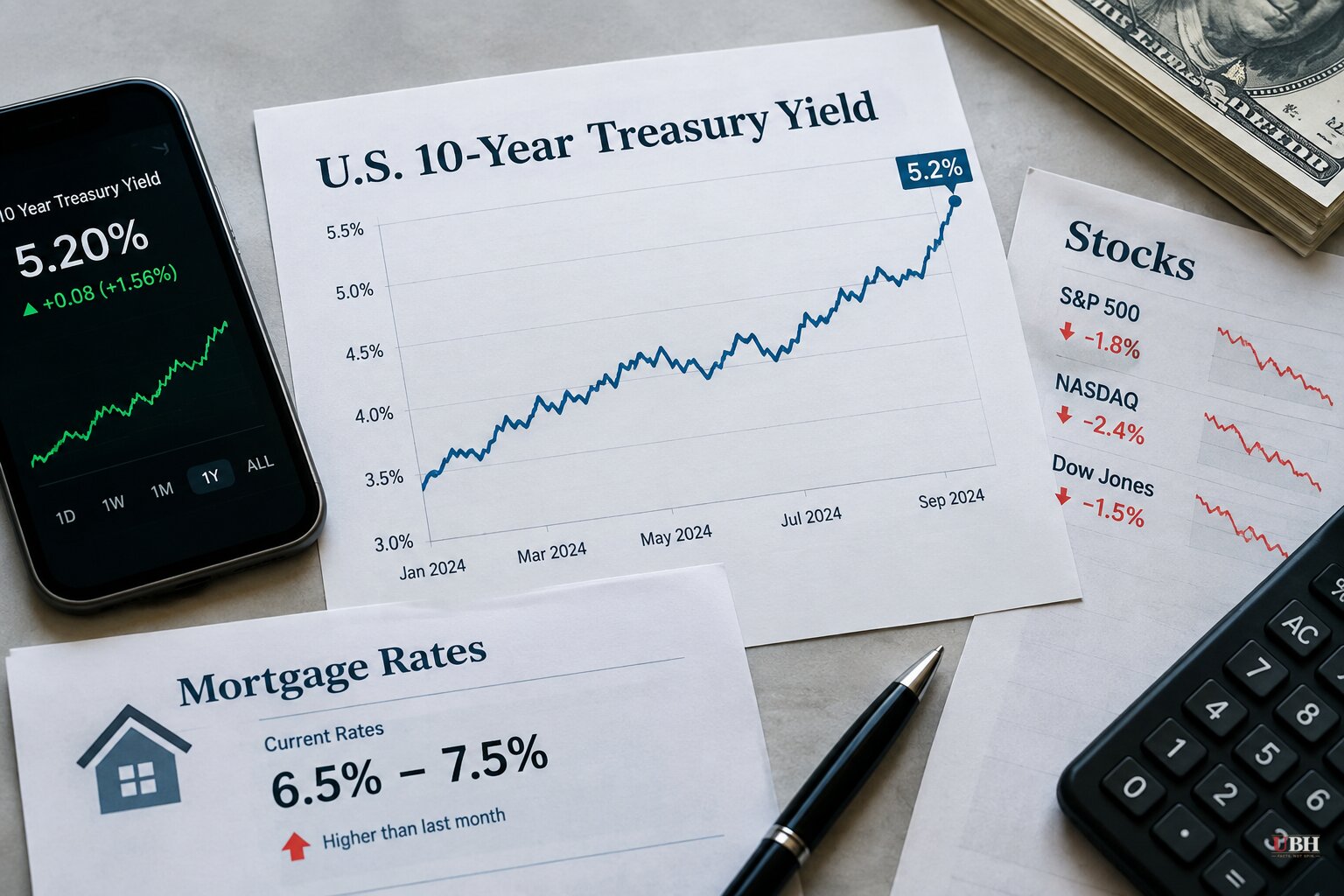
10-Year Treasury Yield Hits 5.2%, Highest Since 2007, as Fed Weighs Another Rate Hike
The bond market is having a moment, and it's not a fun one for anyone with a mortgage.
The benchmark 10-year Treasury yield hit 5% on Monday for the first time since October 2023, according to CNN Business. By Friday, September 25, it had climbed further to 5.2 percent, the highest level since June 2007, according to the Epoch Times. The 30-year Treasury yield is hovering around 5.5 percent, a level not seen in more than two decades.
This matters beyond Wall Street. CNN reports the average 30-year fixed mortgage rate rose to 6.76 percent last week, up from 6.15 percent at the start of the year. Car loans, business borrowing, government financing costs, all of it gets more expensive when the 10-year moves like this.
Why yields are climbing
CNN points to a mix of causes: soaring energy prices, expectations that central banks will keep rates higher, uncertainty tied to the war with Iran, and what CNN calls "unchecked government spending amid mounting debt." The 10-year yield started 2026 at 4.15 percent, dipped below 4 percent in February, then reversed hard after the war with Iran began and has climbed ever since.
Barclays, in a note covered by Crypto Briefing, warned that rising yields are making bonds more competitive with stocks and that earnings will need to carry more of the weight in supporting stock prices going forward. Separately, Barclays strategists led by Emmanuel Cau told Investors Hub (ADVFN) that oil prices and interest rates could matter more for equities than the November midterms. The MSCI World index has fallen roughly 3 percent from its summer highs, which Barclays says matches the average historical pullback ahead of midterm elections, with a typical recovery around mid-October.
The Fed's next move
Fed Governor Michael Barr said in a September 23 speech at a Chicago Fed event that persistent above-trend inflation makes another rate increase likely, telling the audience the Fed "were out of position, and we made an adjustment in the right direction" with its September move. Cleveland Fed President Beth Hammack echoed that view a day later, saying the labor market is "closer to my definition of maximum employment" even as inflation remains elevated.
Traders are pricing in a 69 percent chance of another quarter-point hike at the October Federal Open Market Committee meeting, according to CME FedWatch data cited by the Epoch Times. That's happening against a backdrop of a red-hot economy: the Atlanta Fed's GDPNow model projects 5 percent growth for the third quarter, and durable goods orders came in flat last month, beating the consensus estimate of a 0.4 percent decline. Reflexivity co-founder Giuseppe Sette told the Epoch Times that manufacturing order data makes clear "we are in an extremely ebullient growth phase."
Is this about debt, or just the Fed?
Washington Post opinion writer Ross Clark frames rising yields as a warning the government isn't heeding, invoking James Carville's old line about wanting to come back as the bond market because "you can intimidate everybody." That narrative suggests traders are punishing Washington for deficit spending and debt levels, the way UK gilts punished Britain's government in past crises. This reading has merit if you're watching the debt trajectory and assuming markets are rational actors pricing risk.
But Breitbart, citing a VoxEU analysis by economists Paul Beaudry, Paolo Cavallino, and Tim Willems, makes a data-driven counterpoint. The economists examined three-day windows around monthly payroll reports and Fed official speeches from August 2020 through early September 2026. Those windows cover just 23.9 percent of trading days, yet account for 90.5 percent of the total increase in the 10-year yield and 81 percent of the rise in expected average short-term rates over the next decade. Their conclusion: markets are mostly repricing expectations for future Fed policy, not rendering an independent verdict on fiscal recklessness. Notably, prior research on narrower Fed-meeting-day windows found almost none of the post-COVID yield increase happened on Fed day itself, meaning the real signal comes from between-meeting commentary and data, not the headline decisions.
Both explanations can be partly true at once, and the sources don't resolve which force dominates. What's clear is that retail investors aren't panicking. A Stocktwits poll found 55 percent of respondents would rather put new money into stocks right now than bonds or cash, with only 17 percent picking bonds or cash, 15 percent gold, and 13 percent crypto. The U.S. Treasury Department has also been trying to manage the selloff directly, buying back $4.078 billion of 20- to 30-year bonds this week, according to Stocktwits.
What happens next
The next real test comes at the October FOMC meeting, where markets are already pricing in a two-thirds chance of another hike. If Barr and Hammack's inflation concerns prove out and the Fed follows through, the question becomes whether 5 percent-plus long-term yields are the new normal, or whether Barclays' seasonal-recovery thesis holds and equities bounce back by mid-October the way they historically have ahead of midterm elections. Barclays also flagged that congressional polling showed an eight-point Democratic advantage in the generic ballot heading into the midterms, with prediction markets at the time implying roughly 60 percent odds of Democrats winning both chambers, a scenario the bank said would bring more regulatory scrutiny to tech, healthcare, and banking but only modest market impact either way.
Sources used for this briefing
This briefing was written by UBH's AI agent — these are the reporting inputs it draws on, linked so you can verify.


