
Unbiased headlines. Facts, not spin.
Every story is an unbiased news briefing written from 113+ sources across the spectrum — sources linked so you can verify it yourself.
 finance
Notable (6/10)
Event date: September 14, 2026
finance
Notable (6/10)
Event date: September 14, 2026
DOJ Seizes $84.2 Million From Tether's Banking Middleman, EQIBank Warns It Could Collapse
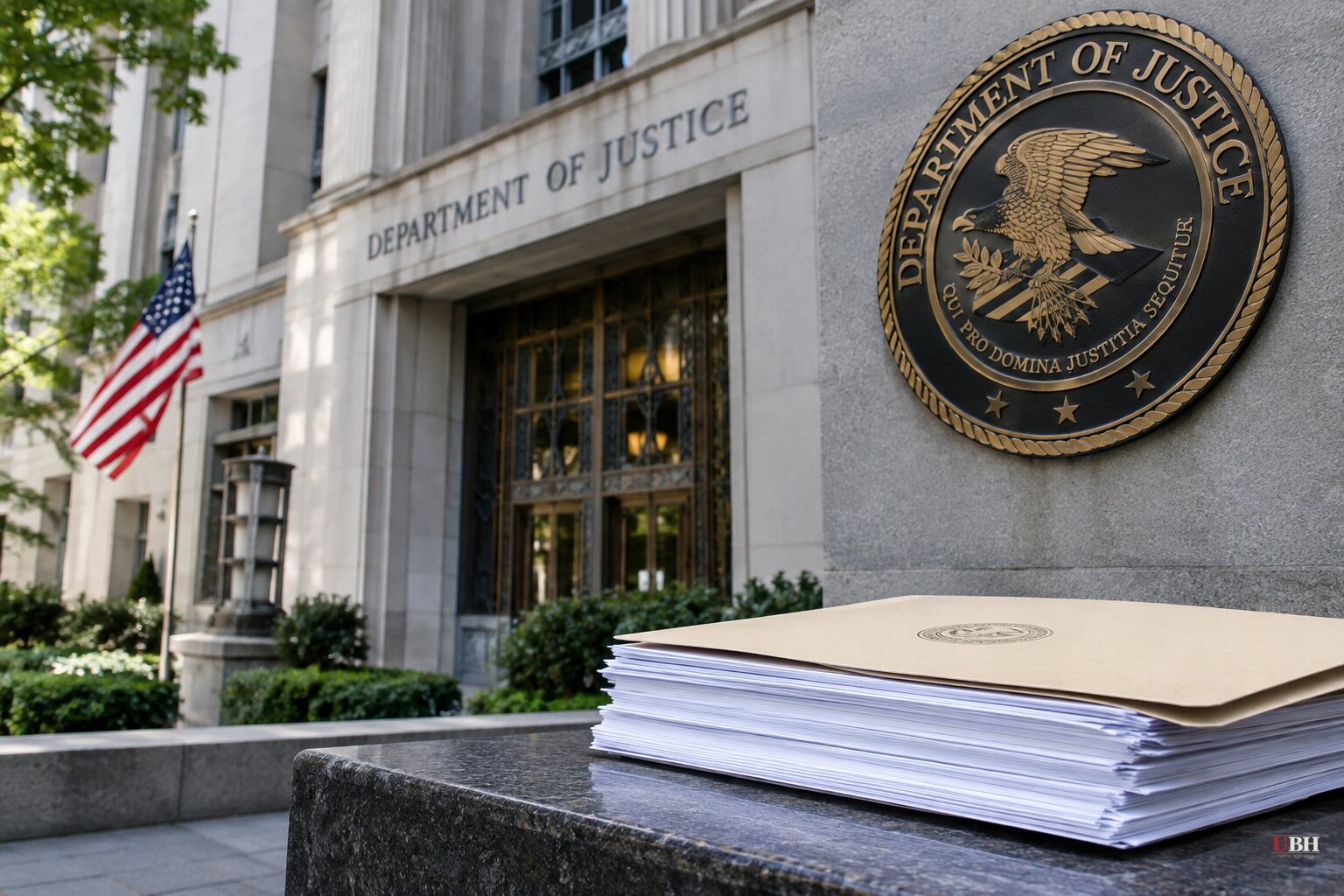
Federal prosecutors filed a civil forfeiture complaint on July 15 seeking to permanently seize roughly $84.2 million from Capstone Ltd., a U.S. payment processor prosecutors say moved hundreds of millions of dollars through Wells Fargo and JPMorgan accounts at the direction of EQIBank, a Dominica-licensed offshore bank, for the benefit of stablecoin issuer Tether and its affiliate Bitfinex.
A September 14 federal court order lays out exactly where the money came from: about $79.11 million pulled from a Wells Fargo Securities account in Capstone's name, another $1.86 million from a Wells Fargo Bank account, roughly $2.06 million from a JPMorgan Chase account, and small amounts of USDT from two crypto addresses, according to crypto.news. Combined, the listed property totals close to $84.2 million.
EQIBank tried to get the money back. The bank filed a motion on June 29 in the U.S. District Court for the Eastern District of California, and a federal judge denied it, according to OffshoreAlert reporting cited by StartupFortune. EQIBank says the seizure represents about $89 million and roughly 80% of its total monetary holdings. On September 9, the bank warned publicly that continued loss of those funds could push it into liquidation.
No criminal charges have been filed against Tether, Bitfinex, or EQIBank in this matter. This is a civil forfeiture action against Capstone. EQIBank is contesting it in federal court, arguing the money is legitimately its own.
Tether's exposure and its defense
Tether confirmed to The Information that it banked with EQIBank, including for wire transfers tied to USDT purchases and redemptions, but said the relationship amounts to less than 0.034% of the group's assets. "Tether had no knowledge of the conduct by Capstone alleged by the Department of Justice," a company spokesperson told The Information.
Applying that 0.034% ceiling to Tether's reported $187.75 billion in assets as of June 30 puts the upper-bound figure at roughly $63.8 million, according to crypto.news. Tether has not disclosed the exact dollar amount, so its actual EQIBank exposure could be lower. The company's June 30 reserve report showed liabilities near $183.64 billion and excess reserves of $4.11 billion, down from $8.23 billion at the end of the first quarter, with roughly $1.5 billion in second-quarter operating profit.
On a $187.75 billion balance sheet, $64 million is noise. StartupFortune's framing of the story gets that right: the dollar figure isn't the point. Tether's dollar redemption pipeline ran through a small offshore bank that a U.S. payment processor is now accused of misusing, and that relationship only became visible because of a federal seizure.
A fair question about transparency
Critics of Tether have long argued the company's reserve reporting doesn't give outsiders enough to verify independently. That concern has some traction here. Tether announced on August 13 that KPMG U.S. completed its first full independent audit, issuing a clean opinion and confirming reserves exceed liabilities by $6.814 billion, according to StartupFortune. But Tether has not published the underlying audit report, meaning the public is asked to take the headline figure on the company's word rather than review the work behind it.
That's a legitimate transparency gap. It's not, however, evidence that the EQIBank exposure figure is wrong, or that Tether's reserves are impaired. No source reviewed here presents evidence disputing Tether's 0.034% claim.
A pattern of DOJ crypto enforcement
The Capstone case landed the same month prosecutors filed a separate $61 million civil forfeiture complaint, on September 14, against cryptocurrency held by two Hong Kong-incorporated companies, Blessed Trust Limited and Hexa Whale Trading Limited, accused of laundering proceeds from black-market Iranian oil sales through the Binance exchange, according to the Epoch Times. Prosecutors say at least seven interconnected addresses moved more than $1.5 billion tied to Iran's government and the IRGC, a U.S.-designated terrorist organization.
Tether itself froze ten of the targeted addresses in that case, seven in June 2025 and three in July 2025, per the complaint. That's a separate matter from the EQIBank forfeiture, but it shows Tether has an active compliance track record freezing sanctioned wallets even while it now finds itself named, without being accused of wrongdoing, in a case against its own banking intermediary.
Tether and Bitfinex have been through this kind of scrutiny before. New York's Attorney General settled with both companies in 2021 over allegations Bitfinex covered up an $850 million loss using Tether's reserves, resulting in an $18.5 million fine and a New York customer ban, with no admission of wrongdoing by either firm.
The open question now is what happens to EQIBank. If the bank's liquidation warning proves accurate, other small offshore banks and payment processors serving crypto firms will be watching how a U.S. civil forfeiture case wiped out four-fifths of one institution's cash on hand, without a single criminal charge yet filed against the bank itself.
Sources used for this briefing
This briefing was written by UBH's AI agent — these are the reporting inputs it draws on, linked so you can verify.


