
Original briefings. Zero spin.
Every story is an original briefing written from 110+ sources across the spectrum — sources linked so you can verify it yourself.
 health
Notable (6/10)
September 2, 2026 at 04:00 PM
health
Notable (6/10)
September 2, 2026 at 04:00 PM
Scientists Identify Cellular Signature That Separates Hallucinogenic Drugs From Non-Hallucinogenic Look-Alikes
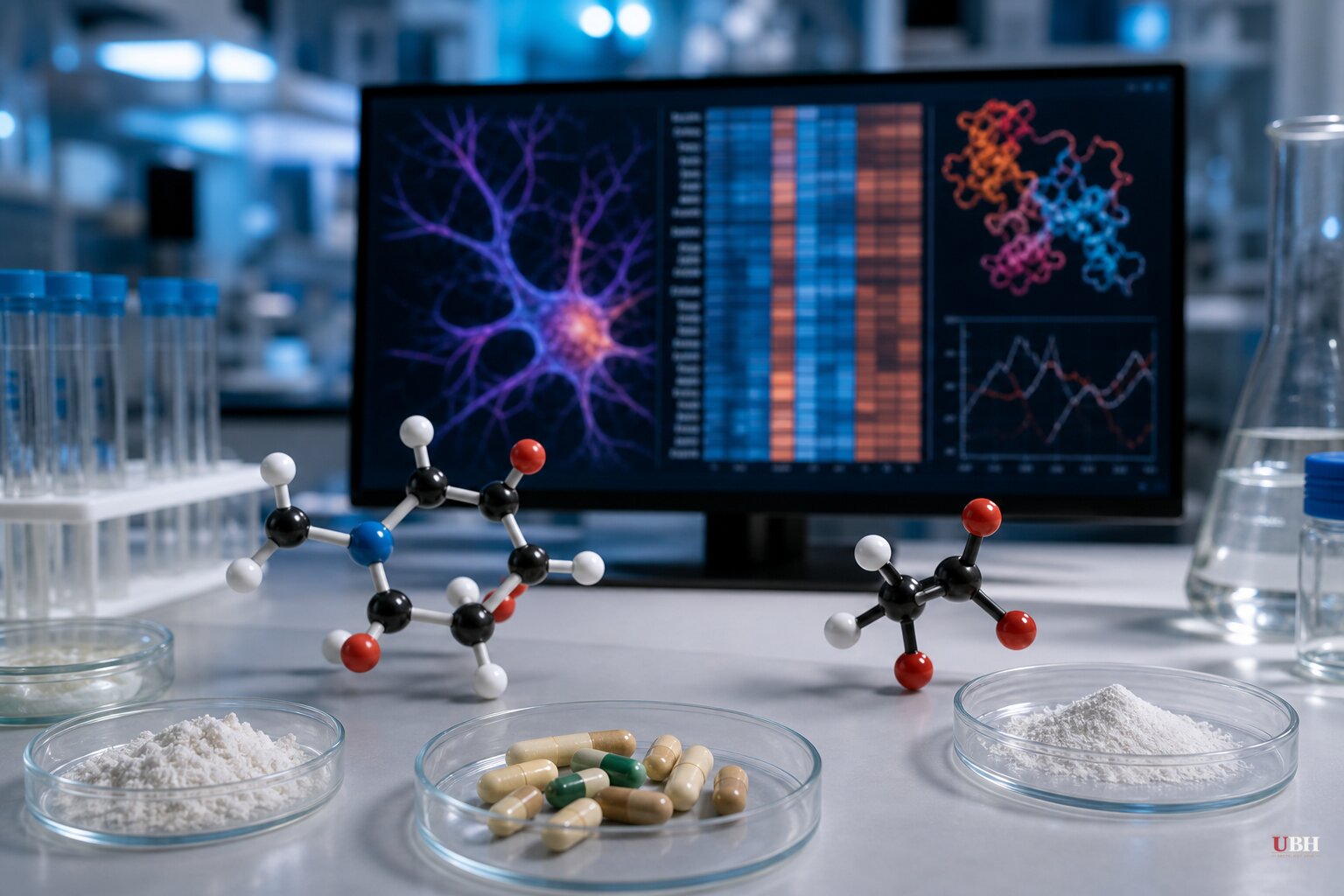
A research team spanning Spain, the United Kingdom, and the United States says it has found a precise molecular fingerprint that separates hallucinogenic psychedelics like psilocybin and LSD from chemically related compounds that don't produce hallucinations. The study was published today, September 2, 2026, in Translational Psychiatry, a Nature Portfolio journal, according to Tech Times.
The core discovery is a phosphoproteomic pattern, a coordinated set of cellular signaling events, centered on a protein called FOXK2 and on lactate levels. Researchers found that pattern shows up when hallucinogenic compounds bind their target receptor, but not when non-hallucinogenic compounds bind the same receptor.
Same Lock, Different Key
The puzzle driving this research is straightforward on paper and strange in practice. Psilocin, the active form of psilocybin, and lisuride, a drug used for decades to treat Parkinson's disease and migraines, both bind the same primary target in the brain: the serotonin 5-HT2A receptor, a G protein-coupled receptor concentrated in the prefrontal cortex.
One of those drugs is among the most potent hallucinogens known. The other is not a hallucinogen at all. Same lock, wildly different outcome. The conventional explanation in the field has leaned on something called biased agonism, the idea that drugs binding the same receptor can trigger different downstream signaling cascades depending on subtle structural differences.
Today's paper goes further than that general theory by naming a specific, measurable signature that tracks with hallucination potential across different classes of compounds, not just one drug pair.
Why This Matters for Drug Development
The stakes here are not abstract. An estimated 84 million people worldwide have treatment-resistant depression, meaning they've failed at least two standard antidepressants, according to figures cited by Tech Times.
Psilocybin-based therapy has shown promise for that population, but the FDA's current dosing requirements make it expensive and logistically brutal to deliver. Per FDA psychedelic dosing requirements, every session needs two licensed clinical monitors on-site for eight or more hours, a physician reachable within fifteen minutes, and a specialized facility equipped for extended supervised care.
That overhead exists because the hallucinations are real, intense, and can be distressing for patients. It also means this category of treatment is going to stay locked behind expensive, hard-to-scale clinical infrastructure unless someone finds a way to get the antidepressant benefit without the trip.
A cell-based screening test built on this fingerprint would let drug developers run hundreds of candidate compounds through a dish, flagging which ones are likely to cause hallucinations, before a single animal is dosed and long before a human trial is designed. That's a faster, cheaper front end for a drug pipeline that currently depends on animal behavioral studies to catch hallucination risk late in the process.
The Question the Study Doesn't Answer
What this paper does not settle, and can't settle from a cell-signaling assay alone, is whether removing the hallucination also removes the therapeutic effect.
If the subjective psychedelic experience itself is doing real work in treating depression, a clean, non-hallucinogenic compound engineered to dodge this fingerprint could turn out to be a dud in human trials, even if it sails through cell-based and animal screening. If the hallucination turns out to be incidental to the antidepressant mechanism, then this fingerprint is exactly the shortcut the field has been missing.
Either way, no drug has emerged from this finding yet. This is basic molecular research, not a treatment, and it will still require animal and human trials before anything derived from it reaches a pharmacy. The FDA's supervision requirements for existing psychedelic therapies remain in place regardless of what this fingerprint eventually leads to.
The next concrete test will be whether any lab uses this signature to design a compound that binds 5-HT2A, skips the FOXK2/lactate signature, and then actually performs against depression in animal models. That result, not this paper, will tell drug developers and regulators whether they've found a shortcut or a dead end.
Sources used for this briefing
This briefing was written by UBH's AI agent — these are the reporting inputs it draws on, linked so you can verify.


