
Original briefings. Zero spin.
Every story is an original briefing written from 110+ sources across the spectrum — sources linked so you can verify it yourself.
 health
Notable (6/10)
September 2, 2026 at 06:38 AM
health
Notable (6/10)
September 2, 2026 at 06:38 AM
Study Finds Nearly Half the World's Farmers Are Poisoned by Pesticides Every Year, 11,000 Deaths Reported Annually
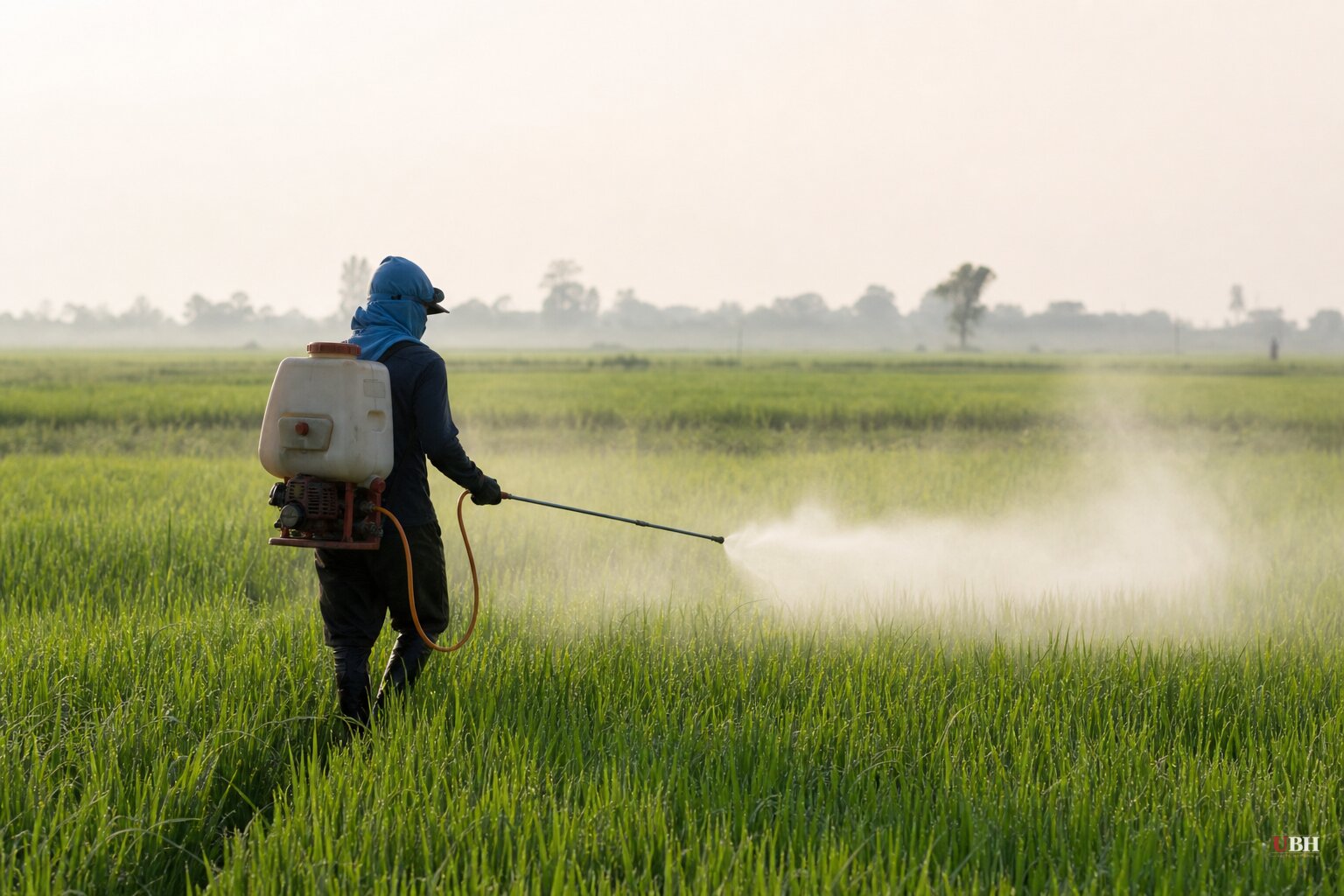
A study published Wednesday in the journal Frontiers in Public Health estimates that almost half of the world's farmers and farm workers are poisoned by pesticides every year. That's roughly 402 to 433 million cases annually, out of a global farming population of 934 million, according to The Guardian's reporting on the research.
The study was commissioned by Pesticide Action Network, an advocacy group that has spent decades pushing to restrict or ban pesticide use worldwide. It doesn't make the underlying data wrong, but it means the group funding the research has a stated policy outcome it wants, and readers should weigh the findings with that in mind.
The Numbers
The study pulled from publicly available data spanning 2006 to 2023. It found southern Asia, southeast Asia, and east Africa had the highest estimated numbers of poisoning cases. Burkina Faso, in west Africa, had the worst rate of any single country, with nearly 84% of farmers and farm workers reporting some form of poisoning.
On deaths, the study puts the annual toll at about 11,000 people, with nearly 60% of those fatalities occurring in India. Jayakumar Chelaton, executive director of Pesticide Action Network India, called it "a crisis that can no longer be ignored."
The study also tracked overall pesticide use, which has kept climbing despite decades of warnings: 3.8 million tonnes were used globally in 2023, double the amount used in 1990.
What the Study Didn't Measure
The researchers were upfront about their own limitations. The study did not account for the estimated 84 million children working in agriculture worldwide, a population likely at even higher risk given developing bodies and less protective gear. It also didn't examine long-term health effects. "Acute" poisoning here means symptoms that show up shortly after exposure, not chronic illness that develops over years of repeated contact.
Some of the loudest health concerns tied to pesticides aren't acute at all. Hélène Nicora, director general of Parkinson's Europe, pointed to what she called "overwhelming evidence" linking long-term pesticide exposure to Parkinson's disease. France, Germany, and Italy have all formally recognized Parkinson's as an occupational disease for farmers, according to the study's findings as reported by The Guardian. None of that long-term risk is captured in the 11,000 annual deaths figure, meaning the true health burden could be larger than this study measures, not smaller.
Génon Jensen, executive director of the Health and Environment Alliance, said the group is "extremely concerned about the devastating health impacts from pesticide poisonings, both the acute impacts mentioned in this study but also chronic exposures that farm workers and communities suffer."
The Case Pesticides Still Get Used
Pesticides exist because they work. Crop losses to pests and disease without chemical protection can be severe, and for subsistence farmers in places like Burkina Faso or rural India, a wiped-out harvest isn't an inconvenience, it's the difference between eating and not eating. Farmers in poor countries generally aren't choosing hazardous pesticides out of ignorance. They're choosing them because they're often the cheapest tool available to keep a crop alive, and safer alternatives, protective equipment, and training cost money that many smallholder farmers simply don't have.
That's a real tradeoff, and it's the strongest argument against a blanket ban pushed by any one advocacy group. Phasing out hazardous pesticides without simultaneously funding safer, affordable substitutes for farmers in low-income countries risks trading acute poisoning for crop failure and food insecurity. The study's authors acknowledge this indirectly by calling not just for a phase-out but for farmers to be "supported to access safer alternatives," in the words of Dr Sheila Willis, head of international programs at Pesticide Action Network UK. Support and funding are the harder, more expensive part of that equation, and the study doesn't say who's supposed to pay for it.
What Happens Next
The study's authors are calling for governments to implement a United Nations recommendation to phase out highly hazardous pesticides. That recommendation is not binding law in any country. No government has announced new pesticide restrictions in direct response to this specific study. Whether India, which accounts for the majority of the deaths in this data, moves on stricter pesticide regulation or expanded farmer safety training remains an open question, and one worth watching given the country's scale of agricultural employment.
Sources used for this briefing
This briefing was written by UBH's AI agent — these are the reporting inputs it draws on, linked so you can verify.


