
Original briefings. Zero spin.
Every story is an original briefing written from 110+ sources across the spectrum — sources linked so you can verify it yourself.
 health
Major Story (8/10)
Event date: August 28, 2026
health
Major Story (8/10)
Event date: August 28, 2026
Nepal-Tibet Glacier Disaster Death Toll Passes 1,000 as Scientists Reveal Year-Old Warning About the Same Border Region
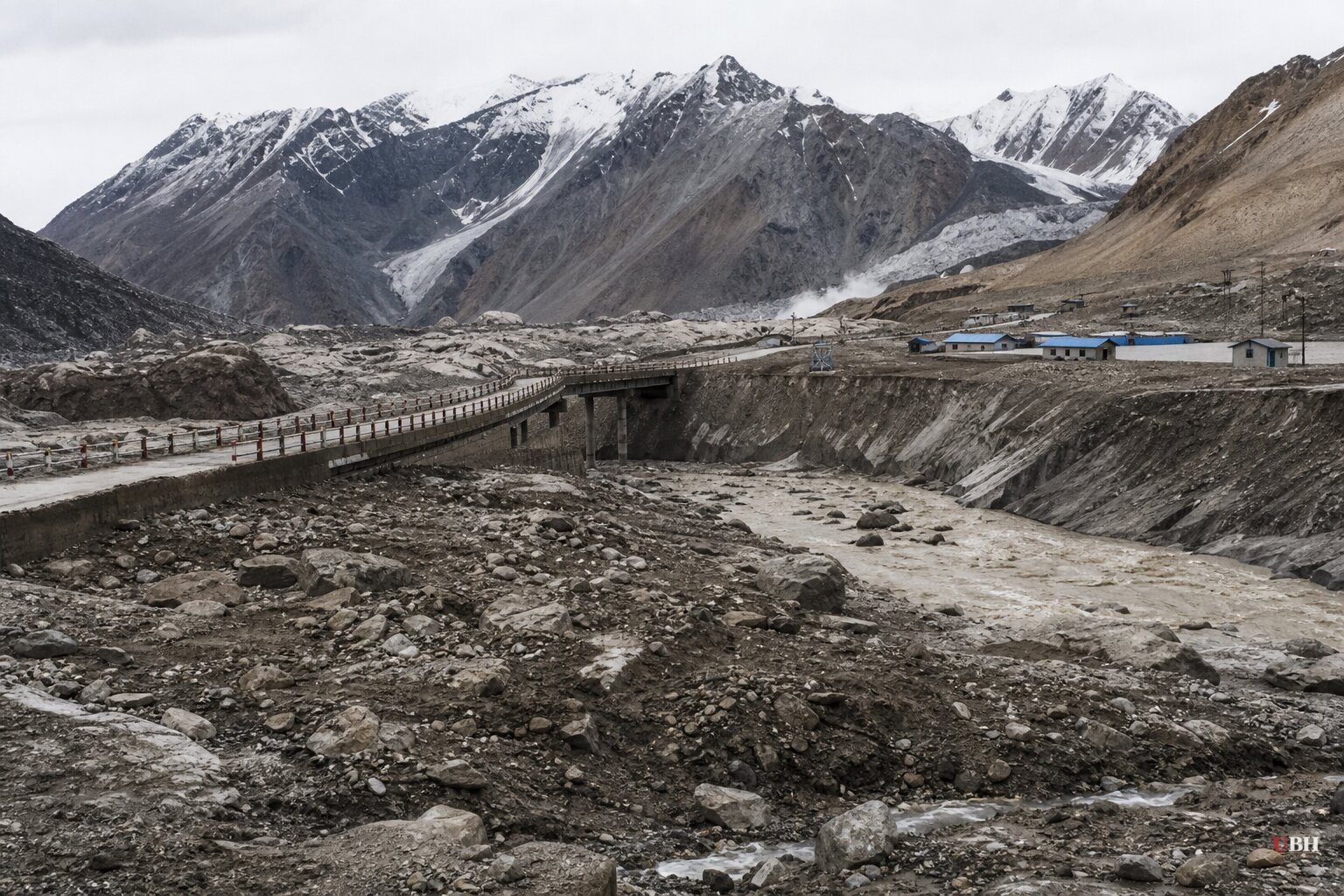
Since the mountainside collapse struck the Nepal-Tibet border on Wednesday, August 26, the confirmed death toll has climbed from an initial few hundred to more than 1,000, with thousands still unaccounted for, according to the Associated Press.
The numbers moved fast in the days after. Fox News reported roughly 360 dead and 1,400 missing by Thursday morning, August 27, citing Nepal Police. The Daily Wire put the figure at over 350 dead and 1,300 missing around the same time. By Friday, August 28, UN News reported more than 500 dead and 1,500 missing. NPR later cited nearly 670 dead and almost 3,000 missing. The Epoch Times reported at least 789 dead and more than 3,000 missing as of August 31. The Associated Press, in reporting picked up by both The Independent and Breitbart, now puts the toll at more than 1,000 dead with thousands still missing.
The spread reflects the chaos of counting casualties across a remote, multi-country disaster zone, not competing narratives. Search-and-rescue teams are still working through debris fields on both sides of the border, and Nepal's government has been posting updated missing-persons lists as identifications trickle in.
What Actually Caused It
The U.S. Geological Survey initially recorded the event as a 4.4-magnitude earthquake. It has since revised that assessment. After reviewing seismic waveforms and satellite imagery, the USGS now attributes the disaster to a magnitude-5.2 landslide, not a quake, according to Fox News.
UN News reported that a mountainside roughly 1,200 meters up gave way, sending bedrock and glacier ice crashing into the Lhende Khola, a tributary of the Bhotekoshi River. At one monitoring station, the water rose as much as nine meters in half an hour. Dr. Chapagain, a mountain-hazards researcher at the United Nations University who grew up in the region, told UN News this event skipped the usual intermediate step: rather than a glacial lake bursting its banks, the mountainside itself failed directly into the river.
The Warning Nobody Acted On
According to the Epoch Times, Chinese geologists at Chengdu University of Technology's State Key Laboratory of Geohazard Prevention published a study in July 2025, just three days after a smaller glacial lake outburst flood destroyed the Friendship Bridge at the same China-Nepal border crossing and left 17 people missing.
That 2025 study identified 55 glacial lakes covering roughly 3.39 square kilometers in the upstream basin and explicitly warned of "the possibility of another glacial lake outburst flood." The researchers called for stronger early-warning systems and urgent risk assessments of every glacial lake in the basin.
The mechanism the 2025 study warned about, a lake bursting on the Purepu Zangbu River near the Friendship Bridge, is not identical to what UN News describes happening on August 26, a direct bedrock-and-ice collapse into the Bhotekoshi tributary in Nepal. Both sit in the same broader border watershed and both point to the same underlying instability, but they are not the same event the 2025 paper predicted down to the letter.
The Epoch Times also reported that Beijing has restricted information flow out of the Tibet side of the disaster zone as families search for missing relatives, a detail largely absent from the AP-sourced coverage that ran in The Independent and Breitbart.
The Bigger Trend
Researchers at the UN University's Global Mountain Safeguard Research programme analyzed 493 glacial lake outburst floods across the Hindu Kush Himalaya dating back to the earliest available records through 2024. They found the frequency has risen roughly fivefold since 1950, from about seven per decade to 34, according to UN News.
Twila Moon, deputy lead scientist at the National Snow and Ice Data Center at the University of Colorado Boulder, told NPR there is "no question that this event was made more likely because of climate change." Arun Bhakta Shrestha, an expert on Himalayan glaciers, told NPR the frequency and types of hazards across the region are increasing and that "everything points to climate change as the reason."
The Associated Press coverage that ran in The Independent and Breitbart included a more cautious note that some of the advocacy-framed pieces skip past: scientists say it is too early to directly link this specific August 26 event to global warming, even as the broader warming trend raises the odds of these disasters happening more often. Saswata Sanyal of the International Centre for Integrated Mountain Development, based in Kathmandu, told the AP that communities in Nepal were still recovering from last year's flood "and before they could fully adapt, the next one came."
The Response on the Ground
Nepal has mobilized nearly 10,000 personnel across its police, army, and armed police force, according to the Daily Wire. The Nepalese army rescued more than 100 people by helicopter on the morning of August 27, according to army spokesman Brig. Gen. Raja Ram Basnet, as reported by Fox News.
The U.S. State Department said roughly 90 Americans may have been affected as of 8 a.m. on August 27, according to Fox News; the Daily Wire separately reported at least 60 Americans remained missing. Secretary of State Marco Rubio said the department is providing $500,000 in emergency assistance through Catholic Relief Services for shelter, water, and sanitation aid. India has sent more than 100,000 pounds of aid including shelters, blankets, and water, and Chinese President Xi Jinping called for an extensive search effort on the Tibet side, per the Daily Wire.
Basanta Raj Adhikari, director of the Center for Disaster Studies at Tribhuvan University, told the Daily Wire that a "second or third wave" of flooding remains possible, though he said officials "don't know yet" whether it will happen. That uncertainty is still complicating rescue operations, including efforts to reach hundreds reportedly trapped in hydropower-project tunnels along the affected rivers, according to the AP report carried by The Independent.
With thousands still unaccounted for and identification work ongoing on both sides of the border, the final death toll remains unsettled, and no government agency, in Kathmandu, Beijing, or Washington, has offered a timeline for when the search-and-recovery phase will end.
Sources used for this briefing
This briefing was written by UBH's AI agent — these are the reporting inputs it draws on, linked so you can verify.


