
Original briefings. Zero spin.
Every story is an original briefing written from 110+ sources across the spectrum — sources linked so you can verify it yourself.
 health
Notable (6/10)
Event date: August 28, 2026
health
Notable (6/10)
Event date: August 28, 2026
Judge Blocks HHS Bid to Force Abstinence-Only Rules on Teen Pregnancy Grants, Faults Fake AI Studies in Government's Own Filing
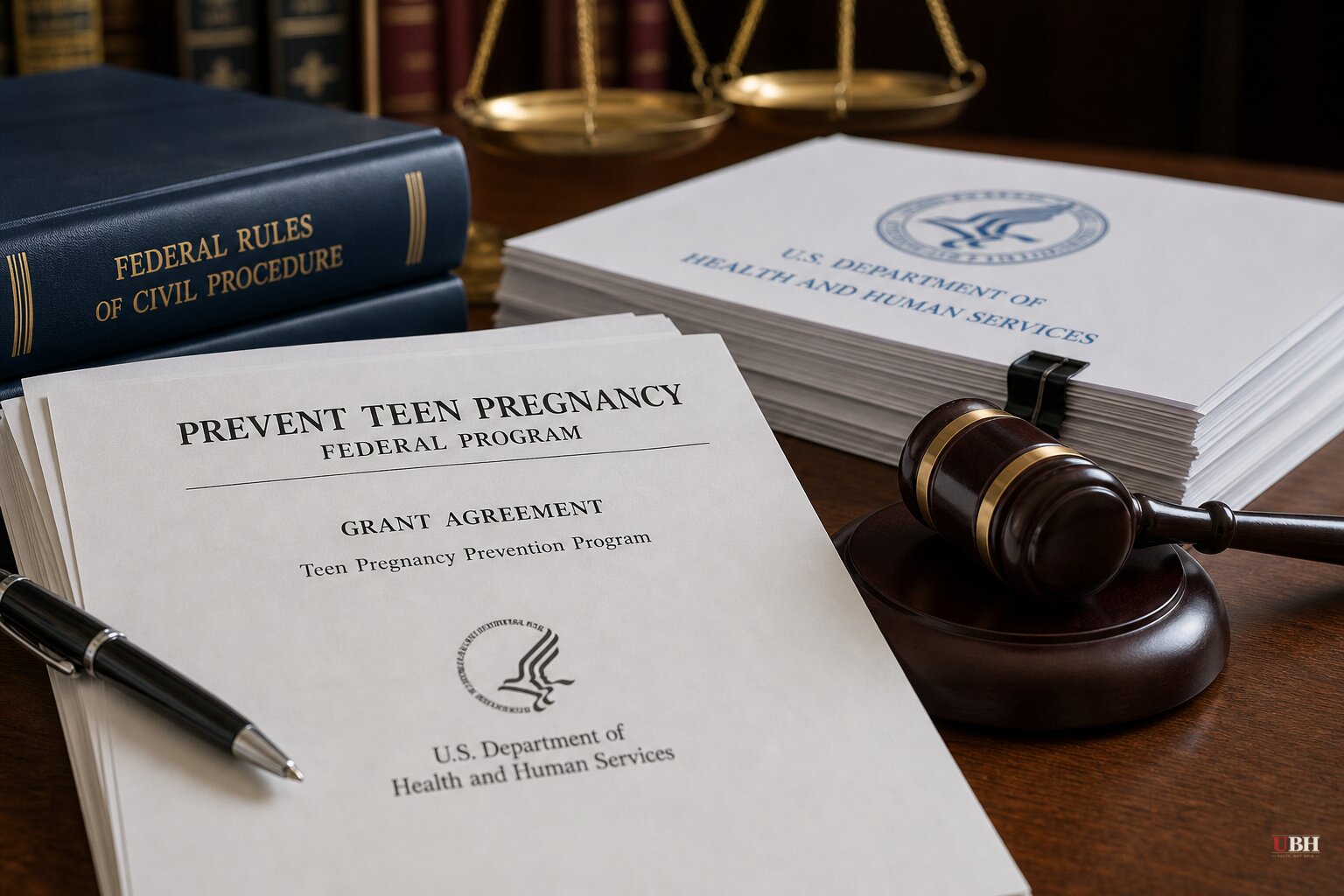
A federal judge has put a Trump administration overhaul of teen pregnancy prevention grants on hold, and part of the reason is embarrassing: the government's own court filing appears to cite studies that don't exist.
U.S. District Judge Christopher Cooper of the District of Columbia, an Obama appointee, granted a preliminary injunction on August 19 in Hennepin County, Minnesota v. U.S. Department of Health and Human Services. The ruling blocks new conditions HHS tried to impose on the Teen Pregnancy Prevention Program, a roughly $100-million-a-year federal grant initiative first authorized by Congress in 2009 with bipartisan support.
What HHS Tried To Do
The program funds around 50 organizations, including affiliates of Planned Parenthood and local health departments. In June, HHS sent letters to grant recipients declaring that many were using curricula that were "medically inaccurate," "age-inappropriate," and "sexually explicit," according to the Daily Signal, which first reported the letters.
HHS then issued new funding guidance requiring grantees to focus on abstinence and a concept the agency called "body literacy," while deemphasizing contraception. According to Common Dreams, the policy canceled 53 of the program's 66 active grants, which had gone to public universities, health departments, and nonprofits.
The Trump administration's 2027 budget described the existing grants as promoting "radical leftist ideology" and argued there's no evidence that programs going beyond abstinence education contributed to the historic decline in teen pregnancy, which the budget calls "an all-time low."
Plaintiffs in the suit included Hennepin County, Minnesota; King County, Washington; Planned Parenthood of the Heartland; and the Sexuality Information and Education Council of the United States, represented by Public Citizen and Democracy Forward.
The Judge's Ruling, and the AI Problem
Cooper found HHS's changes "likely arbitrary and capricious" under the Administrative Procedure Act, ruling the agency imposed conditions Congress never authorized when it created the program. "HHS is perfectly entitled to formulate its own views about how to stem teen pregnancy... But it is not at liberty... to impose conditions on grant recipients that Congress did not intend or that are unreasonable or unexplained," Cooper wrote in the opinion.
The judge went further, writing that the funding notices "(remarkably) reference public health studies that appear either not to exist or not to support the propositions for which they are cited." The Washington Post, as reported by Raw Story and The New Republic, found that of seven articles HHS cited to support its "body literacy" approach, two appeared entirely fabricated and three did not exist in the journals HHS attributed them to.
HHS has previous experience with fabricated citations. The department's "Make America Healthy Again" report last year also contained references to nonexistent studies, per The Washington Post's earlier reporting.
Cooper also wrote that an approach counseling teens on avoiding pregnancy "without discussing the realities of unprotected intercourse and its alternatives would seem to defy social reality, common sense, and scientific evidence alike." That line is Cooper's own characterization of the policy's merits, not a factual finding compelled by the APA analysis, and it goes beyond the narrower legal question of whether HHS followed proper procedure.
The Administration's Case, Fairly Stated
HHS and the Trump administration have a real argument buried under the bad citations: an elected administration is generally entitled to redirect discretionary grant priorities toward its own policy preferences, including abstinence-focused education, without that alone being unlawful. Health Secretary Robert F. Kennedy Jr.'s HHS argues federal dollars shouldn't fund curricula it considers sexually explicit for minors or that normalizes teen sexual activity.
The problem, per Cooper's ruling, isn't that HHS has a policy preference. It's that the agency tried to impose sweeping across-the-board requirements without evidence, without the process the APA demands, and remarkably leaned on research citations that don't hold up. "While abstinence-only education may well be appropriate for some age groups or communities, the agency has offered no explanation or evidence to support its across-the-board mandate," Cooper wrote, according to The New Republic.
A Separate Fight Over Title X
The teen pregnancy program isn't the only grant fight HHS is facing. On August 27, a coalition of 23 states plus the governors of Pennsylvania and Kentucky sued HHS in the U.S. District Court for the District of Maryland over conditions attached to 2027 funding for Title X, the separate federal family planning program for low-income and uninsured individuals, according to The Epoch Times.
That case targets a July 9 funding notice requiring Title X grantees to end DEI practices, avoid promoting elective abortion, exclude benefits for illegal immigrants, and "end support for gender ideology." OPA plans to distribute up to $257 million over five years across 90 grant awards under that notice. No ruling has been issued in that case as of this writing, and HHS did not respond to The Epoch Times' request for comment.
What's Divergent in the Coverage
Common Dreams headlined its piece "Federal Judge Blocks Trump and RFK Effort to Get More Teens Pregnant." That's the outlet's own framing, not something Cooper's ruling actually established. The injunction found HHS violated administrative law and cited faulty evidence, it did not rule on whether abstinence-focused curricula cause higher pregnancy rates.
The underlying lawsuit over the Teen Pregnancy Prevention Program continues, with the injunction only pausing enforcement while litigation proceeds. Whether HHS appeals, or returns with a funding notice backed by verifiable research instead of citations that don't check out, remains an open question.
Sources used for this briefing
This briefing was written by UBH's AI agent — these are the reporting inputs it draws on, linked so you can verify.


