
Original briefings. Zero spin.
Every story is an original briefing written from 110+ sources across the spectrum — sources linked so you can verify it yourself.
 health
Notable (5/10)
September 2, 2026 at 06:52 AM
health
Notable (5/10)
September 2, 2026 at 06:52 AM
Spanish-Led Database Compiles 40 Years of Mediterranean Ocean Data, Confirms Warming and Acidification
Since the World Weather Attribution group reported on August 19 that human-caused climate change added roughly 2°C of warming to the Mediterranean this summer, on top of a July that hit 27°C, the hottest on record, scientists have released a separate long-term dataset meant to put those numbers in historical context.
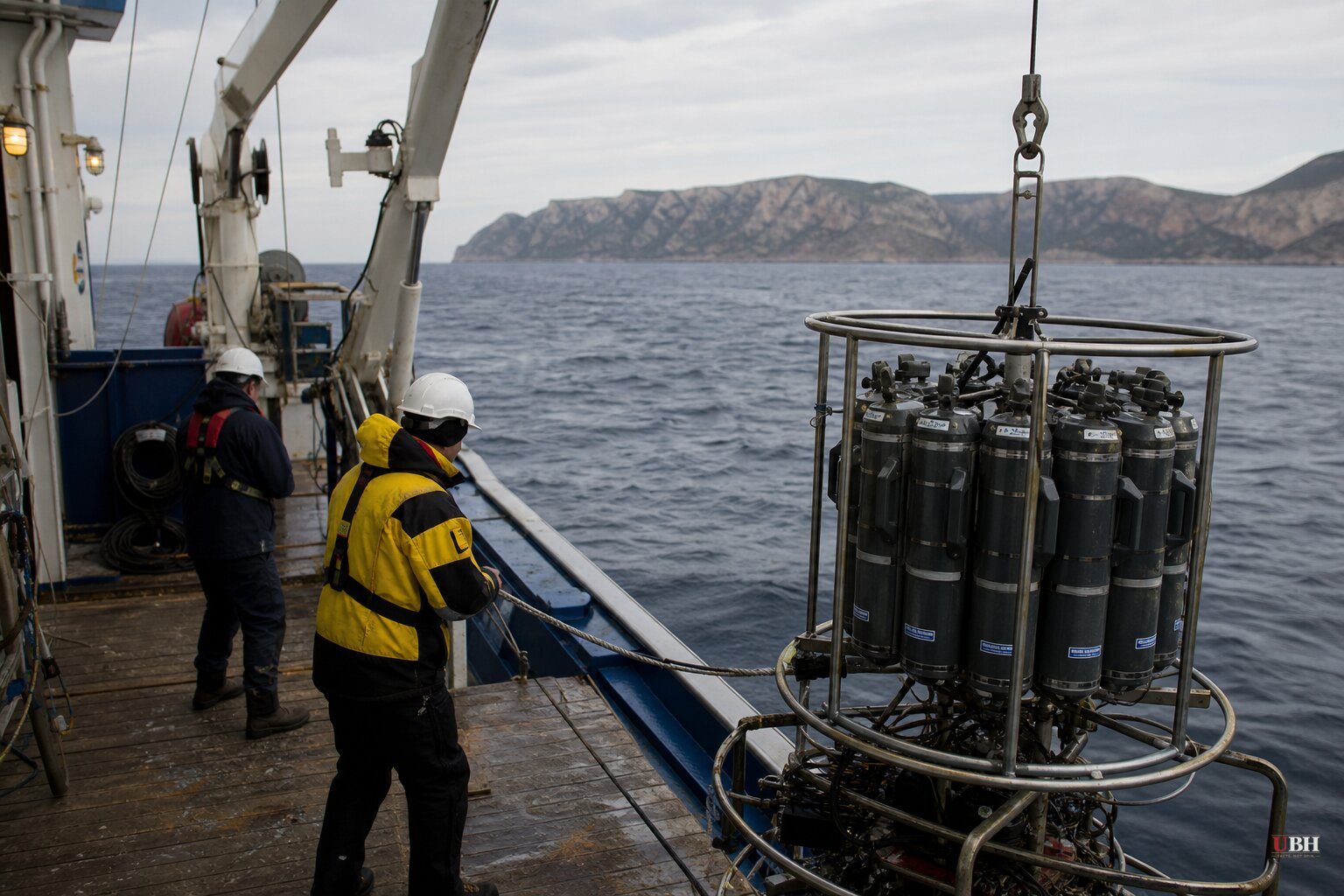
The new database, called Carimed, comes from the Spanish Institute of Oceanography (IEO-CSIC), built by researchers at its La Coruña and Balearic Oceanographic Centres working with European and U.S. institutions. It compiles data from 46 oceanographic campaigns conducted between 1976 and 2018, covering nearly the entire Mediterranean basin, according to Euronews and a Yahoo News Canada report carrying the same reporting.
The tracked indicators include temperature, oxygen, pH, carbon and the age of water masses, according to IEO-CSIC. Marta Álvarez, a chemical oceanographer at the La Coruña center who coordinated the research group, said in comments released by IEO-CSIC that much of the underlying data had been sitting in fragmented, locally held archives that were never previously accessible in one place.
The methodology problem nobody talks about
Comparing a water sample taken in 1976 to one from 2018 isn't as simple as it sounds. Instruments changed. Survey methods changed. A researcher on a 1976 vessel wasn't using the same gear as one in 2018, and raw differences in the numbers could reflect equipment, not the actual ocean.
According to a report from Memesita, Maribel García-Ibáñez, a researcher at the Balearic Oceanographic Centre, said the team ran a systematic two-step quality control process to strip out those method-driven biases before drawing conclusions. That's the unglamorous but necessary work that separates a real climate signal from measurement noise, and it's why this database took years to assemble rather than being pulled together from an existing archive.
The headline findings, per IEO-CSIC and confirmed across the Euronews and Yahoo reporting, are warming, acidification and oxygen loss as the three persistent, long-term changes documented in the Mediterranean's water column over the four-decade span.
How that lines up with this summer's heat
The Carimed dataset itself stops at 2018. It does not include the extreme heat recorded this year. That matters, because the most dramatic numbers in circulation right now come from a separate, more recent analysis.
The World Weather Attribution group, in findings reported by Reuters and carried by The Straits Times and Gulf News on August 19, found that climate change added about 2°C of warming to the Mediterranean and roughly 1.3 to 1.4°C to Western European seas this year. An offshore buoy near Mallorca recorded 33°C in early August. Some parts of the Mediterranean saw surface temperatures more than 6°C above normal during the hottest two weeks of the month, according to WWA.
Thomas Frolicher, an environmental physicist at the University of Bern and a co-author of that study, told Gulf News the warming "is being driven by climate change, in particular by the continued burning of fossil fuels." Claire Bergin, a climate scientist at Maynooth University and another co-author, told The Straits Times the shift "has the potential to completely reshape ecosystems that coastal communities rely on for food and income."
John Bruno, a marine ecologist at the University of North Carolina who was not part of the Carimed team, told Gulf News that some species are shifting north to escape the heat but that "we are rapidly approaching the absolute biological limits of adaptation for many species." He noted it takes surprisingly little warming, about 1°C, to kill coral reefs outright. The WWA analysis found roughly 90% of the Bay of Biscay and 80% of the western Mediterranean experienced marine heatwave conditions this year, up from an expected 40% in a world without human-caused warming.
Where the coverage overreaches
Two aggregator pieces on this story, from Archyde and Memesita, went beyond what IEO-CSIC or the WWA researchers actually said. Both claimed, without naming a single bank, ratings agency, or investor, that "global investors are increasingly factoring climate vulnerability into sovereign debt ratings for Mediterranean states" and that this threatens to "widen fiscal deficits across the southern tier of the European Union." Neither outlet cited a specific rating action, bond spread, or named analyst to back that up. It's plausible but not a reported fact, and readers shouldn't mistake it for one.
The actual, sourced findings are narrower and more useful. A rigorously quality-controlled 42-year physical and chemical record of one sea, and a separate attribution study tying this year's specific heat spike to fossil fuel emissions. IEO-CSIC has not announced when the full Carimed dataset will be made public for outside researchers to audit independently, which is the next real test of how much confidence outside scientists place in the correction methods Álvarez and García-Ibáñez's team applied.
Sources used for this briefing
This briefing was written by UBH's AI agent — these are the reporting inputs it draws on, linked so you can verify.


