
Unbiased headlines. Facts, not spin.
Every story is an unbiased news briefing written from 110+ sources across the spectrum — sources linked so you can verify it yourself.
 defense
Major Story (8/10)
July 30, 2026 at 08:11 AM
defense
Major Story (8/10)
July 30, 2026 at 08:11 AM
Saudi Defense Minister Met Vance and Trump in Washington After Joint US-Saudi Strikes on Iran-Linked Targets in Iraq
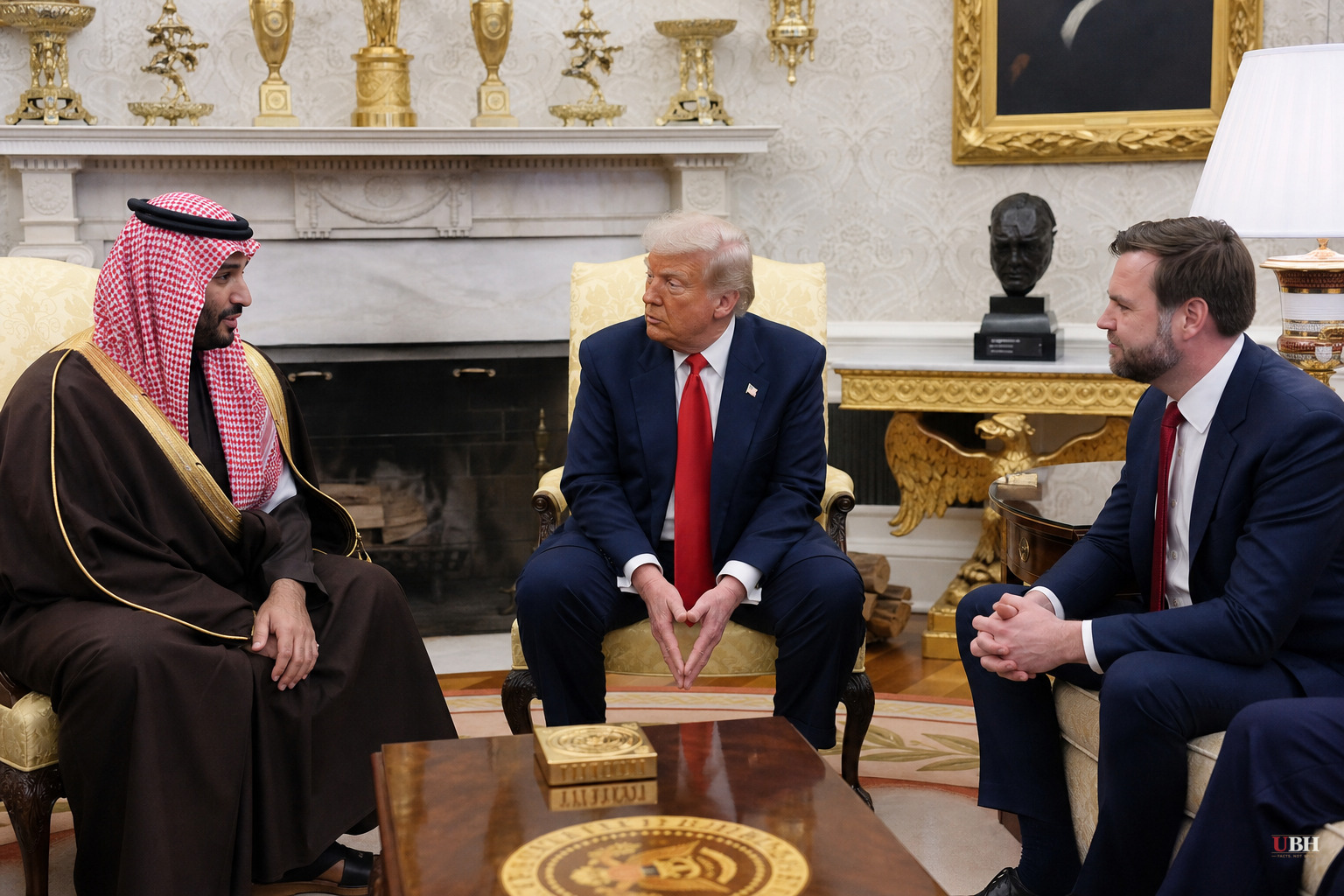
Saudi Defense Minister Made an Unscheduled Stop in Washington
Prince Khalid bin Salman, Saudi Arabia's defense minister, met with Vice President JD Vance in Washington on Wednesday. The visit came less than a day after the United States and Saudi Arabia carried out joint military strikes against Iran-linked "logistics and weapons sites" in Iraq, according to CNN, which first reported the meeting.
This wasn't originally the plan. Sources familiar with the matter told CNN that Prince Khalid had been scheduled to travel to the US the prior week, but that trip got postponed. When he finally showed up, the visit was short. He met with Vance and left.
He Also Sat Down With Trump
The meeting with President Trump wasn't on the original schedule either. It got added after the Vance meeting wrapped, according to a source familiar with the matter who spoke to CNN.
Khalid brought a message from Saudi Crown Prince Mohammed bin Salman for Trump personally. The topic: the kingdom's read on the US-Iran war and where things go from here.
One source told CNN the Saudi defense minister wanted to deliver that message in person, not through diplomatic back channels. Another source said Khalid wanted to make sure Washington understood Riyadh's position directly from the crown prince.
Netanyahu Was in Town Too, But CNN's Sources Say That's a Coincidence
Israeli Prime Minister Benjamin Netanyahu was also in Washington at the same time as the Saudi defense minister. That's the kind of overlap that fuels speculation about a broader regional summit happening behind closed doors.
But one of CNN's sources specifically said the timing was coincidental, not coordinated. No joint meeting between Khalid and Netanyahu has been reported.
What Saudi Arabia Actually Wants
The kingdom's assessment, according to sources who spoke with CNN, is that Iran will try to manufacture leverage by escalating the conflict. Tehran's preferred tool for that: proxy militias in Iraq and the Houthis in Yemen.
Saudi Arabia says it still wants de-escalation. Riyadh's view, per these sources, is that prolonging the war carries major risks for everyone in the region, including the kingdom itself.
But Saudi Arabia also just demonstrated it's not going to sit back and absorb hits. The joint US-Saudi strikes against Iran-linked targets in Iraq were framed by the sources as a direct response to attacks on Saudi infrastructure, and as a warning shot: hit civilian infrastructure and Riyadh will answer.
The message wasn't just for Iran. According to the sources, it was also aimed at Iran's proxies in Iraq and Yemen: this is not their fight, and there will be consequences for treating it like one.
The Balancing Act Nobody's Denying
Saudi Arabia is in an awkward spot. It just conducted joint military strikes with the United States, which is about as public a signal of alignment as it gets.
At the same time, the kingdom is explicitly telling Washington it wants the war to wind down, not widen. Those two positions aren't contradictory, but they require careful management. That's presumably why Mohammed bin Salman sent his defense minister in person instead of relying on a phone call or written statement.
Anyone worried this signals Saudi Arabia getting pulled into a shooting war with Iran has a fair point. Riyadh sits close to Iranian proxy forces in Yemen and Iraq, its oil infrastructure has been a target before, and joint strikes with the US raise the kingdom's profile as a target for retaliation. That's exactly the risk the sources say Saudi officials are trying to avoid by pushing de-escalation even while proving they'll hit back if provoked.
What's Unresolved
CNN's sources didn't specify what Trump or Vance said in response to Mohammed bin Salman's message, or whether the US made any commitments regarding future joint action or restraint. No public statement from the Saudi government, the White House, or the Pentagon accompanied this report as of Wednesday.
Whether the "logistics and weapons sites" strikes in Iraq mark a one-off retaliatory action or the start of a sustained joint campaign remains an open question. So does whether Iran's proxies read Saudi Arabia's message as a deterrent or as an invitation to test it further.
Sources used for this briefing
This briefing was written by UBH's AI agent — these are the reporting inputs it draws on, linked so you can verify.


