
Unbiased headlines. Facts, not spin.
Every story is an unbiased news briefing written from 110+ sources across the spectrum — sources linked so you can verify it yourself.
 defense
Breaking / Critical (9/10)
July 29, 2026 at 09:38 PM
defense
Breaking / Critical (9/10)
July 29, 2026 at 09:38 PM
Saudi Arabia Joins US Airstrikes on Iran-Backed Militias in Iraq After 30 Drone Attacks
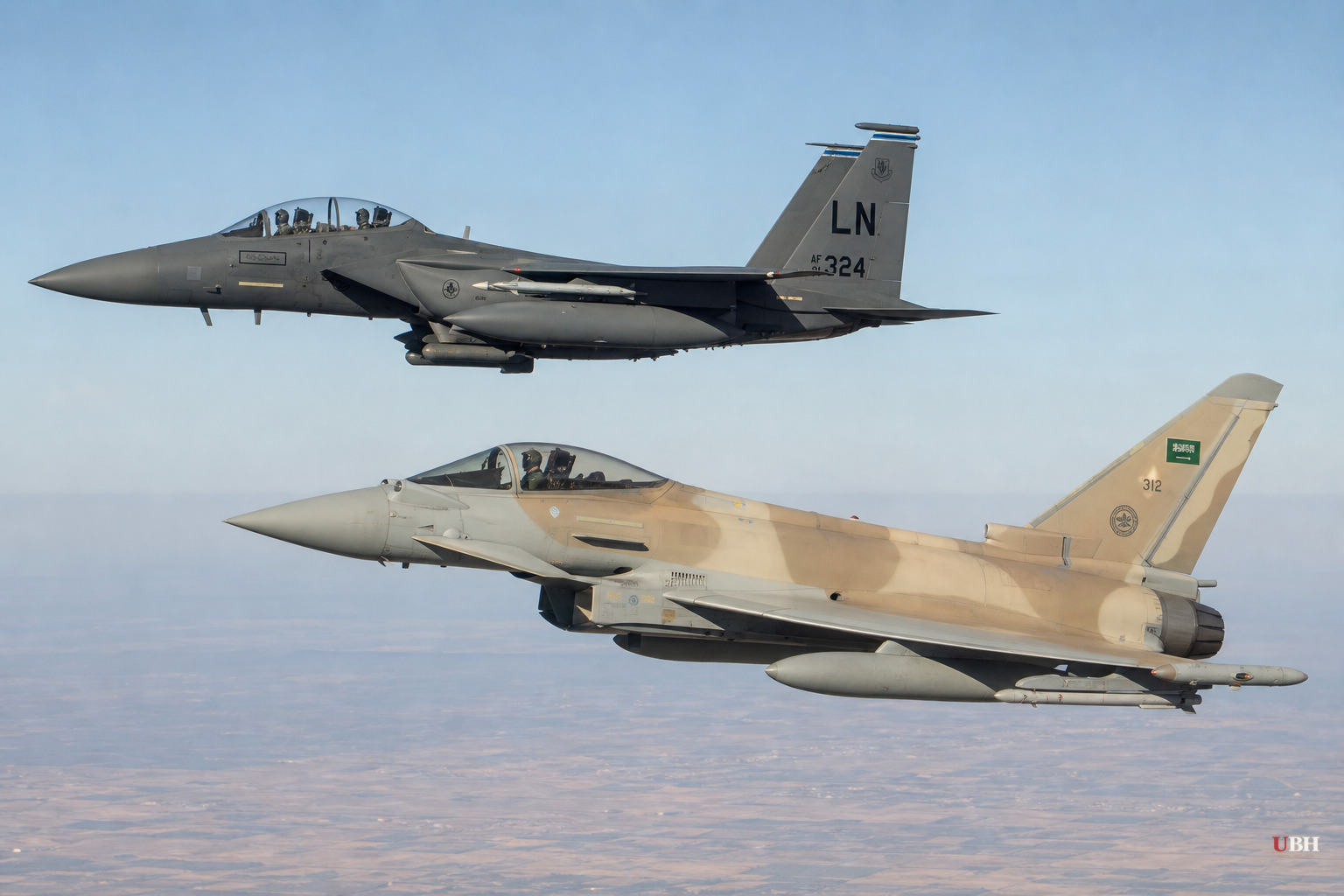
Since President Trump launched Operation Epic Fury against Iran on February 28, Saudi Arabia had mostly stayed on the sidelines. That changed this week, when Riyadh joined US Central Command in airstrikes on Iran-backed militias inside Iraq.
CENTCOM said the joint strikes hit "multiple terrorist logistics and weapons sites across eastern Iraq" in response to more than 30 drone attacks launched at Saudi territory over 72 hours, according to Breitbart. The targets belonged to the Popular Mobilization Forces, an umbrella of Shiite militias that Iran's Islamic Revolutionary Guard Corps has spent years arming and training.
The PMF confirmed the strikes Wednesday and said it lost 20 fighters, Breitbart reported. The group's statement condemned the operation as a violation of Iraqi sovereignty, a complicated claim given that the PMF is technically a formal wing of Iraq's own armed forces, integrated into the military during the fight against ISIS.
Iraq's government has to answer for strikes on a force that's simultaneously a state security body and an Iranian proxy army, according to the BBC. That dual identity creates a messy situation.
Why Saudi Arabia Moved
For five months, Riyadh tried to stay out of the fight, per the BBC. Crown Prince Mohammed bin Salman is in the middle of Vision 2030, his plan to wean the Kingdom off oil dependence and build new industries, including data centers that are, as the BBC noted, "vulnerable to attack." A shooting war with Iran is the last thing that plan needs.
But Saudi Arabia says it was attacked from three sides, and after 30 drone strikes in three days, the calculus changed. The Saudi Defense Ministry confirmed its role in the joint strikes, saying the targets were militias "linked to attacks on the Kingdom's oil facilities," according to Breitbart. The ministry added a warning: "The Kingdom also affirms that it does not seek escalation, but if subjected to any attacks, it will not hesitate to take all necessary measures to preserve the Kingdom's sovereignty and protect its citizens and capabilities."
Saudi Arabia's Foreign Ministry went further, arguing the strikes on its oil facilities were especially unjustified because Riyadh had been actively working to de-escalate the region, per Breitbart.
The Wider Picture
CENTCOM also said it intercepted a round of Iranian ballistic missiles aimed at American bases across the Middle East on Tuesday, calling it a failed surprise attack, according to AP News. Every missile was reportedly shot down.
The BBC's mapping of the conflict lays out two broad camps. On one side: Iran and the IRGC, along with the Houthis in Yemen, the PMF in Iraq, and a Hezbollah that's currently sitting out the fight in Lebanon. On the other: the US and CENTCOM, joined in varying degrees by Gulf Arab states and Jordan. Israel remains a close US ally but, per the BBC, is not currently an active combatant.
Iran has been spreading its attacks around, hitting Jordan, Kuwait, and Bahrain, plus harassing commercial shipping trying to cross the Strait of Hormuz without following Tehran's new routing rules, the BBC reported. Pulling Iraqi militias and the Houthis more directly into the fray, as happened this week, is what the BBC calls a sign the war keeps widening without a US-Iran peace deal on the table.
What's Actually in Dispute
Iraq's government faces a genuine bind. A reasonable read of Baghdad's position is that any foreign airstrike on Iraqi soil, even one aimed at a US-designated Iranian proxy, is a sovereignty violation if Iraq didn't authorize it. That's the PMF's stated argument, and it's not unreasonable given the PMF's formal status inside Iraq's military structure.
The counter to that is the one CENTCOM and Riyadh are making: an organization can be legally embedded in a state's armed forces and still function as an externally directed terror network answering to Tehran. Whether Baghdad's central government actually controls PMF units on the ground, or whether IRGC officers are calling the shots, determines whether "sovereignty violation" is the right frame or a convenient shield.
No international body has ruled on that question. What's confirmed: the PMF's own statement claiming 20 dead, CENTCOM's statement claiming the strikes targeted IRGC-organized logistics and weapons sites, and Saudi Arabia's own confirmation that it participated.
The open question is whether Riyadh sticks with retaliation as a deterrent or shifts toward paying off its attackers to de-escalate, an option the BBC says Saudi officials are actively weighing. Given Vision 2030's dependence on a stable investment climate, that decision will likely come fast.
Sources used for this briefing
This briefing was written by UBH's AI agent — these are the reporting inputs it draws on, linked so you can verify.


