
Unbiased headlines. Facts, not spin.
Unbiased Headlines is an independently owned news organization. We bring you the facts, not opinions, written fresh from 110+ named sources. Sources linked so you can verify it yourself.
 defense
Major Story (8/10)
Saudi Air Defences Down Houthi Missiles Over Riyadh a Day After Houthis Claim Strikes on Jeddah and Jizan Ports
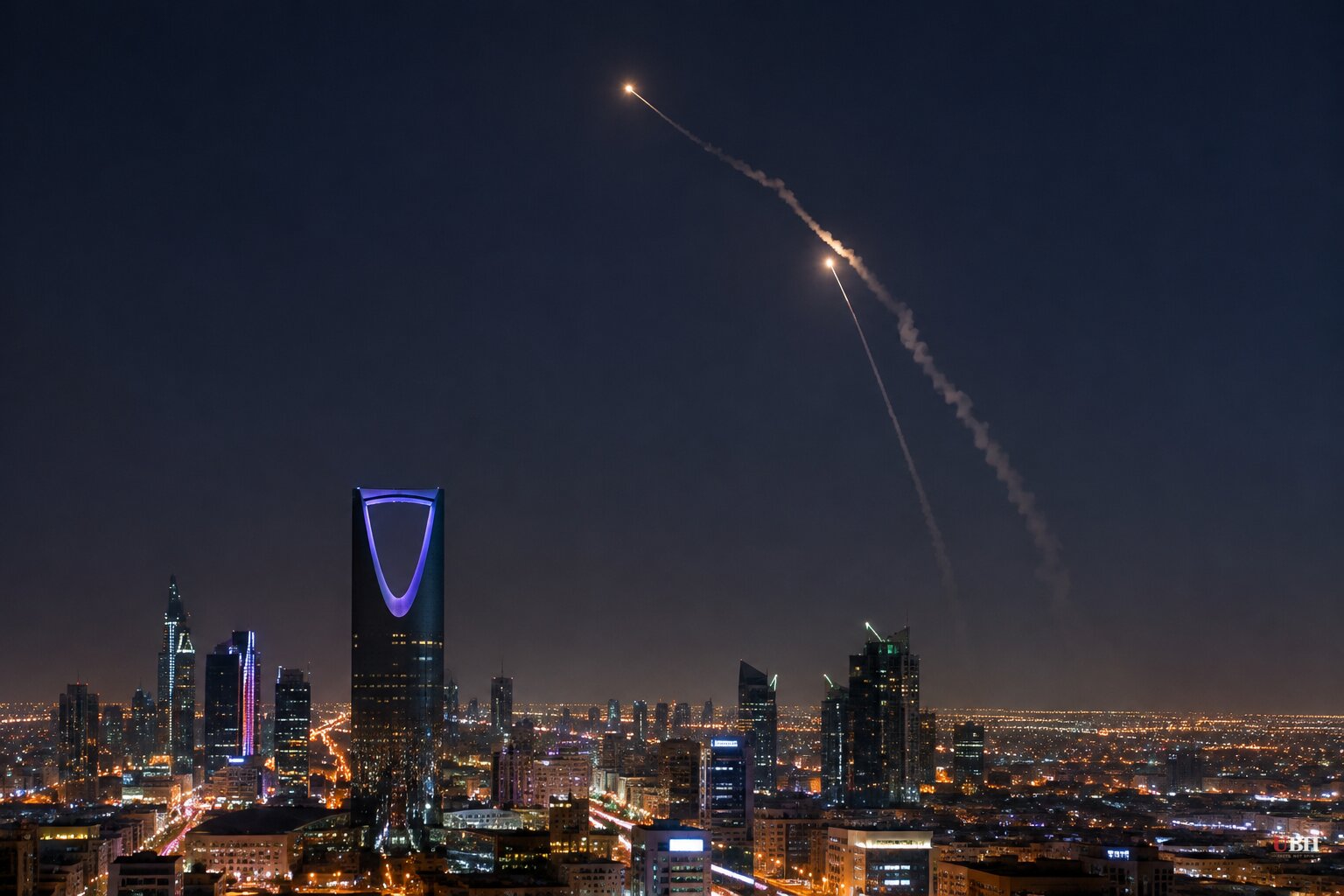
Since the Houthis threatened every Saudi Red Sea port on Nov. 25 if Riyadh bombed Hodeidah, the threat has moved from warning to claimed action, and the missiles reached the capital again overnight.
Saudi armed forces said air defences destroyed two ballistic missiles launched toward Riyadh early Thursday, Nov. 26. An AFP journalist and residents heard an explosion around midnight local time (2100 GMT) after authorities issued a "hostile aerial threat" alert, which was lifted shortly afterward. One resident said house windows "shook violently."
The coalition also said it destroyed a cruise missile over the western region and a drone near Jeddah's port. Two more drones were downed over the Eastern Province. Coalition spokesman Maj. Gen. Turki al-Maliki said debris from the intercepted drone caused no civilian injuries.
What the Houthis claimed on Wednesday
The Houthi armed forces said Wednesday, Nov. 25, that they had struck Jeddah port and Jizan port. They described it as the first operation of its kind against Jeddah and called it a response to Saudi strikes on Hodeidah. In the Houthis' words, the aim was to "establish the equation of port for port." They said both strikes were accurate and caused damage.
The coalition's account differs by site. It said it intercepted and destroyed a drone near Jeddah Islamic Port. It acknowledged that a projectile hit Jizan port, causing minor damage and no civilian casualties, and said it was still working to determine what type of projectile it was.
There has been no confirmation that Jeddah port was struck. Videos circulating on social media that allegedly show fires at the Jeddah facility have not been verified.
Hodeidah and the Saudi position
The coalition said its Nov. 25 strikes hit "operational capabilities" at Hodeidah port and destroyed targets in Saada and Amran governorates. Al-Maliki said the Hodeidah targets were used in smuggling operations and the transport of weapons and ballistic missiles. He urged civilians to leave the port area beforehand.
Houthi spokesman Yahya Saree told port workers, residents and shipping companies to evacuate Saudi Red Sea ports. The Houthis posted maps marking Yanbu, Jizan, King Fahd Industrial Port, Jeddah port and Riyadh's King Abdullah Financial District. The group said it "will not hesitate to respond directly and immediately" to any new attack on Hodeidah.
Houthi-run al-Masirah TV reported further Saudi airstrikes on Hodeidah, including at its international airport. It also reported strikes on Sanaa on Thursday. The Houthi outlet gave no details and no casualties were reported. These accounts are unverified.
Ras Tanura and the Riyadh tower
The Houthis also claimed a strike on Ras Tanura, Saudi Arabia's largest refinery, at 550,000 barrels per day. Saree said it caused fires. Satellite imagery from Wednesday shows a large plume of black smoke over the Ras Tanura peninsula.
The coalition said air defences destroyed four drones over Ras Tanura and that falling fragments caused no casualties in its initial assessment. It has not said the facility was hit. A shipping source told CNN that oil loadings at the terminal were suspended after the attack. It is unclear whether they have resumed. CNN said it had approached Aramco for comment.
In Riyadh, the Public Investment Fund headquarters tower was struck on Tuesday, Nov. 24, wounding at least 11 people, according to Saudi authorities. The same tower was damaged on Nov. 19 without injuries. The coalition called the latest attack a "terrorist attack" and promised a firm response. Saree said the Riyadh operation was carried out in three phases and caused "significant damage."
Jeddah Islamic Port handles 57% of Saudi maritime trade and transhipment, according to Saudi Ports Authority (Mawani) data. It sits roughly 700 kilometres across the Red Sea from Hodeidah.
The Red Sea coast has taken on added weight since the US-Iran war began in late February. Yanbu, which receives crude through the East-West pipeline, became more important to Saudi exports after that war reduced the role of the Gulf-coast Ras Tanura complex as the kingdom's main export terminal. Both Ras Tanura and Yanbu now appear on the Houthis' target list.
The ground war
On Tuesday, Yemeni army spokesman Col. Majed al-Nuzaily said Houthi forces had moved about 60 kilometres closer to Aden after government-aligned forces withdrew from areas along the Bab el-Mandeb Strait. He said government forces had set up a defence line north and west of Aden to stop the advance. The fighting reignited in July after years of relative calm under a 2022 UN-brokered ceasefire.
The coalition has promised a firm response to the Riyadh attacks. The Houthis have said any further strike on Hodeidah will draw an immediate answer against Saudi ports. Riyadh has not said whether it will keep targeting Hodeidah. Aramco has not publicly addressed the status of Ras Tanura loadings.
Sources used for this briefing
7 links from 7 independent newsrooms (syndicated copies of the same report count once)
These are the sources it draws on, linked so you can verify.


