
Unbiased headlines. Facts, not spin.
Unbiased Headlines is an independently owned news organization. We bring you the facts, not opinions, written fresh from 110+ named sources. Sources linked so you can verify it yourself.
 defense
Major Story (7/10)
Trump and NATO's Rutte Urge Russia Not to Widen Ukraine War as Merz Floats Abu Dhabi for Talks
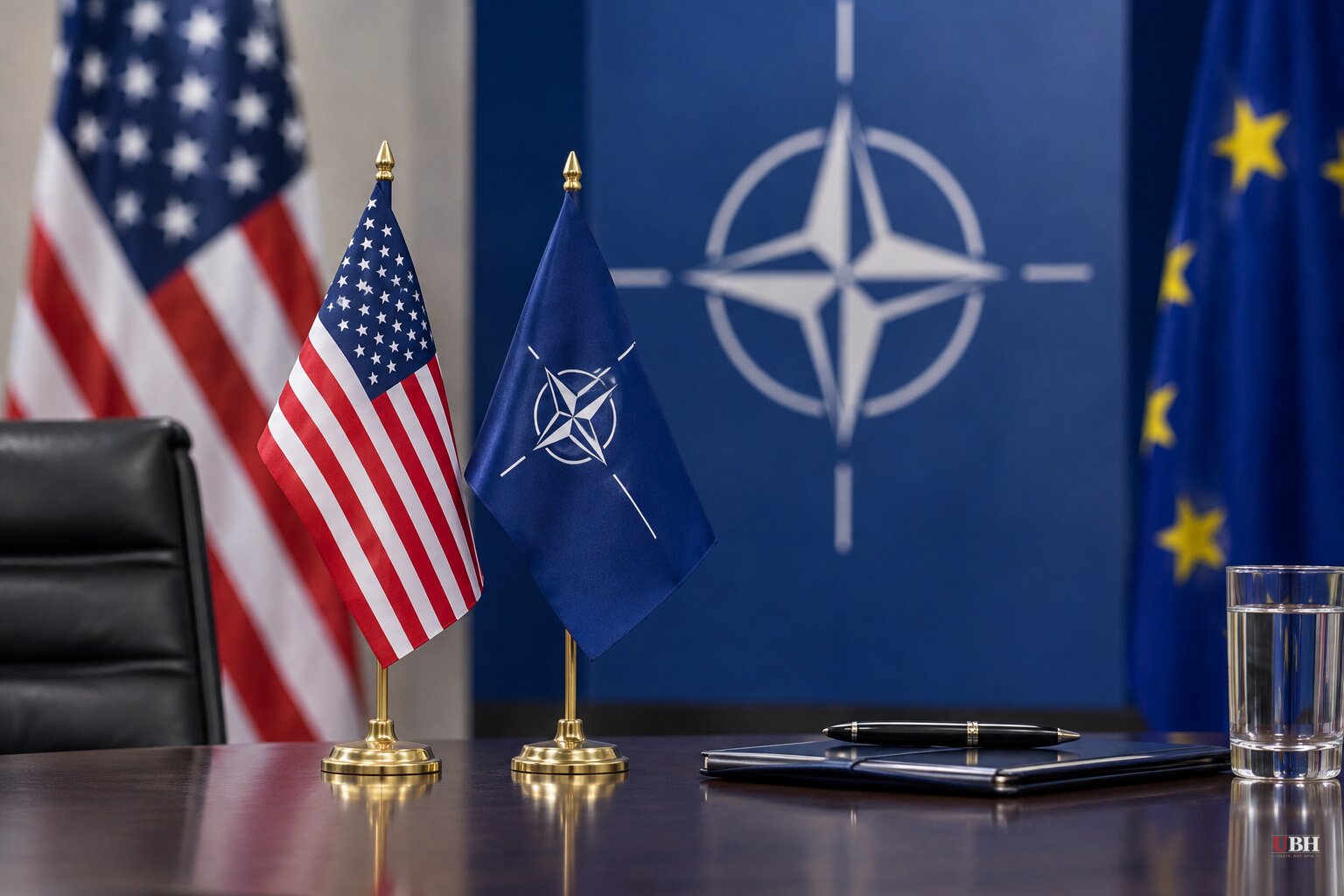
Since Russia resumed large-scale strikes on Ukraine's civilian energy and heating infrastructure in mid-autumn, the war has moved into its winter phase. On Wednesday, Nov. 25, Donald Trump and NATO Secretary General Mark Rutte answered with words.
The two met behind closed doors at Mar-a-Lago in Florida. The White House then released a joint statement calling the talks "outstanding" and "very impactful." Russia's war in Ukraine and the Iran conflict were the main topics.
The key line: "We also discussed the importance of Russia avoiding any actions that intentionally, or unintentionally, expand the war, and the importance of obtaining a peaceful resolution to the war as rapidly as possible."
The statement names no deadline, sanction or consequence. It also does not say what was discussed on Iran, even though Trump has often criticized allies over what he calls inadequate support for the war against Iran. The two did review the "record setting achievements" of NATO's last two summits in The Hague and Ankara and the need for more defense spending and defense production in the U.S. and across the alliance.
Coming days after the Shenzhen summit
The meeting came less than a week after Trump sat down with Vladimir Putin and Xi Jinping in Shenzhen. Trump called both men "friend." The summit produced no ceasefire.
Putin publicly rejected one afterward. Trump then assured European leaders that he believed Moscow was serious about negotiations. Trump envoy Jared Kushner said in an interview released Wednesday that Putin remains uninterested in a ceasefire before a broader settlement.
Volodymyr Zelensky holds the opposite sequence. He has repeatedly said an unconditional ceasefire must come before talks on a comprehensive deal.
The Shenzhen meeting drew a backlash from Democrats in Washington and from European allies. Rutte has answered the criticism by saying it is normal for the leaders of major nuclear powers to meet. Before the Florida talks, he said Trump was testing Putin's willingness to end the war. He also repeated that any settlement, whether a full peace deal or a long-term ceasefire, must include credible security guarantees for Ukraine.
Europe wants a seat, and Moscow says it will make room
German Chancellor Friedrich Merz said at a Berlin news conference with Rutte that advisor-level talks among Ukraine, Russia, Europe and the U.S. could resume in Abu Dhabi. He also urged Moscow to stop airspace provocations. Merz has said a neutral venue was still being sought and has named the United Arab Emirates as one possibility. He has given no date.
At the Coalition of the Willing summit in Berlin last week, Merz called the Shenzhen meeting a "photo op." He said a "Yalta format cannot bring peace to Ukraine." Kushner told the Berlin gathering that Trump wants a deal "with Europe by his side" and is "not looking to impose anything unilaterally."
Putin says the door is open. After Shenzhen, he said Russia had invited European leaders to Moscow through diplomatic channels and that "discussing issues linked to security in Europe is pointless" without Europeans. He added that the American side is urging Moscow to accept European involvement.
The Kremlin's position
Merz has accused the Kremlin of "escalating" threats to European security, citing actions in the Baltic region, Poland and the Black Sea. "Russia knows exactly what it wants. And Russia wants more than Ukraine," he said Wednesday.
The Kremlin has repeatedly denied seeking military confrontation with NATO countries. Moscow also denies deliberately targeting civilians in Ukraine. It says critical energy infrastructure is a legitimate military target. A Foreign Ministry spokesperson did not immediately respond to a request for comment Thursday morning.
Rutte has argued that Russia's war machine is running "at full speed" with help from Iran, China and North Korea. He has also warned against building a separate European military structure on top of NATO. His reasoning: "if Putin attacks, we will first need two or three weeks to agree who will do what, and then he will probably end up in Rotterdam before we have decided."
The grid on both sides
Ukrainian officials said Wednesday that Russian strikes damaged energy infrastructure and caused outages in five regions as cold weather sets in. Overnight attacks on Kryvyi Rih disrupted power and brought municipal electric transport to a standstill, according to Oleksandr Vilkul, head of the city's defense council.
Russia is bracing for the same. Deputy Prime Minister Marat Khusnullin told lawmakers Wednesday that preparing for Ukrainian drone attacks on utility infrastructure this winter, especially near the border, is "the number one issue." Some power and heating plants in and around Moscow are covered in anti-drone nets. Khusnullin said budget pressure and a legal exemption from utility bills for residents of many border regions make the job harder.
On the weapons side, Washington has offered no timeline for releasing delayed Patriot interceptors to Ukraine or for approving Ukrainian manufacturing licenses, Kyiv Post reported after pressing the Pentagon.
The Abu Dhabi track remains unresolved. No date or venue has been confirmed, and Putin has told Europeans to come to Moscow instead.
Sources used for this briefing
7 links from 7 independent newsrooms (syndicated copies of the same report count once)
These are the sources it draws on, linked so you can verify.


