
Unbiased headlines. Facts, not spin.
Unbiased Headlines is an independently owned news organization. We bring you the facts, not opinions, written fresh from 110+ named sources. Sources linked so you can verify it yourself.
 defense
Major Story (7/10)
Russia's Duma passes 2027 budget with $209 billion for defense, up 33% from 2026
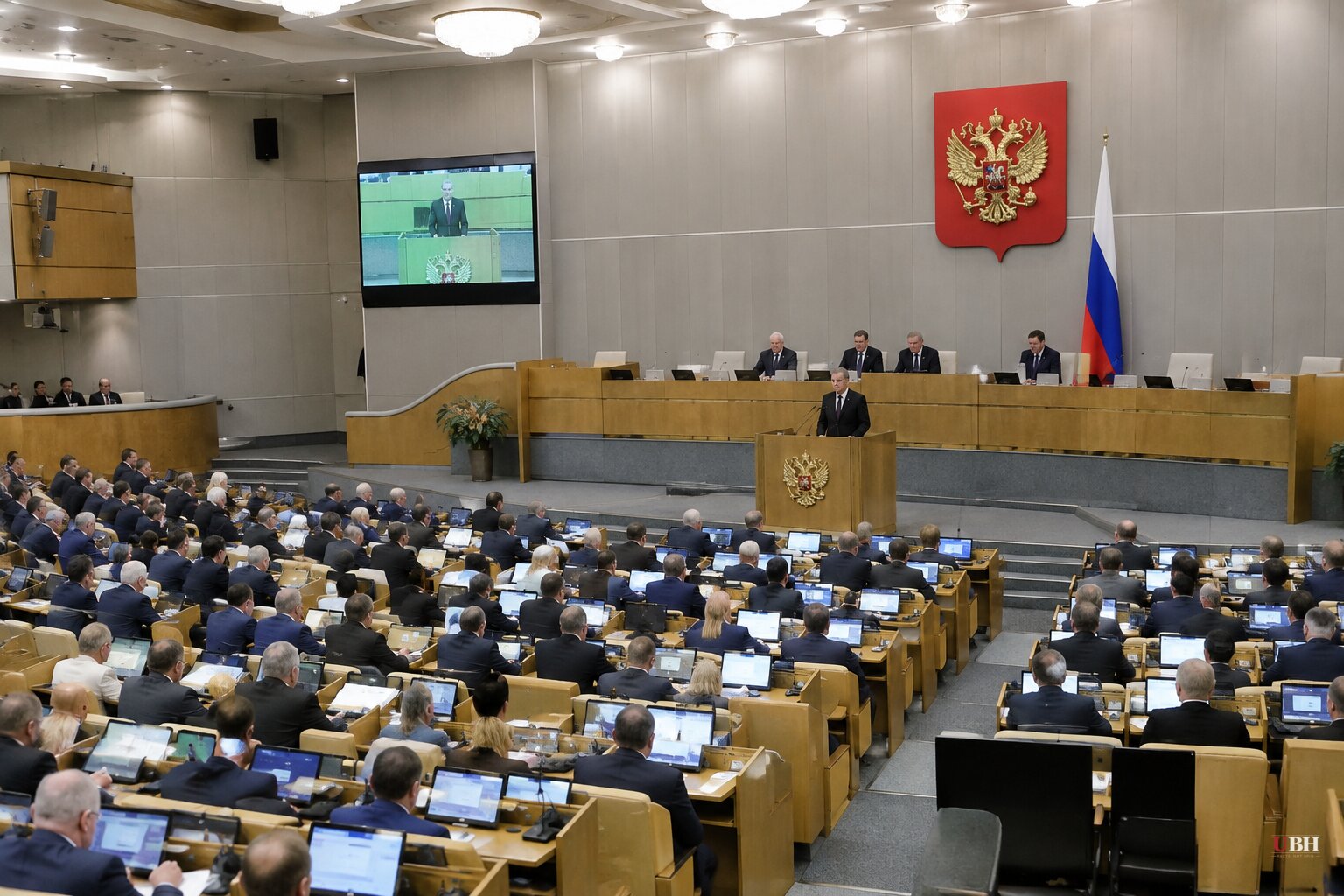
Russia's lower house of parliament has approved a three-year budget that pushes military spending to its highest level since the Soviet collapse. The State Duma passed the 2027-2029 plan in its third reading on Tuesday, Nov. 24, with 396 votes in favor and 37 abstentions. The Federation Council, the upper house, is next.
The numbers
Defense gets 17.15 trillion rubles ($208.9 billion) in 2027. The 2026 figure is 12.93 trillion rubles ($157.5 billion), so the jump is roughly 33%. Last year's budget had forecast only 13.6 trillion rubles for 2027.
Over the full 2027-2029 window, defense spending comes to about 50 trillion rubles, or roughly $609 billion. Defense alone eats about 35% of federal spending in 2027. Add security and law enforcement agencies and the share reaches 44%, against 21% for sectors like health and education, according to figures cited by The Washington Post.
That same reporting shows civilian lines shrinking next year: national economy spending down 3%, housing and utilities down 8%, healthcare down 3%, social policy down 6%.
The 2027 deficit is projected at 5.44 trillion rubles ($66.3 billion), or 2.2% of GDP, according to The Moscow Times. The Finance Ministry plans to cover it with government borrowing.
Who pays
The Duma passed the tax package separately. Moscow is leaning on domestic wallets because sanctions keep it out of international bond markets.
- A 20% to 30% windfall profits tax on mining companies that have gained from higher iron ore, nickel and gold prices.
- Rates of 13% to 22% on income from interest, dividends and property sales. Today that income is taxed at 13% under 2.4 million rubles ($29,800) and 15% above.
- Starting Jan. 1, a 100-ruble charge per parcel and a 22% VAT on foreign online purchases under 200 euros ($219), which are currently tax-exempt.
The Kremlin has raised taxes before, and small businesses disliked it. This round is narrower and targets sectors with visible windfalls. It still lands on households. Chris Weafer, CEO of Macro-Advisory Ltd, told the Associated Press the spending comes "at the expense of raising taxes, of increasing costs for households as well as businesses."
The Kremlin's case
Russian officials present the budget as a wartime necessity, not a strain. Dmitry Kobylkin, head of the United Russia faction, called it a "victory budget" and pointed to money for defense, veterans and their families, and state social support. Additional funding for veterans programs, including the Kremlin-backed Time of Heroes program, was added before the second reading, Tass reported.
State Duma Speaker Vyacheslav Volodin said the budget includes "everything we need for the support of Ukraine war veterans," and noted that Russia is operating under nearly 35,500 Western sanctions.
Finance Minister Anton Siluanov acknowledged that drafting the budget has become harder as the government keeps missing its annual deficit targets because of war spending.
Russian economist Igor Lipsits offered a harsher reading to the exiled channel Dozhd: "Now the country and its people live only to fight, and there are no other goals."
The war behind the budget
Russia's deficit this year has already swelled beyond forecast. Heavy military spending, slow growth, sanctions, high interest rates for nonmilitary firms, labor shortages and Ukrainian strikes on refineries and export terminals have all hit the economy.
Since the 2022 invasion, Russia has spent about $710 billion on its military, according to The Washington Post. The paper's projection puts that at $918 billion by the end of 2027 and $1.1 trillion by the end of 2028.
The human cost is also in dispute. On Monday, the independent Russian outlets Meduza and Mediazona published an estimate, built on leaked Rosstat records obtained by the hacking groups Belarusian Cyber Partisans and Silent Crow, that at least 490,000 Russian military deaths had been registered by late September 2026. Adjusting for registration delays and soldiers listed as missing, they put the real toll at 700,000 or more.
Kremlin spokesman Dmitry Peskov dismissed the estimate today, Nov. 25. "The only entity that can officially disclose casualty figures is the Russian Defense Ministry," he said. He gave no updated official figure.
Keti Korkiya, a research analyst at the Foundation for Defense of Democracies, called the 700,000 estimate plausible, noting the British defense chief had already put deaths above half a million in September. She said the main uncertainty is how many missing soldiers are dead. She also argued the budget shows Russia can keep fighting: the country "still recruits tens of thousands of men a month," and the economic pressure "is unlikely to force Putin to stop fighting anytime soon."
What comes next
The Federation Council has not announced a date for its vote on the budget. Passage there has not been in doubt in the Russian system, where United Russia holds a majority in the Duma. The new tax rules on parcels and online purchases take effect Jan. 1.
The key issue is financing. With deficits running past targets and foreign bond markets closed to Moscow, the plan depends on domestic borrowing and the new taxes delivering what the Finance Ministry projects.
Sources used for this briefing
6 links from 6 independent newsrooms (syndicated copies of the same report count once)
These are the sources it draws on, linked so you can verify.


