
Unbiased headlines. Facts, not spin.
Unbiased Headlines is an independently owned news organization. We bring you the facts, not opinions, written fresh from 110+ named sources. Sources linked so you can verify it yourself.
 defense
Major Story (7/10)
Event date: November 22, 2026 ·
Iran's President Says Economic War Is Harder Than Missiles as U.S. Blockade Continues
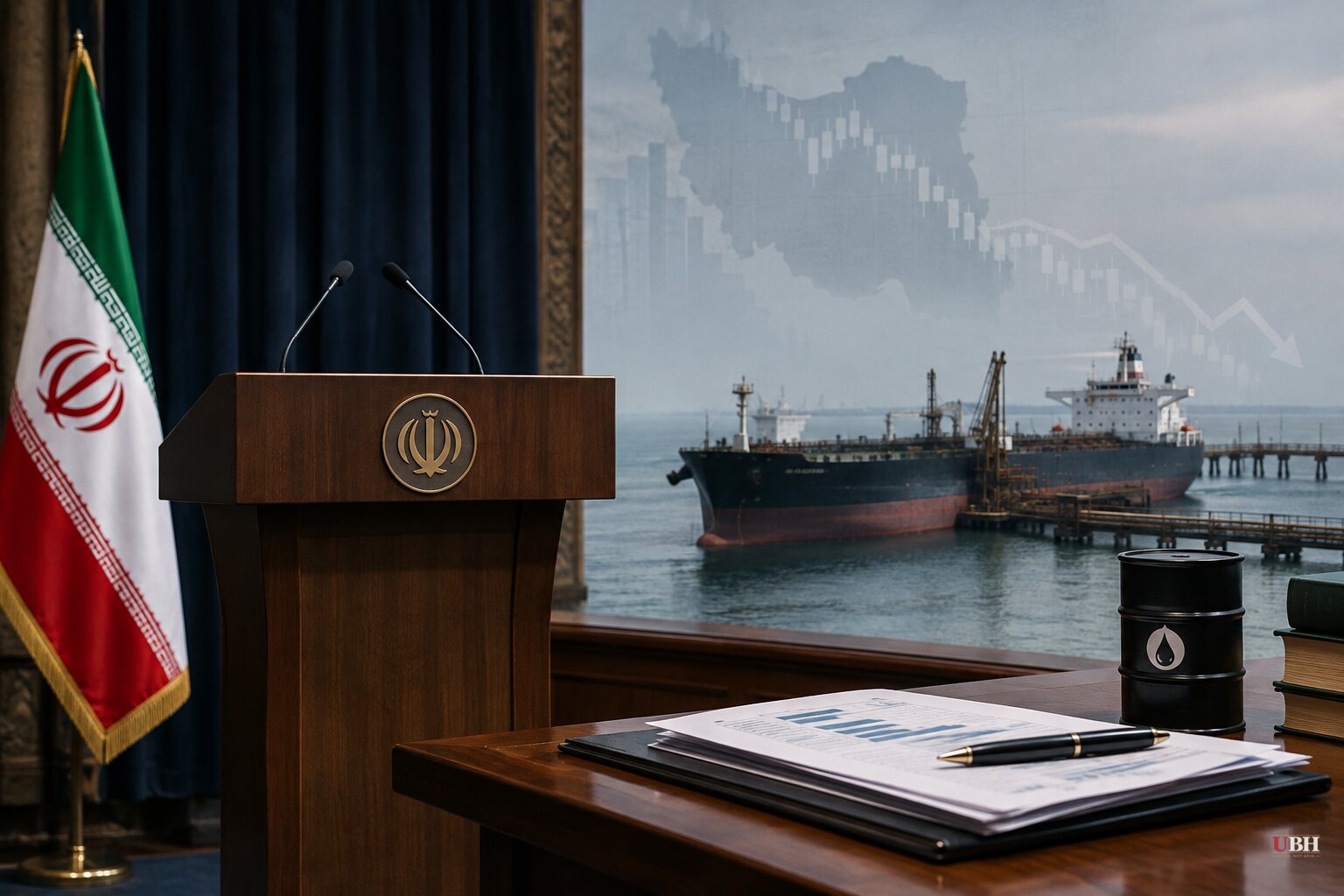
Iran's president is describing the U.S. blockade as the harder fight.
"We are in a silent war, which is much more difficult than a war in which missiles are launched and destruction is carried out," Masoud Pezeshkian told a capital markets conference in Tehran on Saturday, Nov. 21, according to Iran's state news agency IRNA. He called it an economic war that business owners are fighting, "and it is no easy battle."
Pezeshkian also said Iran may struggle to supply gas and electricity this winter. He urged officials to cut government offices' consumption first and keep factories running. He blamed part of the losses at state-owned companies on mismanagement.
What Treasury says it has done
The U.S. side claims the pressure is working. Treasury told Fox News Digital that Iran has not loaded a single barrel of oil onto vessels since Aug. 25, 2026, the start of Operation Economic Outcast. "The regime has exhausted its seaborne oil supply, and it may never see the revenue from the oil it has already sold. The ship is sinking," Treasury Secretary Scott Bessent said.
Treasury also provided a report saying the Iranian rial has lost roughly 25% of its value since August and that inflation hit 90% in September. These are Treasury's figures.
On Monday, Treasury sanctioned more than two dozen individuals and companies accused of helping Iran move billions of dollars through financial networks in Dubai, Hong Kong and Turkey. The department identified about $14.7 billion in financial activity potentially linked to Iranian shadow banking between January 2025 and August 2026. It says it is also going after cryptocurrency exchanges.
Bessent's own timeline has slipped. In September he said Iran would have "nothing left to trade" within two weeks. Nearly two months later, Treasury is still unmasking the middlemen and currency dealers keeping Tehran's money moving. No diplomatic breakthrough has followed.
The limits of Iran's workarounds
Before the first U.S. blockade in April, Iran shipped about 1.5 million barrels of crude a day to China, its biggest customer. The U.S. reinstated the blockade in July.
Since then, Iran has reportedly moved limited quantities of fuel oil and liquefied petroleum gas by road to Pakistan and Afghanistan. Some natural gas and jet fuel has reportedly moved ship to ship east of the Strait of Hormuz.
Iranian economists say that is not enough. Energy expert Hamid Hosseini wrote in the reformist daily Shargh on Nov. 2 that land routes to Tajikistan, Uzbekistan, Pakistan, Turkey and Iraqi Kurdistan could carry at most 250,000 to 300,000 barrels a day. That is no more than a fifth of the old China volume. He argued that only a diplomatic solution can end the blockade's bite.
Pouya Jabal Ameli, editor-in-chief of Donya-ye Eqtesad, warned in a Sept. 21 editorial that foreign currency revenue could fall to about one-fifth of pre-blockade levels. Oil previously funded around 35% of the government budget. He estimated that 40% of Iranians already lived below the poverty line before the blockade. He said at least two more income deciles could be pushed into poverty by March 2027.
Officials also project a domestic gas shortfall of roughly 430 million cubic meters, up from about 300 million. Reuters has reported that Iranian officials fear renewed unrest. Iran's Tasnim news agency announced a Basij neighborhood-monitoring program that uses artificial intelligence. Reports of a gathering of more than 1,000 protesters in Abdanan earlier in the week have also circulated.
Tehran's answer
Tehran says it is holding. Pezeshkian argued the "enemy" failed to cause famine or goods shortages. Interior Ministry spokesman Ali Zeinivand said U.S. naval, land and air restrictions have not halted trade and that talks with neighboring countries continue. Foreign Minister Abbas Araghchi told ILNA: "The blockade must be broken."
Iran is also pushing outward. Bahrain, which hosts major U.S. military facilities, said its defense force intercepted and destroyed several Iranian drones on Sunday, after a similar interception the Friday before. The Revolutionary Guard claimed an attack on a U.S. helicopter base in Bahrain, citing unspecified U.S. "aggression." The U.S. Embassy in Manama urged Americans to use "heightened vigilance."
Foreign Ministry spokesman Esmaeil Baghaei warned Gulf states not to "reopen old wounds." That was a reference to their support for Saddam Hussein in the 1980s. It came after the Gulf Cooperation Council suggested Iran owes compensation for attacks on its members' territory.
Is the pressure enough?
The war began nearly nine months ago with Operation Epic Fury. U.S. strikes have largely stopped, but the blockade continues and negotiations appear stalled. Secretary of State Marco Rubio has said the economic damage has been significant enough that President Trump no longer sees a need for a large-scale military operation.
The Atlantic Council's experts disagree on what comes next. Nate Swanson, a former National Security Council director for Iran, says endless economic pressure "will likely fail." He argues Iran "will escalate long before it capitulates," and cites Reuters/Ipsos polling showing 71% of Americans want the new Congress to end the war. He wants the blockade lifted while the U.S. keeps pressing on Iran's nuclear program and freedom of navigation.
Andrew Peek's recommendation is to keep the blockade up and wait a month or two. Matthew Kroenig urges Trump to "finish the job."
The central unresolved question is which clock runs out first: Iran's winter gas supply and household budgets, or Washington's patience and the Gulf's exposure to Iranian drones and a possible attempt to run the blockade.
Sources used for this briefing
6 links from 5 independent newsrooms (syndicated copies of the same report count once)
These are the sources it draws on, linked so you can verify.


